
Lotus Mantis: Is It a Real Insect or an AI Creation?
The lotus mantis is not a real insect. The creature shown in viral videos, a mantis with a body shaped like a white or pink lotus blossom, sitting in misty mountains or landing on a gloved hand, has no record in entomology. Fact-checkers traced the most widely shared clips to accounts that tag their posts with AI and visual-effects hashtags.
The confusion is understandable. Real praying mantises that look like flowers do exist, and some of them are almost as surprising as the fake. This article explains where the lotus mantis came from, how to tell an AI mantis from a real one, why you should never pay for “lotus mantis eggs,” and which real species the videos are imitating.
The Short Answer
| Question | Answer |
|---|---|
| Is the lotus mantis real? | No. There is no scientific record of a species by that name. |
| Where did it come from? | Short videos made with generative AI tools, first spread widely in early 2025. |
| Is it the same as the celestial mantis? | Yes, the same viral clips were shared under both names. |
| Can you buy one? | No. Any “lotus mantis for sale” listing is selling something else or nothing at all. |
| What real insect looks similar? | The orchid mantis (Hymenopus coronatus) and other flower mantises. |
Where the Lotus Mantis Videos Came From
According to a report by Sportskeeda, the clip that pushed the lotus praying mantis into the mainstream was posted on Instagram by the user @oleg.pars on March 7, 2025. Its caption told a short story: a monk mentioned a rare insect disguised as a flower that lived high in the mountains, and the creator set out to find it.
The same report notes that the post carried hashtags such as #vfx, #ai, #digitalart and #aiart, along with #midjourneygallery, a reference to the AI image platform Midjourney. In other words, the original creator signaled that the clip was digital art.
The video gained a second wave of attention when another account reposted it on April 1, 2025, with the caption “The stunning lotus mantis. AI or Real?” That repost described it as having been seen only three times in 150 years and called it the “celestial mantis.” Sportskeeda points out that the human hand the mantis lands on appears to have six fingers, a common flaw in AI-generated images.
Once the clip spread to TikTok, Facebook and X, the disclaimer hashtags were often lost. Many viewers saw only the beautiful creature and the claim of extreme rarity.
The same creator style shows up again and again. MalwareTips, which tracks viral hoaxes, has written up a series of similar “flower insects” built with AI tools, and connects several of them to the same group of accounts. You can read about the sister trend in our guide to the celestial, cherry blossom and rose mantis.
Timeline of the Lotus Mantis Trend
| Date | What happened |
|---|---|
| March 7, 2025 | @oleg.pars posts the lotus mantis clip on Instagram with AI and VFX hashtags |
| March 17 to 18, 2025 | A related “sleeping rose mantis” clip appears; its creator credits Midjourney, Flux and Kling |
| April 1, 2025 | The lotus mantis clip is reposted as the “celestial mantis,” with a claim of three sightings in 150 years |
| April 30, 2025 | Lead Stories publishes a fact check showing the rose mantis is not real |
| Early July 2026 | Researchers and iNaturalist staff warn in Nature Ecology and Evolution about AI images in citizen science |
| August 2026 | Particle reports on an AI-generated mantis image removed from iNaturalist |
The dates show a pattern: the clips appear with honest AI labels, then lose them as they are reposted, and fact checks arrive weeks later, after millions of views.
Why the Lotus Mantis Is Not Real
Several independent lines of evidence point the same way.
- No scientific record. MalwareTips notes there is no documentation of a lotus mantis by entomologists. Real species are named in scientific papers and listed in databases such as the Mantodea Species File and the Global Biodiversity Information Facility. “Lotus mantis” appears in none of them as a species.
- Creator disclosure. The original post used AI hashtags, including a direct reference to Midjourney.
- Visual errors. The six-fingered hand in the celestial mantis version is a classic sign of AI generation.
- Impossible anatomy. The lotus mantis has petals growing from its body in layers, like a real lotus flower. Real flower mantises imitate flowers with flattened lobes on the legs or body, not with actual petal structures.
- The story pattern. A remote mountain, a monk, and “only three sightings in 150 years” are storytelling devices, not data. Genuine rare-species discoveries come with a location, a date, a named researcher and usually a specimen.
A similar case shows how common this has become. Thai PBS Verify investigated a “Snow Lotus Grasshopper” clip with more than 10 million views and confirmed it was AI-generated, pointing to distorted details such as extra fingers.
Lotus Mantis vs Orchid Mantis
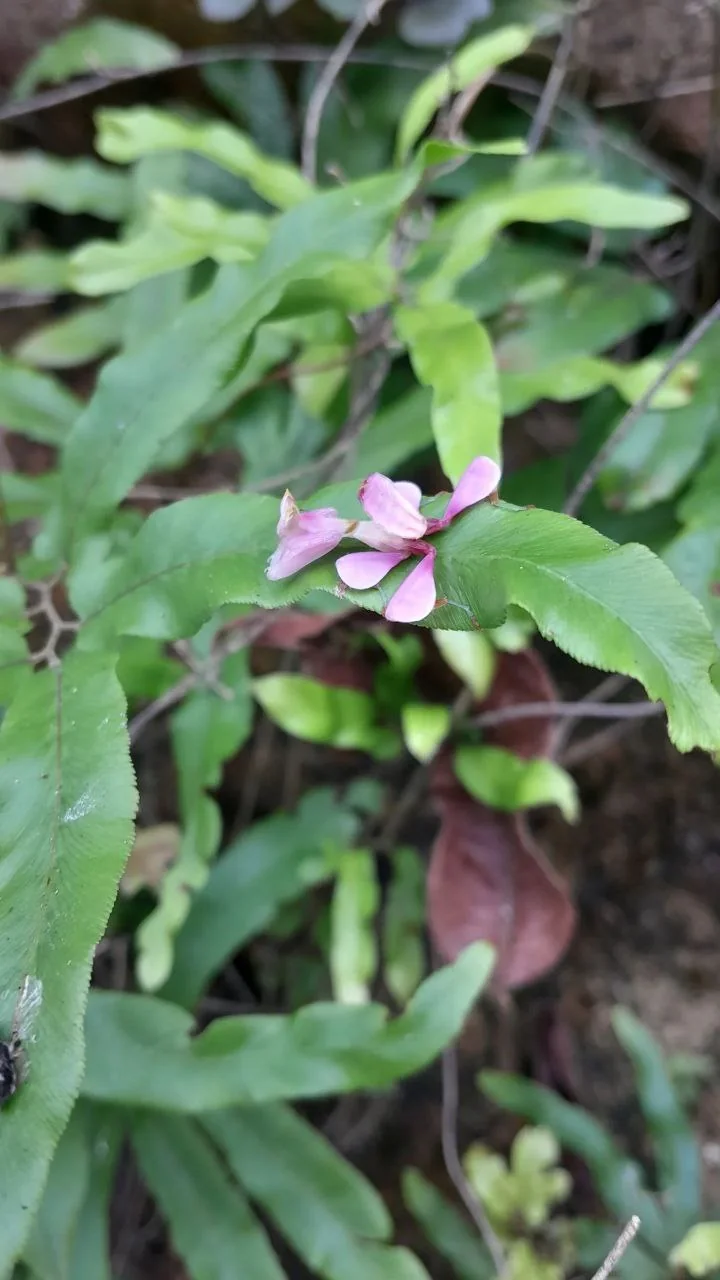
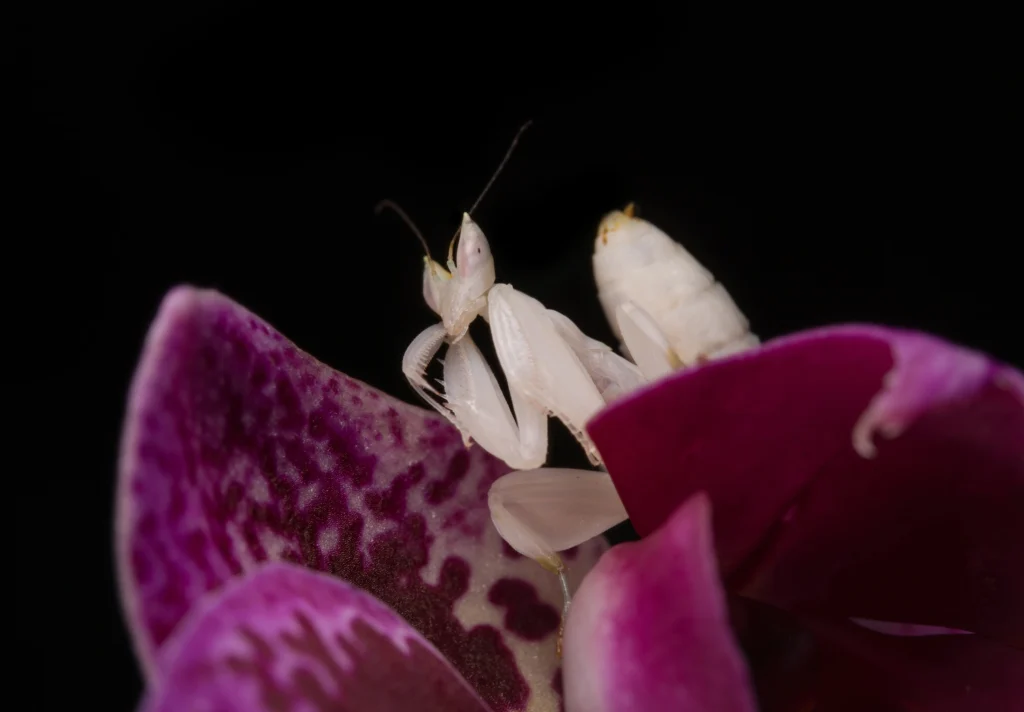
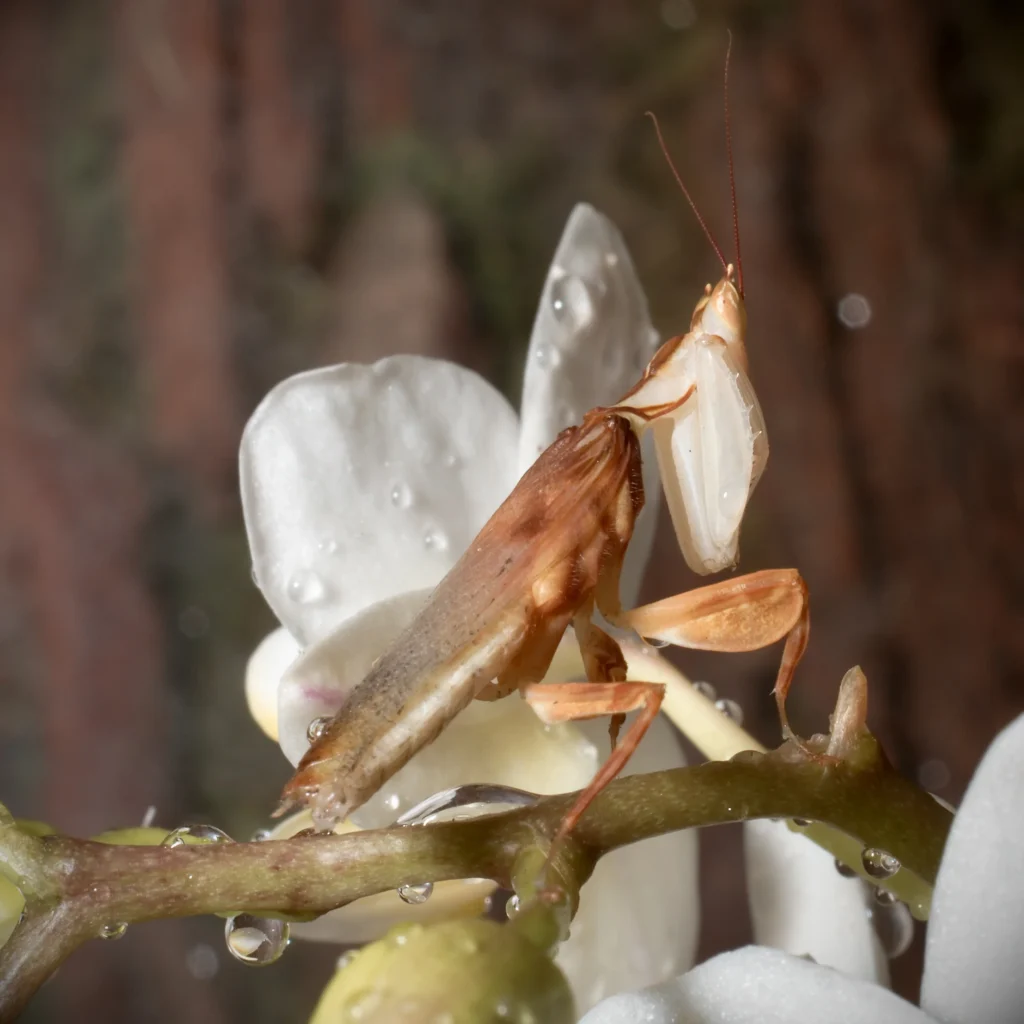
The lotus mantis looks like an exaggerated version of a real animal: the orchid mantis. Comparing the two makes the fake easier to spot.
| Feature | Lotus mantis (viral) | Orchid mantis (real) |
|---|---|---|
| Exists in nature | No | Yes, Hymenopus coronatus |
| Where it “lives” | Unnamed misty mountains | Tropical forests of Southeast Asia |
| Flower resemblance | Layered petals growing from the body | Flat, rounded lobes on four walking legs |
| Colors | Glowing white, pink, sometimes blue | White with pink or yellow hues |
| Size claims | Often shown large on a hand | Females about 6 to 7 cm, males about 2.5 to 3 cm |
| Scientific study | None | Peer-reviewed studies since at least 2013 |
| Can be bought | No | Yes, captive-bred nymphs from specialist breeders |
The orchid mantis is remarkable without any editing. A 2014 field study by James O’Hanlon and colleagues found that it attracted pollinating insects at a higher rate than nearby flowers, then caught them. If the lotus mantis caught your eye, the orchid mantis is the real story.
“Lotus Mantis for Sale”: A Warning
Because the videos are so popular, some sellers list “lotus mantis” eggs, nymphs or adults. Since the animal does not exist, these listings fall into a few categories:
- Outright scams. The seller takes payment and ships nothing. Writing about a similar viral species, MalwareTips advises readers not to pay anyone selling eggs or pets of an animal that does not exist.
- Relabeled real species. A seller may ship an orchid mantis, spiny flower mantis or another real mantis under the “lotus” name, usually at an inflated price.
- Toys and models. Some listings sell figures, prints or 3D models of the AI creature, which is fine if clearly described.
Before buying any live mantis, ask for the scientific name. A real breeder will always give one. If you want a flower mantis, our guides to where to buy an orchid mantis and orchid mantis price explain what a fair, legitimate purchase looks like. In the United States, also check whether you need a permit; see can you own an orchid mantis?
How to Spot an AI-Generated Mantis
AI images of insects are getting better, so no single clue is proof. Look for several of these together:
- Hands and fingers. Extra, missing or merged fingers on the person holding the insect.
- Too many or too few legs. Real mantises have six legs: two raptorial forelegs and four walking legs. AI images often add or blur legs.
- Melting details. Antennae that fade into the background, wings that merge with petals, or a body that blends into the flower it sits on.
- Transformation on camera. A real insect cannot unfold from a flower into an animal.
- Perfect symmetry and glow. Soft studio lighting, flawless symmetry and glowing edges are common in AI art.
- No photographer, no place, no date. Real wildlife photos usually credit the photographer and give a location.
- Hashtags. Check the original post for #ai, #midjourney, #vfx, #kling or similar tags.
- Database check. Search the name on iNaturalist or GBIF. Real species return real observations.
Why Fake Insects Matter
A fake lotus mantis might seem harmless, but scientists are concerned. In a 2026 article, Particle (a science outlet in Australia) reported that a mantis specialist, Kris Anderson, flagged an AI-generated image of a dead leaf mantis that had been submitted to iNaturalist as a real observation from Malaysia. The image was later removed.
The same article describes an opinion piece in Nature Ecology and Evolution, co-written by biodiversity researcher Alexander Lees and iNaturalist staff, warning that citizen science platforms could be “contaminated” by AI-generated records. Because researchers increasingly use these records to track where species live, fake observations can distort real science.
There is also a simpler cost. People who believe a lotus mantis is real may pay scammers, or may come away thinking real flower mantises are fake. Both outcomes make it harder to appreciate the actual animals.
If You Already Shared the Video
Plenty of people shared the lotus mantis before they knew it was fake. There is no harm in correcting it. A short reply such as “Turns out this is AI art, but the real orchid mantis is just as amazing,” with a link to a real photo, helps the next person who sees it. If someone in your feed is offering lotus mantis eggs or pets, reporting the listing to the platform protects other buyers.
Real Insects That Inspired the Lotus Mantis
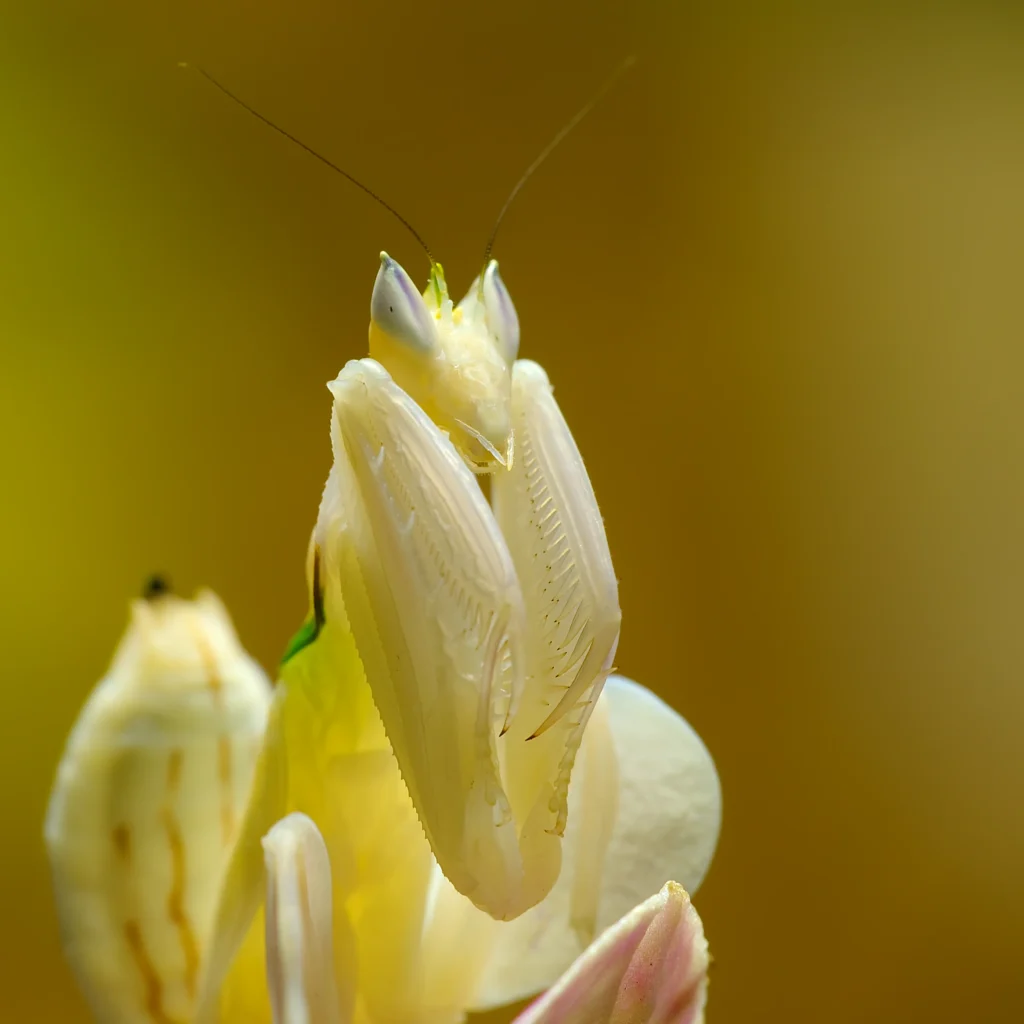
If you loved the idea of a lotus mantis, these real species are worth looking up:
- Orchid mantis (Hymenopus coronatus), Southeast Asia. White to pink, with petal-shaped leg lobes. Start with our orchid mantis facts.
- Spiny flower mantis (Pseudocreobotra species), Africa. Small, spiny, with a spiral eyespot on the wings.
- Devil’s flower mantis (Idolomantis diabolica), East and Central Africa. Large, with colorful forelegs and a dramatic threat display. Its blue and purple colors are behind many “blue orchid mantis” posts, explained in blue orchid mantis.
- Jeweled flower mantises (Creobroter species), South and Southeast Asia. Cream and green with eyespots.
Our flower mantis guide compares all of them. And if the lotus mantis video showed a pink insect, the pink praying mantis guide explains which real mantises can be pink.
Is There Any Mantis Linked to Lotus Flowers?
Mantises of many species hunt on flowers, including water lilies and lotus flowers in gardens and ponds, simply because those flowers attract insects. A photo of a real green or brown praying mantis on a lotus flower is perfectly plausible. What does not exist is a mantis whose body is shaped like a lotus. When you see “praying mantis lotus” photos, check whether the mantis is simply sitting on the flower, or whether it is supposed to be the flower.
Related Guides
If you want to go deeper, these guides pick up where this page leaves off:
- Celestial and cherry blossom mantis: more viral mantis photos checked.
- Pink praying mantis: which mantises are pink, and why.
- Flower mantis species: every major flower-mimicking mantis compared.
- Orchid mantis facts: 35 facts checked against the science.
Frequently Asked Questions
Is the lotus mantis real?
No. The lotus mantis seen in viral videos is an AI or digital art creation. No species by that name has been described by scientists.
Is the lotus mantis the same as the celestial mantis?
They come from the same viral trend. The clip first posted as a lotus mantis was reposted with the “celestial mantis” name and the claim of only three sightings in 150 years.
Can I buy a lotus mantis?
No. Listings for lotus mantis eggs or nymphs are either scams or real species sold under a misleading name. Always ask for the scientific name before buying.
What insect looks like a lotus flower?
No insect has a lotus-shaped body. The closest real look-alike is the orchid mantis, whose white to pink body and petal-shaped legs resemble a small blossom.
How can I check if a mantis photo is real?
Look for a named photographer, location and date, check for AI hashtags, count the legs and fingers, and search the name on iNaturalist or GBIF.
Why do AI insect videos go viral?
They combine real-looking detail with something impossible, plus a story of rarity and discovery. That mix is easy to share before anyone checks it.
Sources
- Sportskeeda, “Is the celestial mantis real? Viral footage debunked”: https://www.sportskeeda.com/pop-culture/is-celestial-mantis-real-fake-viral-footage-debunked-video-floors-netizens
- MalwareTips, “The Viral Lotus Mantis Insect Video Is FAKE”: https://malwaretips.com/blogs/lotus-mantis-insect-video-scam/
- MalwareTips, “Mantiflora Aurantia: Real Insect or AI Hoax?”: https://malwaretips.com/blogs/mantiflora-aurantia-exposed/
- Thai PBS Verify, “Snow Lotus Grasshopper clip verified as AI-generated”: https://www.thaipbs.or.th/verify/en/content/2449
- Particle, “The Creatures Born From Code”: https://particle.scitech.org.au/science-society/the-creatures-born-from-code/
- Lead Stories, “Sleeping Rose Mantis Is NOT Real Insect”: https://leadstories.com/hoax-alert/2025/04/fact-check-sleeping-rose-mantis-is-not-real-insect.html
- O’Hanlon, J.C. et al. (2014). Pollinator deception in the orchid mantis. The American Naturalist. https://www.journals.uchicago.edu/doi/reader/10.1086/673858
- Wikipedia, Flower mantis: https://en.wikipedia-on-ipfs.org/wiki/Flower_mantis
- USDA APHIS, Invertebrate Pets: https://www.aphis.usda.gov/organism-soil-imports/invertebrate-pets