Devil Blue Orchid Mantis: What the “Blue Orchid Mantis” Really Is
If you have seen a photo of a “devil blue orchid mantis,” you have probably seen one of two things: a real devil’s flower mantis (Idolomantis diabolica) showing off its blue and purple forelegs, or a photo of an orchid mantis that has been edited to look blue. There is no naturally blue orchid mantis.
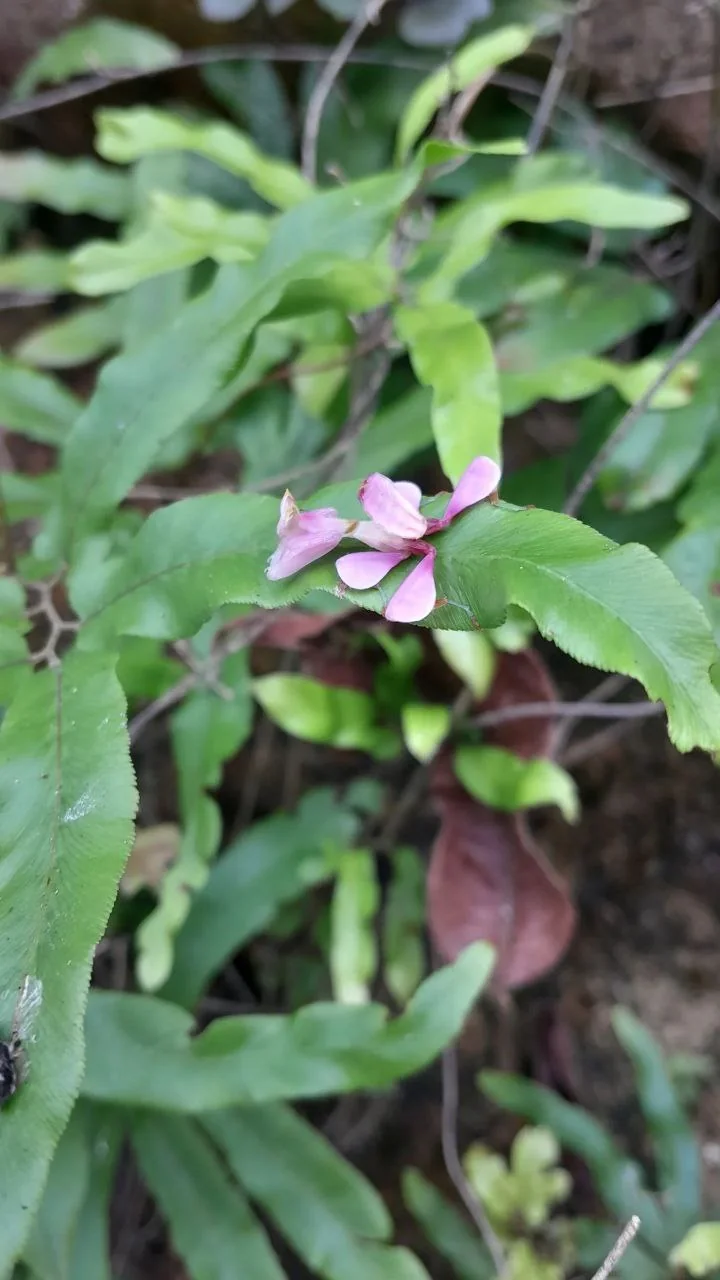
The confusion comes from mixing up two real, famous flower mantises. The orchid mantis (Hymenopus coronatus) is white to pink and lives in Southeast Asia. The devil’s flower mantis is a much larger African species whose raptorial forelegs flash blue, purple, red and white when it feels threatened. Put the two names together and you get “devil blue orchid mantis,” a name that describes neither insect accurately.
This guide explains each species, shows how to tell them apart, and answers the common question of whether you can buy a blue orchid mantis.
The Short Answer
| Question | Answer |
|---|---|
| Is there a blue orchid mantis? | No. Orchid mantises are white with pink or yellow hues. |
| What is the blue mantis in most photos? | Usually the devil’s flower mantis, Idolomantis diabolica, from Africa. |
| Is the devil’s flower mantis an orchid mantis? | No. It belongs to a different family, Empusidae. |
| Can I buy a blue orchid mantis? | No. Listings using this name are either mislabeled devil’s flower mantises or edited photos. |
Why There Is No Blue Orchid Mantis
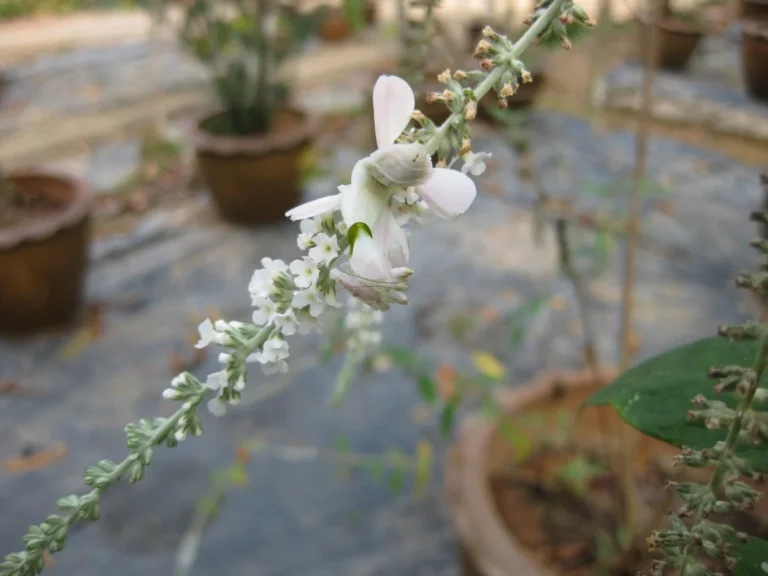
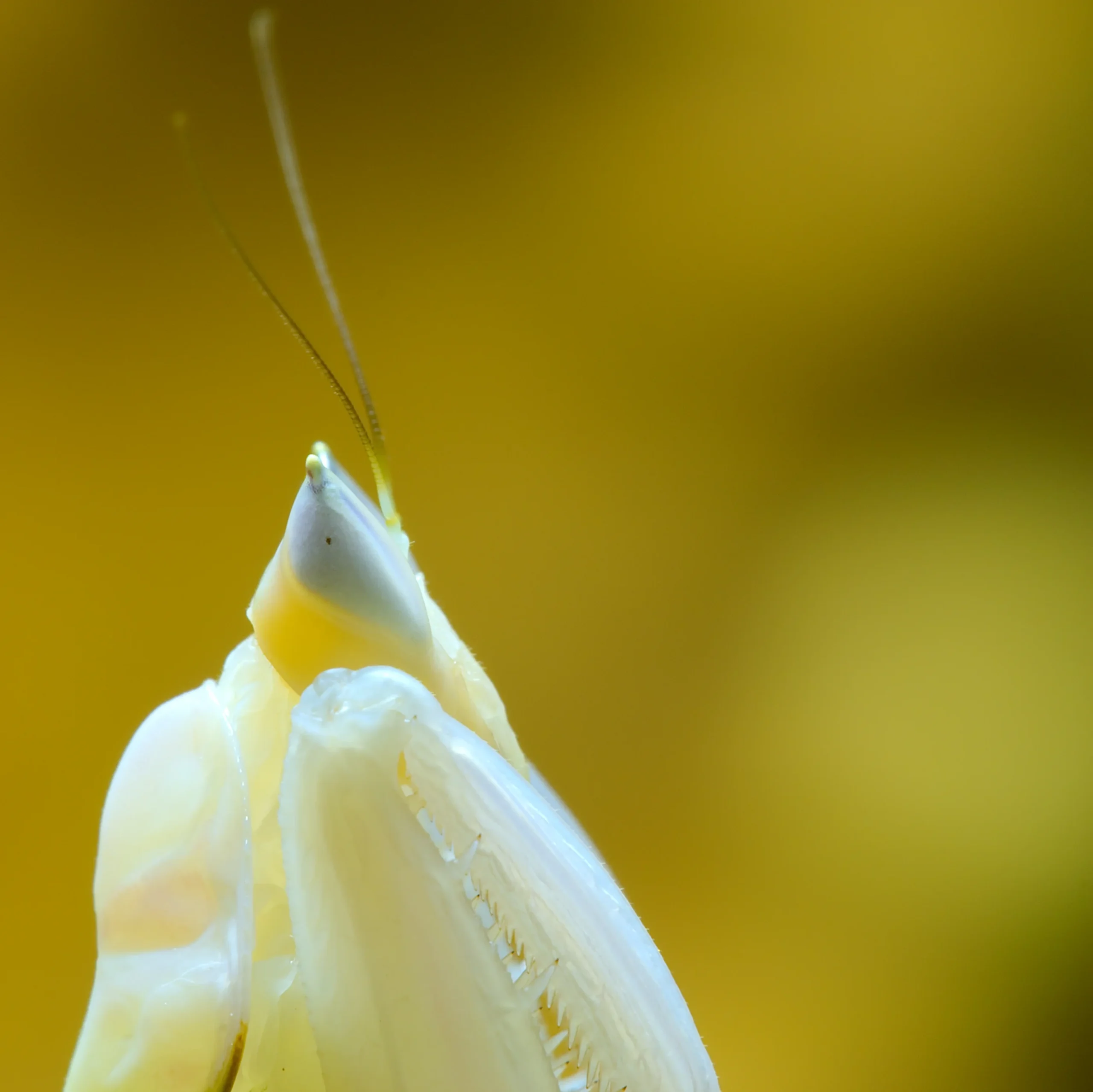
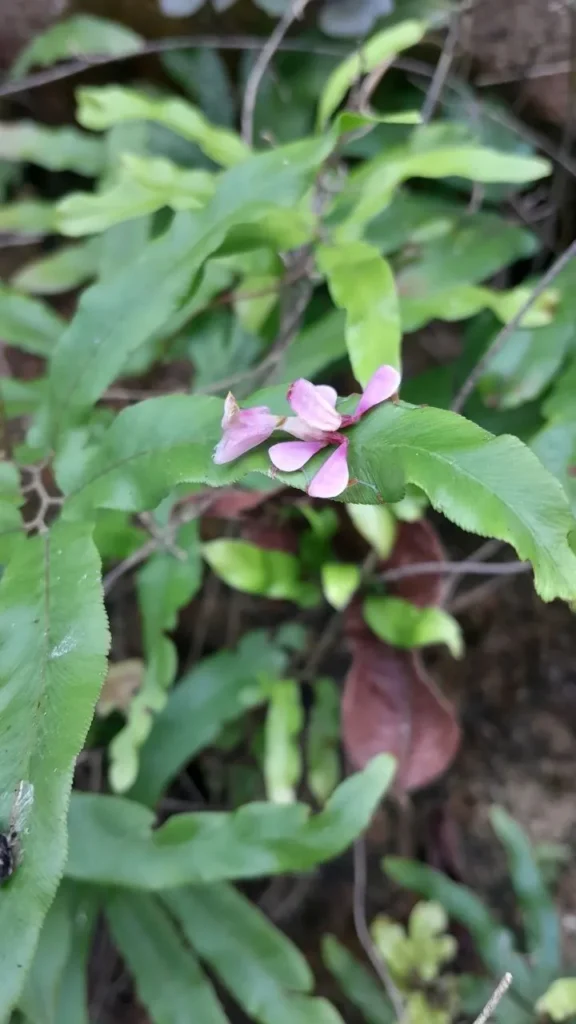
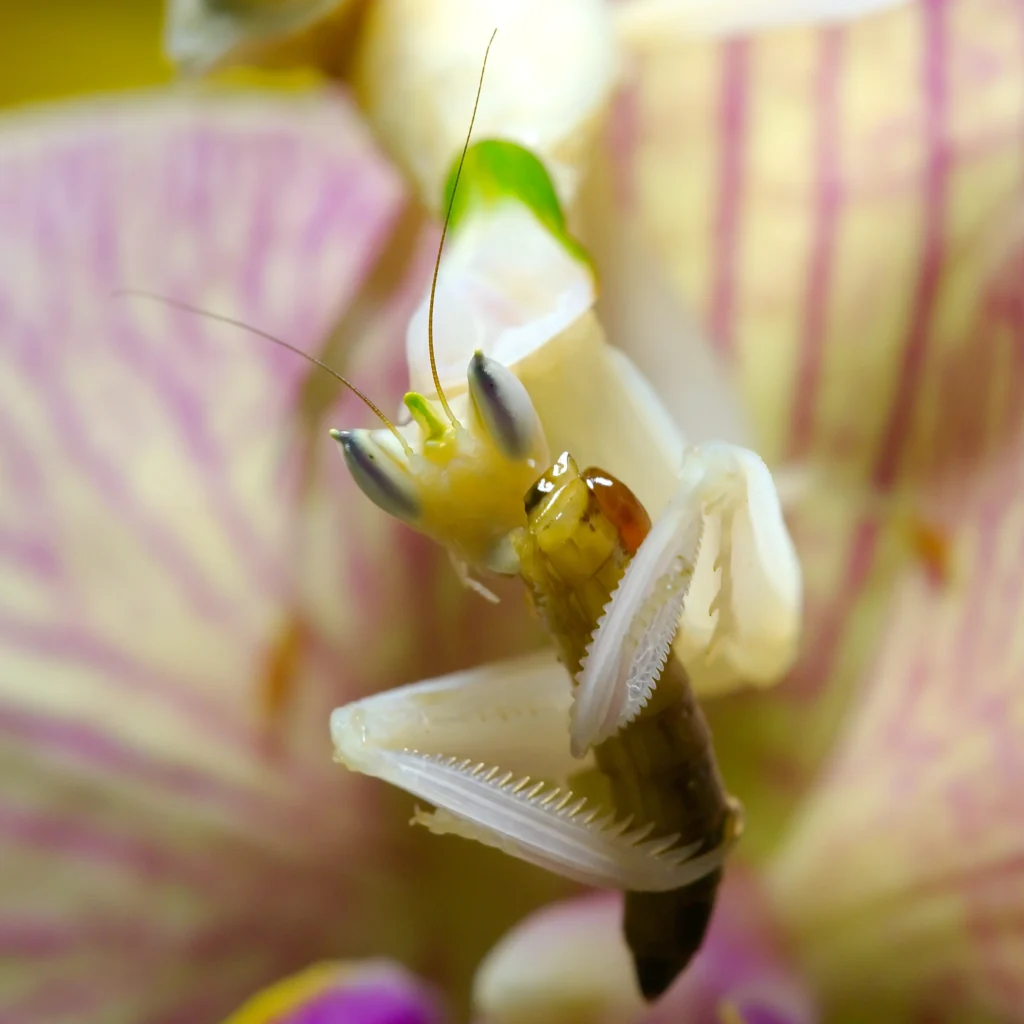
The orchid mantis has been studied closely. A 2013 paper by James O’Hanlon and colleagues in the Journal of Orthoptera Research described it as predominantly white, often with pink or yellow hues. Juveniles can shift color over days or weeks, and the Natural History Museum of Utah lists white, pink, purple and yellowish green among the tones they can take, but bright blue is not part of the species’ normal range.
So where do the blue photos come from?
- Edited images. Many “blue orchid mantis” or “orchid mantis blue” images are real orchid mantis photos with the hue shifted in an editing app or AI tool. The petal-shaped legs are unmistakably Hymenopus, but the color is not.
- Lighting. Strong blue or violet light in a photo studio can make a white mantis look blue.
- The devil’s flower mantis. Real photos of Idolomantis diabolica with its forelegs raised show genuine blue and purple. When these are mislabeled, they become “blue orchid praying mantis” posts.
If someone offers a blue orchid mantis for sale, treat it as a red flag. Our guide to orchid mantis colors explains what real color variation looks like.
Meet the Devil’s Flower Mantis (Idolomantis diabolica)
The devil’s flower mantis is the real insect behind most “devil blue” searches. It is the only species in the genus Idolomantis, and it belongs to the family Empusidae. The species was described by Henri de Saussure in 1869.
Where it lives
It is native to East and Central Africa. Google Arts and Culture’s feature on the species describes it in the wilds of Tanzania, and Wikipedia’s flower mantis list gives its range as Central and East Africa.
How big it gets
It is one of the largest mantises in the world and is thought to be the largest that mimics flowers. Wikipedia’s flower mantis table gives females a length of about 13 cm. Care guides aimed at keepers describe adults at around 4 to 5 inches. Either way, it is roughly twice the length of an adult female orchid mantis, which reaches about 6 to 7 cm.
The blue forelegs and threat display
At rest, the devil’s flower mantis is mostly green and brown, with twisted, leaf-like flaps on its body and legs. Its raptorial forelegs are broad and flattened. When threatened, it rears up, turns to face the threat and spreads those forelegs to show bright patches of white, red, blue and purple. It may also open its wings. Google Arts and Culture’s feature suggests the display exaggerates its size to scare off predators.
This display is what turns up in “devil blue orchid mantis” photos. The blue is real, but it belongs to a different species.
Lifespan
Wikipedia states that the lifespan of I. diabolica varies with habitat but is typically about 12 months.
Diet
Keepers feed it mainly flying insects. Some care sources, such as Keeping Insects, go further and recommend flies only, while others list moths, crickets and grasshoppers in its wild diet. What sources agree on is that flying prey forms the core of its diet in captivity.
Why it is not an orchid mantis relative
It is tempting to assume that two flower-mimicking mantises must be close cousins. They are not. The orchid mantis belongs to Hymenopodidae, while the devil’s flower mantis belongs to Empusidae, the same family as the conehead mantises and the wandering violin mantis. Wikipedia’s overview of flower mantises notes that the group does not share a single common ancestor. In other words, looking like a flower evolved separately in different branches of the mantis family tree.
That matters for keepers too. Care advice for one species does not automatically transfer to the other. The devil’s flower mantis has its own temperature, space and feeding needs, described below.
Devil’s Flower Mantis vs Orchid Mantis
| Feature | Orchid mantis | Devil’s flower mantis |
|---|---|---|
| Scientific name | Hymenopus coronatus | Idolomantis diabolica |
| Family | Hymenopodidae | Empusidae |
| Native range | Southeast Asia | East and Central Africa |
| Adult female size | About 6 to 7 cm | Roughly 10 to 13 cm |
| Main colors | White, pink, yellow | Green and brown body; blue, purple, red and white on forelegs |
| Flower mimicry | Petal-shaped lobes on four walking legs | Leaf-like flaps; colorful forelegs used in a threat display |
| Signature behavior | Sits still and lures pollinators | Rears up and spreads forelegs when threatened |
| Typical lifespan | Females about 8 to 9 months in captivity | About 12 months |
| Keeper difficulty | Intermediate | Advanced |
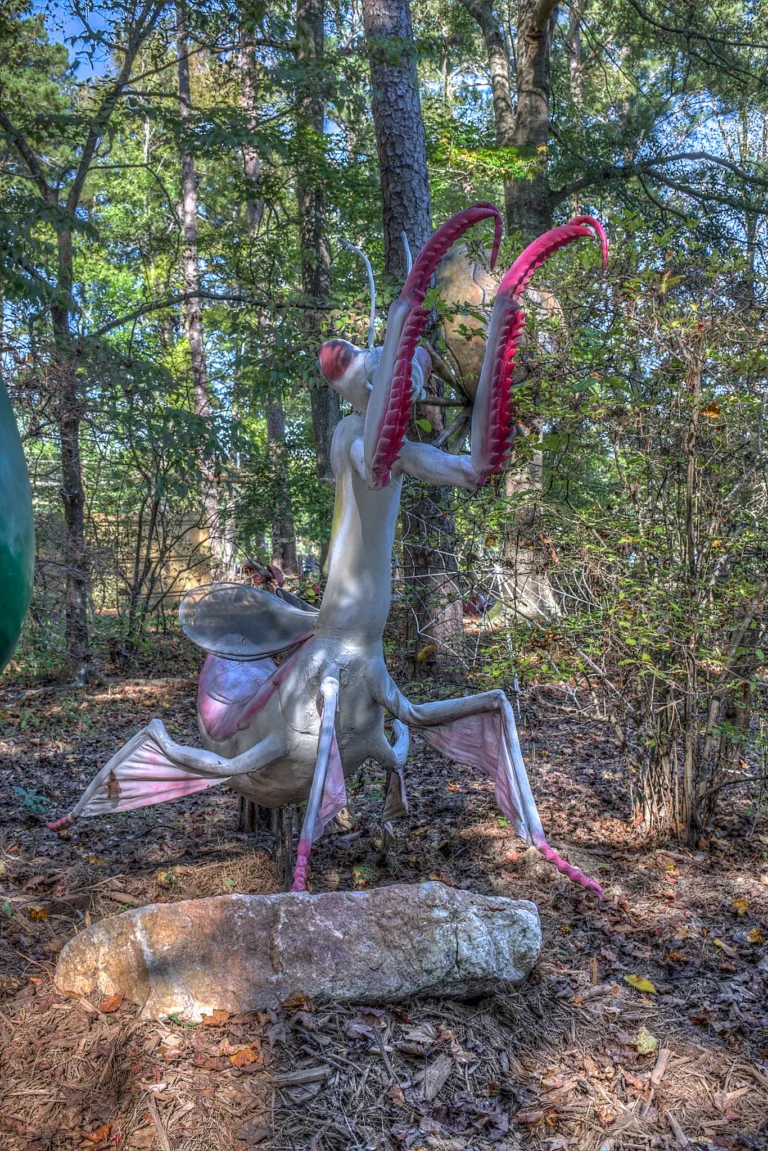
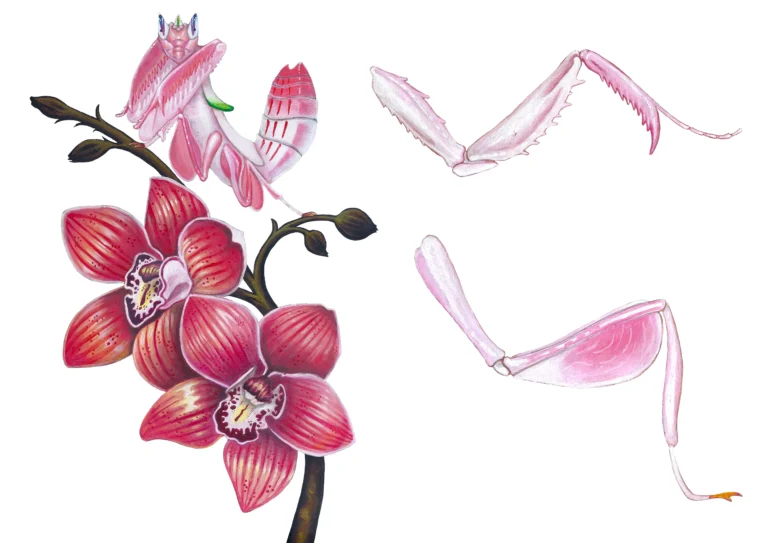
The quickest way to tell them apart in a photo: look at the four walking legs. Wide, rounded, petal-like lobes mean orchid mantis. Long, thin walking legs with a large, colorful pair of forelegs held up front mean devil’s flower mantis.
Ghost Mantis, Devil’s Flower Mantis and Orchid Mantis
Many keepers search for these three together, because they are three of the most famous exotic mantises in the hobby. They are often listed in the same breeder catalogs and recommended at different stages of experience.
| Ghost mantis | Orchid mantis | Devil’s flower mantis | |
|---|---|---|---|
| Scientific name | Phyllocrania paradoxa | Hymenopus coronatus | Idolomantis diabolica |
| Looks like | A dry, curled dead leaf | A white or pink flower | A twisted leaf with colorful “flower” forelegs |
| Origin | Sub-Saharan Africa and Madagascar | Southeast Asia | East and Central Africa |
| Adult size | About 4.5 to 6 cm | Females 6 to 7 cm, males 2.5 to 3 cm | Roughly 10 to 13 cm |
| Typical experience level | Beginner to intermediate | Intermediate | Advanced |
The ghost mantis is generally the easiest of the three; Dubia Roaches’ care sheet describes it as an intermediate pet with a total lifespan of about 7 to 12 months, and some keepers find it forgiving enough for a first mantis. The orchid mantis needs more careful humidity and ventilation. The devil’s flower mantis is usually seen as the most demanding. If you are deciding between the first two, see orchid mantis vs ghost mantis.
Can You Keep a Devil’s Flower Mantis?
Yes, experienced keepers do, but it is not a species to start with. Care sources describe a few demands that set it apart:
- Heat. UK supplier Bug Pets recommends an especially warm environment of around 30°C (86°F).
- Space. Keeping Insects suggests at least 40 cm of height and 30 cm of width for an adult, more than most mantises need.
- Flying prey. Fruit flies for young nymphs, then larger flies and moths.
- Low stress. Care guides note that the species can be stressed by handling and by activity near its enclosure.
- Molting space. Like all mantises, it needs clear height to hang and molt safely. Large species are especially vulnerable to bad molts.
Before buying any exotic mantis, check the law where you live. In the United States, USDA APHIS advises contacting its Plant Protection and Quarantine program before buying any land-dwelling invertebrate, since many non-native species need a permit. See can you own an orchid mantis? for what to ask.
“Blue Orchid Mantis for Sale”: What You Are Really Buying
Searches for a blue orchid mantis for sale usually lead to one of three things:
- A devil’s flower mantis listed under a catchy name. The animal is real, but you should be told its scientific name and how demanding it is to keep. In the UK, Bug Pets listed nymphs (L2 to L5) at £32.95, so prices vary by country and stage.
- An ordinary orchid mantis with an edited photo. The animal will arrive white or pink.
- A scam. Some listings use AI images of impossible blue mantises and never ship anything.
The rule is the same as for any exotic pet: ask for the Latin name, real photos of the actual animal, and the seller’s location. A trustworthy seller will provide all three. Our guide on where to buy an orchid mantis includes a full checklist.
Photographing an Orchid Mantis Without Turning It Blue
Some “blue orchid mantis” photos are honest mistakes made by owners. A white insect is very sensitive to the color of the light around it, and phone cameras often guess the white balance wrong. A few habits help:
- Use daylight or a neutral white light. Avoid colored LED strips and blue aquarium lights.
- Set white balance manually if your camera allows it, or tap on a neutral white or grey surface before shooting.
- Avoid heavy filters. Many social media filters push whites toward blue or teal.
- Include a reference. A leaf or a white card in the frame shows viewers what true white looks like.
A white or pink orchid mantis photographed this way will show its real color, and you will avoid adding to the blue orchid mantis myth.
Other Blue and Purple Mantises
A few other mantises show blue or purple tones, which adds to the confusion:
- Juvenile orchid mantises can take on a faint purple or lilac tint during color shifts, according to the Natural History Museum of Utah. This is subtle, not the vivid blue of edited images.
- Some Creobroter and Pseudocreobotra species have colorful wing patterns that can include blue or violet tones when opened.
- AI-generated “flower mantises,” such as the viral lotus and celestial mantis, often add glowing blue. These are not real; see lotus mantis: real or fake?
Related Guides
If you want to go deeper, these guides pick up where this page leaves off:
- Flower mantis species: every major flower-mimicking mantis compared.
- Orchid mantis colors: white, pink, yellow and why they change.
- Orchid mantis vs ghost mantis: two popular species compared.
- Lotus mantis: real or fake?: the viral AI mantis fact-checked.
Frequently Asked Questions
Is the devil blue orchid mantis real?
Not as a single species. The name blends two real insects: the orchid mantis, which is white to pink, and the devil’s flower mantis, which has blue and purple forelegs.
What is Idolomantis diabolica?
Idolomantis diabolica is the devil’s flower mantis, a large African mantis in the family Empusidae. It is famous for spreading colorful forelegs in a threat display.
Do orchid mantises come in blue?
No. Orchid mantises are white with pink or yellow hues and may shift slightly in tone as juveniles. Bright blue orchid mantis photos are edited or show another species.
Is the devil’s flower mantis bigger than the orchid mantis?
Yes. Adult females are roughly twice as long as adult female orchid mantises.
Is the devil’s flower mantis a good beginner pet?
No. It needs high warmth, a large enclosure and a diet focused on flying insects, and it is sensitive to stress. Most keepers start with an easier species such as the ghost mantis.
Why is it called the devil’s flower mantis?
The scientific name diabolica means “devilish,” and the common name follows it. The name suits the species’ menacing threat display, in which it rears up and spreads its spiked, colorful forelegs. The “flower” part refers to the bright, petal-like patches on those forelegs.
Where does the devil’s flower mantis come from?
It is native to East and Central Africa, including Tanzania.
Sources
- Wikipedia, Idolomantis: https://en.wikipedia.org/wiki/Idolomantis
- Wikipedia, Flower mantis (species table): https://en.wikipedia-on-ipfs.org/wiki/Flower_mantis
- Encyclopedia of Life, Giant Devil’s Flower Mantis: https://media.eol.org/pages/8103476/articles
- Earth.com, Devil’s flower mantis: https://www.earth.com/animal-encyclopedia/arthropoda/Empusidae/idolomantis-diabolica/en/
- Google Arts and Culture, Giant Devil’s Flower Mantis: https://artsandculture.google.com/story/JgUh_J4OsP4L2w
- Keeping Insects, Devil’s flower mantis: https://www.keepinginsects.com/praying-mantis/species/devils-flower-mantis/
- Bug Pets UK, Devil’s Flower Mantis: https://bugpets.co.uk/devils-flower-mantis-idolomantis-diabolica/
- Beyond the Treat, Idolomantis diabolica care sheet: https://beyondthetreat.com/idolomantis-diabolica
- O’Hanlon, J.C., Li, D. and Norma-Rashid, Y. (2013). Coloration and morphology of the orchid mantis. https://hdl.handle.net/1959.11/27641
- Natural History Museum of Utah: https://nhmu.utah.edu/articles/orchid-mantis-breathtakingly-beautiful-deceptively-deadly
- Dubia Roaches, Ghost mantis care sheet: https://dubiaroaches.com/blogs/invert-care/ghost-mantis-care-sheet
- Dimensions.com, Ghost Mantis: https://www.dimensions.com/element/ghost-mantis-phyllocrania-paradoxa
- USDA APHIS, Invertebrate Pets: https://www.aphis.usda.gov/organism-soil-imports/invertebrate-pets