Flower Mantis: The Praying Mantises That Look Like Flowers
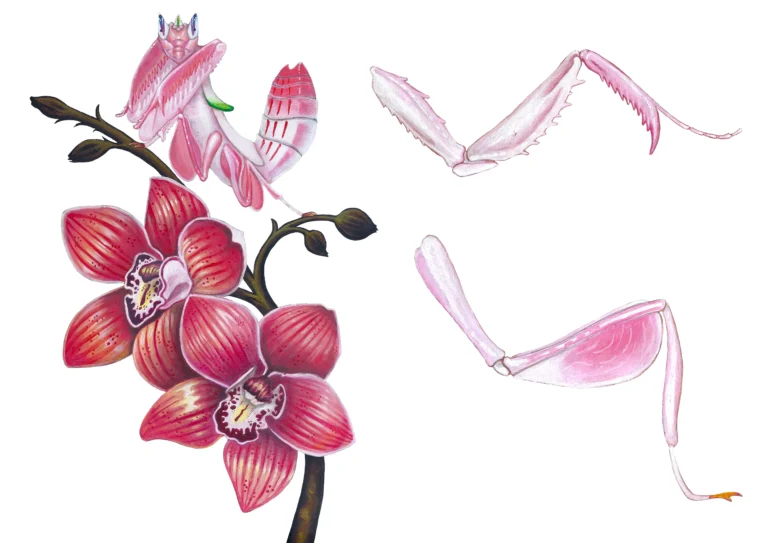
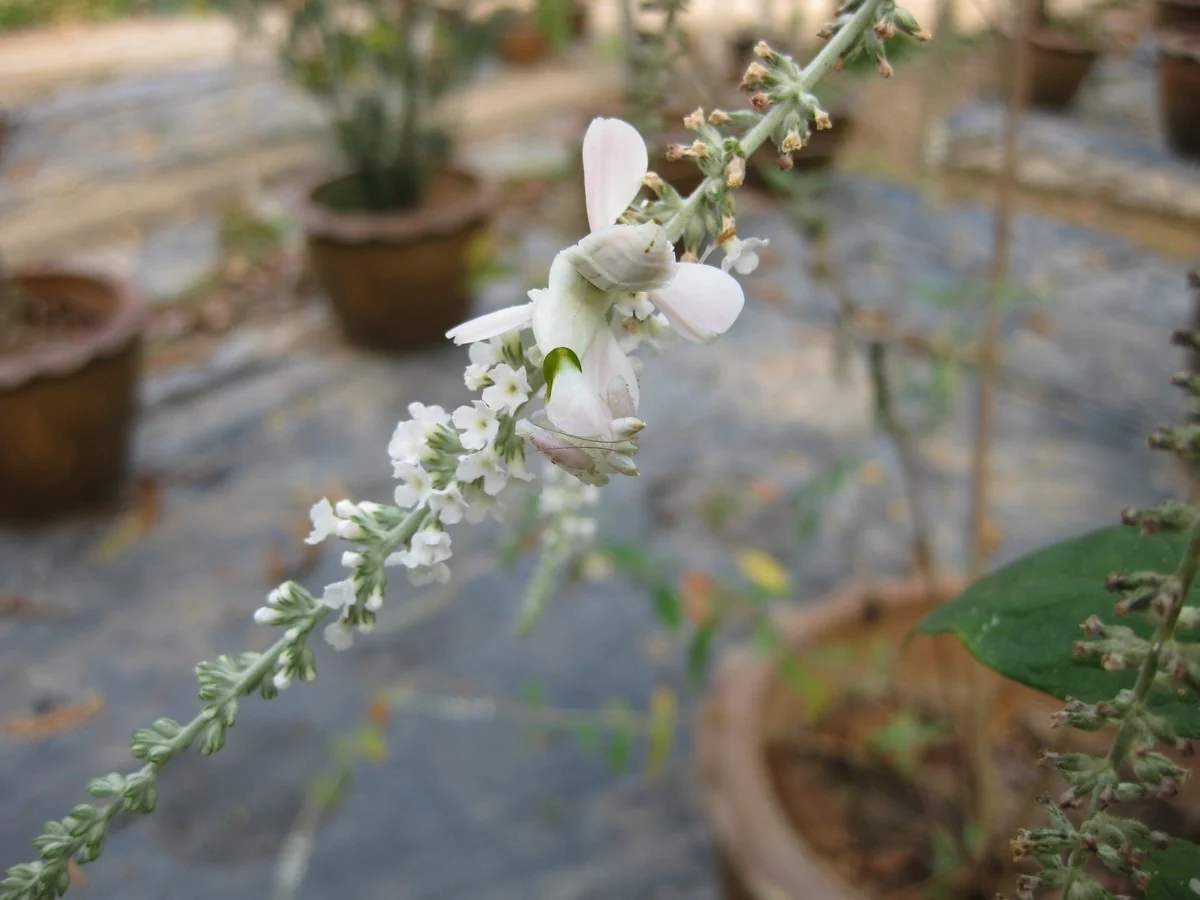
A flower mantis is any praying mantis whose colors and shape resemble a flower. They are some of the most striking insects on earth, and some of the most popular in the pet hobby. Their beauty has a purpose: many flower mantises use it to attract the insects they eat, a strategy biologists call aggressive mimicry.
“Flower mantis” is a common name, not a single scientific group. Most of these species belong to the family Hymenopodidae, but a few of the best-known ones, such as the devil’s flower mantis, sit in a different family, Empusidae. Wikipedia’s overview notes that the flower mantises do not share one common ancestor, which means flower mimicry evolved more than once.
This guide introduces the main species, explains how they hunt, and helps you tell them apart.
What Makes a Praying Mantis a “Flower Mantis”?
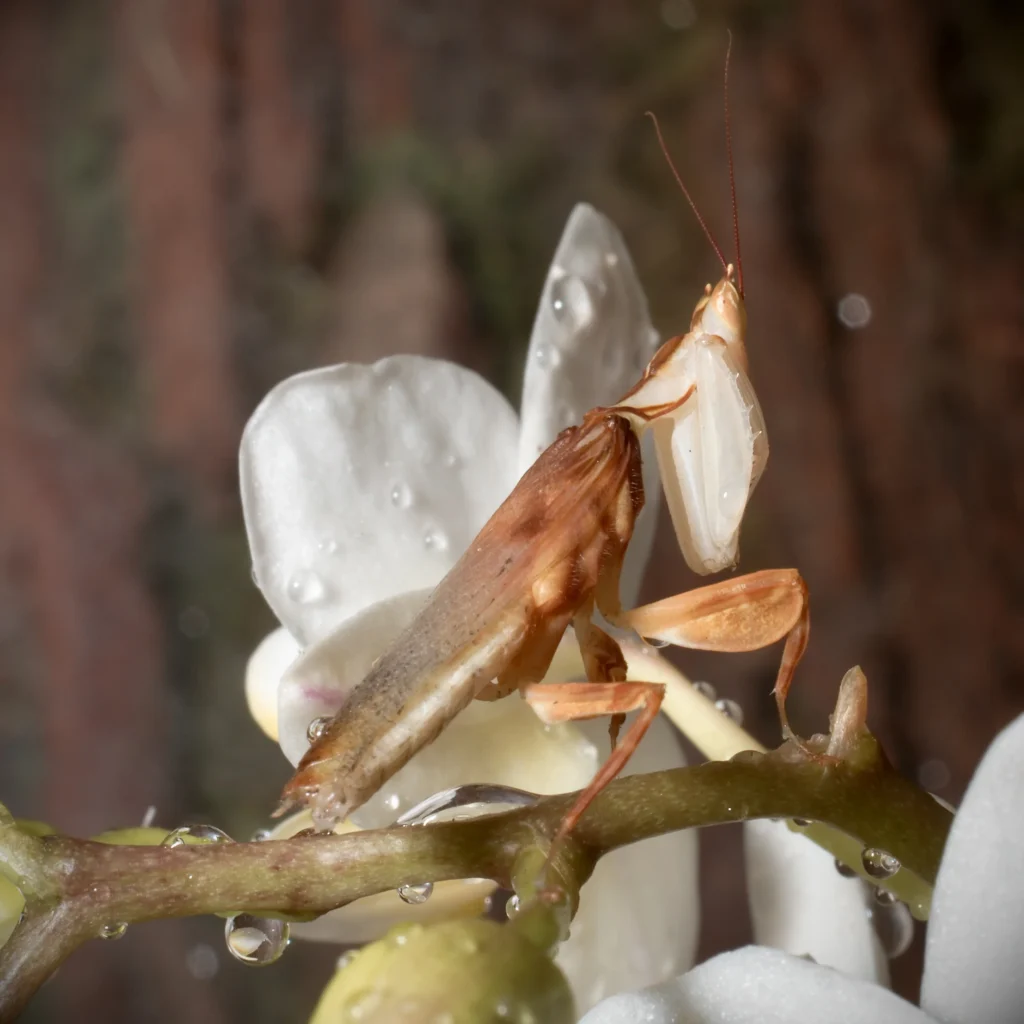
All mantises are ambush predators. A flower mantis adds a twist: instead of only hiding, it presents itself as something prey wants to visit.
Typical flower mantis features include:
- Bright, pale or contrasting colors such as white, pink, yellow, cream or green, often with patterns that resemble petals.
- Flattened lobes or flaps on the legs, thorax or abdomen that break up the insect’s outline.
- A sit-and-wait hunting style. The mantis climbs a plant and waits motionless for prey to come within reach.
- Startle displays. Many species open their wings to flash eyespots or bright hindwings when threatened.
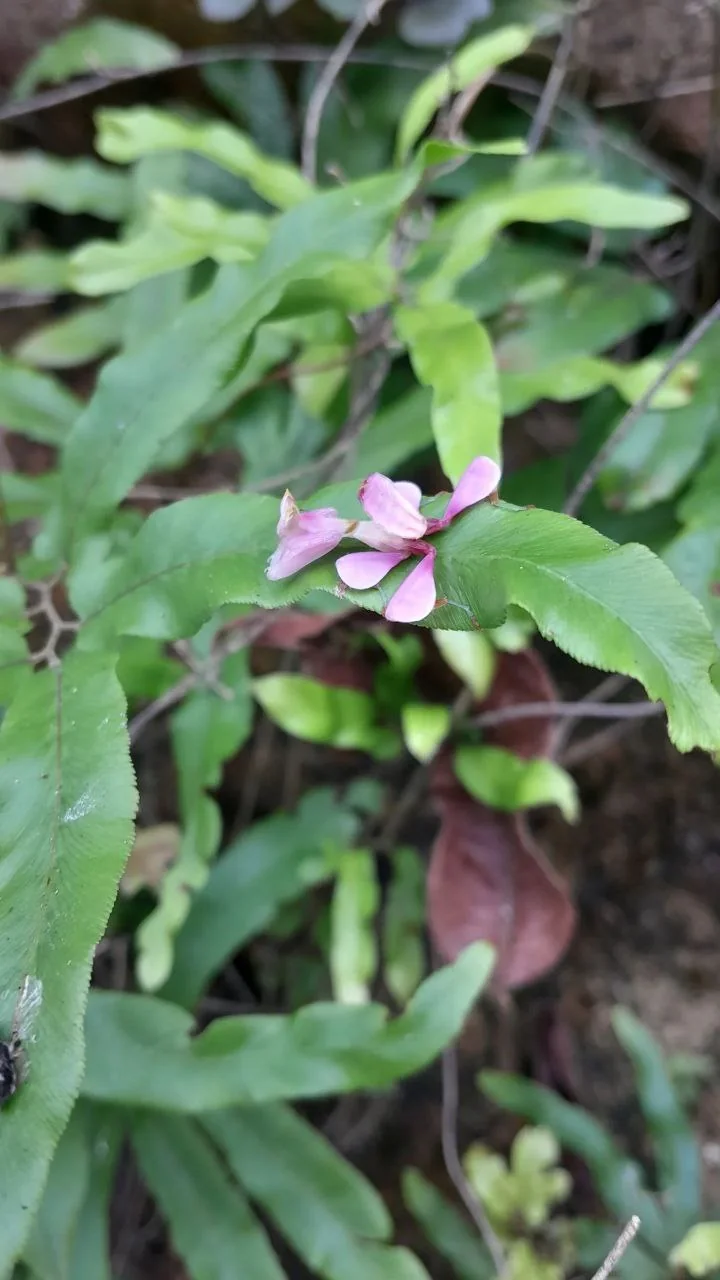
The hunting style is easy to picture. A praying mantis on a flower, or one that is itself shaped like a flower, waits for a bee, fly or butterfly to land. When the prey is close enough, the spined forelegs shoot out and grab it.
How Flower Mimicry Works
For a long time, the idea that a praying mantis could look like a flower to lure prey was a naturalist’s story rather than a tested fact. The orchid mantis changed that.
In 2014, James O’Hanlon and colleagues published field results in The American Naturalist. They found that orchid mantises attracted wild pollinators at a higher rate than the real flowers around them. Color modeling showed that, through a pollinator’s eyes, the mantis’s color sat inside the range of local flowers.
Later work showed the orchid mantis does not copy one specific flower. Science Friday’s summary of the research quotes the conclusion that there was “no compelling evidence” of a single floral model. The mantis instead seems to exploit the general preferences pollinators already have for flower-like shapes and colors.
Not every flower mantis has been studied this closely. For many species, the flower resemblance may help with hunting, with hiding from predators, or both. Our orchid mantis camouflage guide explains the research in more detail.
Where Flower Mantises Fit in the Mantis Family Tree
There are more than 2,400 known species of praying mantis worldwide, according to the Natural History Museum of Utah. Only a small share of them mimic flowers. The rest imitate sticks, bark, grass, green leaves or dead leaves, and some live on the ground.
Looks can be misleading when it comes to relationships. In a video from the American Museum of Natural History, mantis researchers point out that the ghost mantis, which resembles a dry, curled leaf, is more closely related to the orchid mantis than to other dead-leaf mantises that look almost identical to it. Similar camouflage evolved separately in different branches of the mantis tree.
For a reader, the practical point is simple. A flower-like appearance tells you how a mantis hunts or hides, not which family it belongs to. That is why scientists rely on anatomy and DNA, not color, to classify these insects.
Flower Mantis Species at a Glance
The table below draws on Wikipedia’s flower mantis species list and supporting sources. Sizes are approximate adult lengths.
| Species | Common names | Native range | What stands out |
|---|---|---|---|
| Hymenopus coronatus | Orchid mantis, walking flower mantis | Southeast Asia | White to pink body with petal-like leg lobes; females about 6 to 7 cm |
| Idolomantis diabolica | Devil’s flower mantis, giant devil’s flower mantis | Central and East Africa | One of the largest flower-mimicking mantises; bright threat display |
| Pseudocreobotra wahlbergii | Spiny flower mantis, bulls-eye mantis, “#9 mantis” | Southern and East Africa | Spiny body; wings show a spiral eyespot; color varies |
| Pseudocreobotra ocellata | Spiny flower mantis, African ocellated mantis | West, Central and Southern Africa | Similar to P. wahlbergii |
| Creobroter gemmatus and relatives | Jeweled flower mantis, Indian flower mantis | South and Southeast Asia | Strong fliers with eyespots on the forewings |
| Blepharopsis mendica | Small devil’s flower mantis, thistle mantis, Egyptian flower mantis | North Africa, Canary Islands | Turns head and thorax to one side in a threat display |
| Chloroharpax modesta | Nigerian flower mantis | West Africa | Females have eyespots on the wings; takes prey larger than itself |
| Pseudoharpax virescens | Gambian spotted-eye flower mantis | East, Central and West Africa | Females have eyespots on the abdomen |
| Parymenopus davisoni | Yellow flower mantis, Davison’s mantis | Southeast Asia | Slender and yellow; females have three dark wing spots |
| Theopropus elegans | Banded flower mantis | Southeast Asia | White band across the forewings |
| Acromantis formosana | Taiwan flower mantis | Taiwan | Spiny brown nymphs that blend with dead leaves |
| Gongylus gongylodes | Wandering violin mantis, Indian rose mantis | South Asia | Very slender, up to about 11 cm |
The Orchid Mantis: The Best-Known Flower Mantis
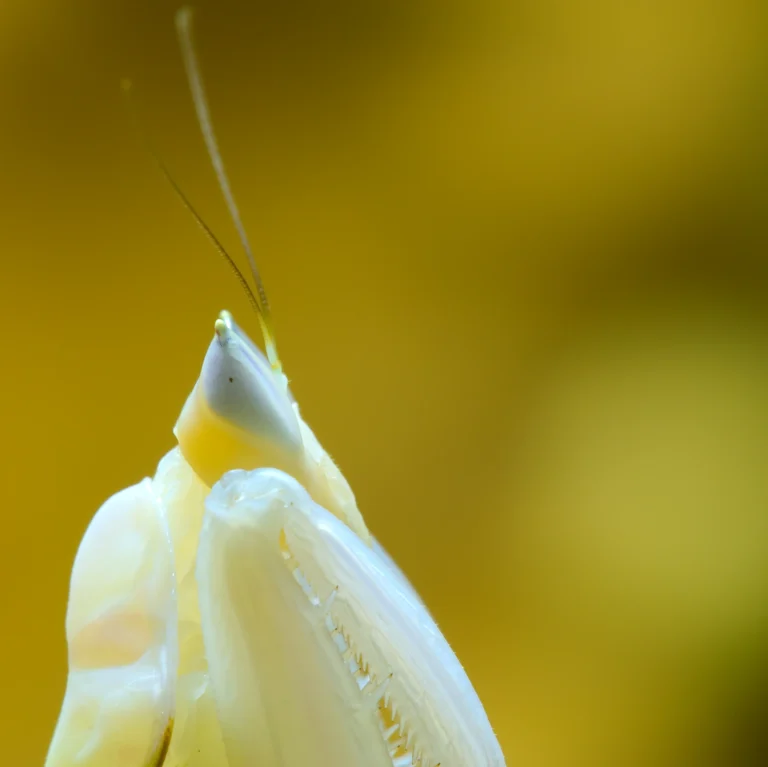
If one species defines the flower mantis, it is the orchid mantis. Its four walking legs carry broad, petal-shaped lobes, and its white to pink body resembles a small blossom, especially in young females. It lives in the forests of Southeast Asia, where it has been recorded hunting on the flowers of the Straits rhododendron (Melastoma polyanthum).
It also shows one of the most extreme size gaps between the sexes of any mantis. Adult females reach about 6 to 7 cm, while males stay around 2.5 to 3 cm. Our main orchid mantis guide covers the species in full, and male vs female orchid mantis explains the difference.
Keepers sometimes call it the “spiny orchid mantis” by mistake, mixing it up with the spiny flower mantis below. They are different species from different continents.
Spiny Flower Mantis (Pseudocreobotra)
The spiny flower mantis is the African favorite. It is small, about 1 to 2 inches long as an adult according to Mental Floss, and its abdomen is covered in short spines that make it look like part of a flower head.
Its color varies widely. Individuals can be cream, green, yellow or pink-tinged, which is why you will sometimes see a “pink spiny flower mantis” for sale. When threatened, it opens its wings to reveal a large spiral eyespot. Hobbyists call it the “#9 mantis” because the pattern can look like the number 9.
Spiny flower mantises are often recommended as a step between beginner species and the more demanding orchid mantis, though they still need warmth and flying prey.
Devil’s Flower Mantis (Idolomantis diabolica)
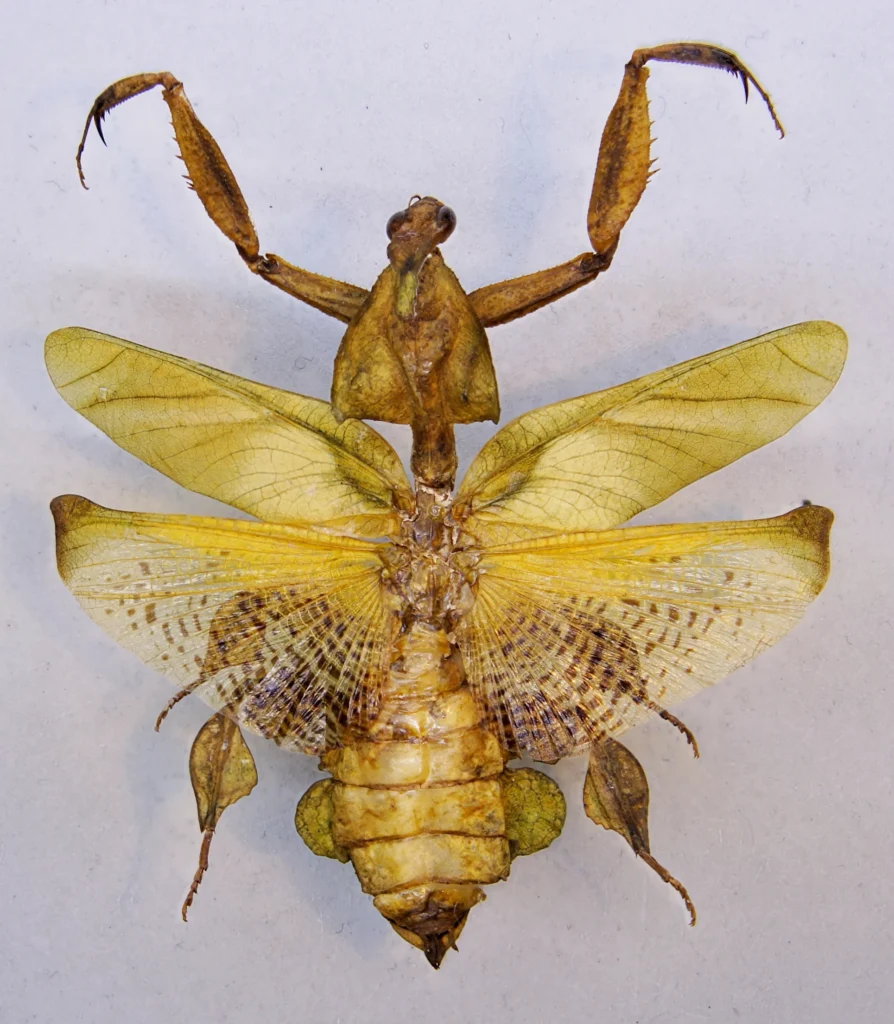
The devil’s flower mantis is a giant among flower mantises. It is the only species in its genus and belongs to the family Empusidae, not Hymenopodidae. It is native to East and Central Africa, including Tanzania.
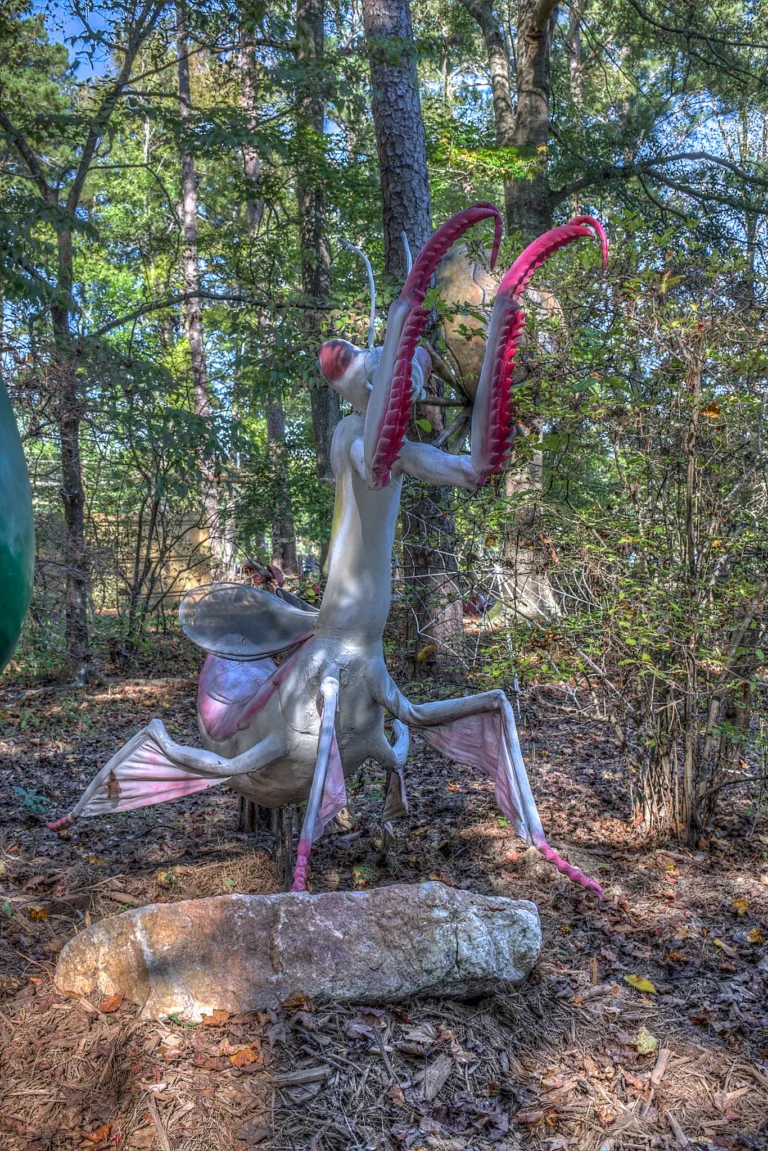
Its raptorial forelegs are broad and boldly colored in white, red, blue and purple. When threatened it rears up and spreads those forelegs and its wings in a dramatic display. Wikipedia describes its lifespan as typically about 12 months, varying with habitat, and care guides describe adults around 4 inches or more.
These blue and purple forelegs are the source of much confusion online. Many photos labeled “blue orchid mantis” or “devil blue orchid mantis” actually show this species. We explain the mix-up in blue orchid mantis.
The devil’s flower mantis is considered a difficult species to keep. Care sources describe it as needing high warmth and a diet focused on flying insects.
Jeweled Flower Mantis (Creobroter)
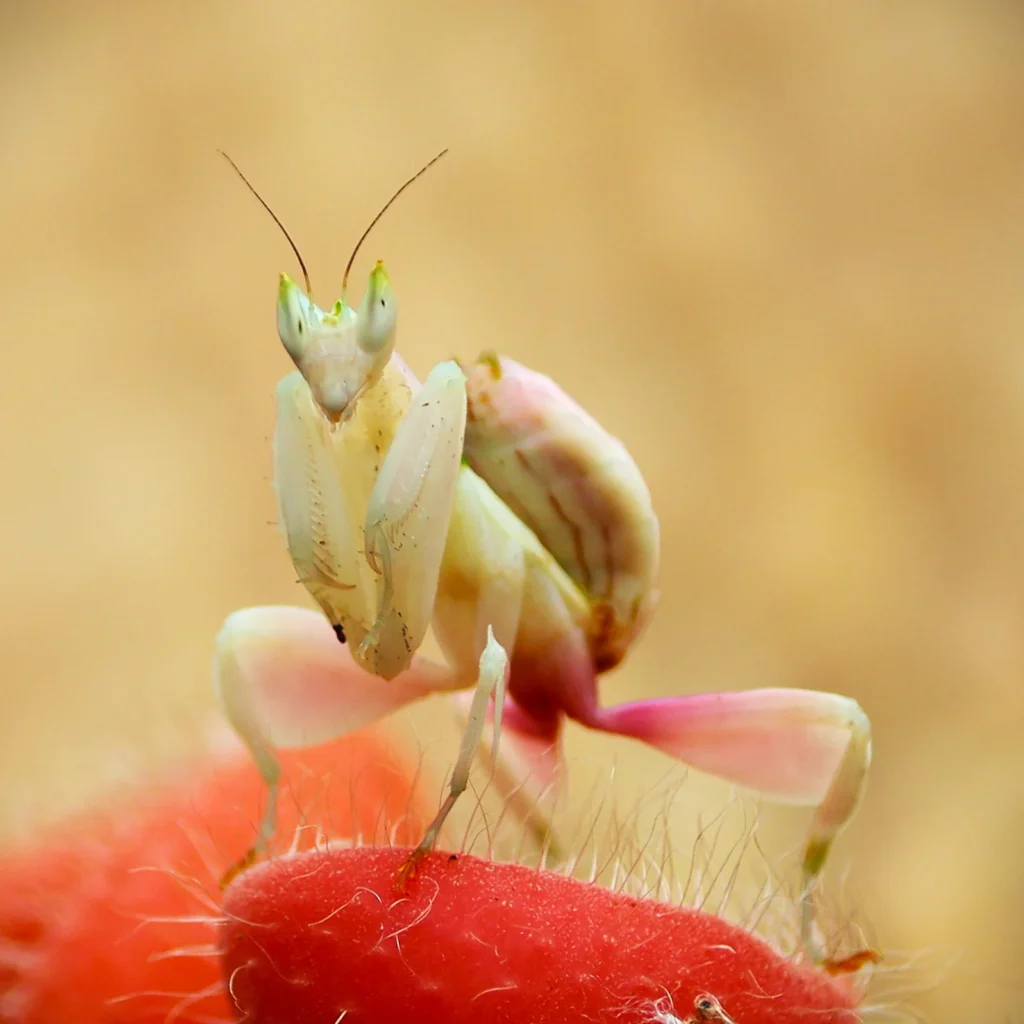
Creobroter is a genus of flower mantises spread across South and Southeast Asia. Adults are strong fliers with long wings, and many carry an eyespot on each forewing that they flash when disturbed.
Wikipedia notes that their flower mimicry is only partial, but they are popular as pets because they are more common and less delicate than the orchid mantis. Some species even resemble ants as young nymphs before they develop flower colors. Common names are inconsistent: at least two different Indian species have been sold as the “Indian flower mantis.”
Other Mantises Often Confused With Flower Mantises
Ghost mantis. The ghost mantis (Phyllocrania paradoxa) is in the same family as the orchid mantis, but it imitates a dead leaf rather than a flower. It is a popular beginner species. We compare the two in orchid mantis vs ghost mantis.
Viral “flower mantises.” Videos of a “lotus mantis,” “celestial mantis,” “cherry blossom mantis” or “sleeping rose mantis” have spread widely since 2025. Fact-checkers found these were made with AI tools, and searches of scientific databases turned up no record of them. A real flower mantis never transforms into a flower on camera. See lotus mantis: real or fake? and celestial and cherry blossom mantis.
Pink Flower Mantises
Pink is a common search because pink flower mantises are so eye-catching. The orchid mantis is the classic example, usually white with pink or yellow tints. Spiny flower mantises can also be pinkish. If you are trying to identify a pink mantis, our pink praying mantis guide gives a step-by-step checklist.
How to Tell Flower Mantis Species Apart
| Feature to check | Orchid mantis | Spiny flower mantis | Devil’s flower mantis | Creobroter |
|---|---|---|---|---|
| Leg shape | Broad petal-like lobes on four walking legs | Thin legs, spiny body | Broad, colorful raptorial forelegs | Thin legs |
| Typical colors | White, pink, yellow | Cream, green, yellow, pink | Green and brown body, colorful forelegs | Cream, green, with markings |
| Wing pattern | Plain | Spiral eyespot | Colorful display | Eyespot on each forewing |
| Origin | Southeast Asia | Africa | East and Central Africa | South and Southeast Asia |
| Relative size | Medium (females 6 to 7 cm) | Small | Large | Small to medium |
Do Flower Mantises Make Good Pets?
Many flower mantises are kept as pets, and Wikipedia notes that several are popular in the hobby. They share some needs:
- Warmth and humidity. Most come from tropical or subtropical regions.
- Ventilation. Damp, still air is a common cause of problems.
- Height for molting. Mantises hang upside down to molt and need clear space below them.
- Flying prey. Many flower mantises are adapted to catch pollinators. The Cincinnati Zoo, for example, notes that its orchid mantises will only eat flying prey.
- Solitary housing. Most flower mantises are kept one per enclosure because they may eat each other.
Difficulty varies. Creobroter and spiny flower mantises are often seen as easier, the orchid mantis as intermediate, and the devil’s flower mantis as advanced. If the orchid mantis is your goal, start with our orchid mantis care sheet and our page on the orchid mantis as a pet.
Always check the law before buying an exotic mantis. In the United States, USDA APHIS advises contacting its Plant Protection and Quarantine program before buying any land-dwelling invertebrate, because many non-native species need a permit. Read more in can you own an orchid mantis?
Related Guides
If you want to go deeper, these guides pick up where this page leaves off:
- Orchid mantis: the complete guide: everything about the species in one place.
- Blue orchid mantis: the devil’s flower mantis behind the blue photos.
- Orchid mantis vs ghost mantis: two popular species compared.
- Orchid mantis camouflage: the science of its flower disguise.
Frequently Asked Questions
What is a flower mantis?
A flower mantis is a praying mantis that resembles a flower in color or shape. Many use this resemblance to attract pollinating insects as prey, or to hide among blossoms.
What is the most famous praying mantis that looks like a flower?
The orchid mantis (Hymenopus coronatus) is the best-known example. Its petal-shaped leg lobes and white to pink body make it look like a blossom.
Are flower mantises a single family?
No. Most flower mantises belong to the family Hymenopodidae, but some, including the devil’s flower mantis and the wandering violin mantis, belong to Empusidae.
Are flower mantises dangerous?
No. They have no venom and cannot seriously hurt people. Larger species may pinch with their forelegs.
Is the lotus mantis a real flower mantis?
No. The “lotus mantis” seen in viral videos was created with AI tools, according to fact-checkers. No such species has been documented by entomologists.
Where do flower mantises live?
Different species live in Africa, South Asia, Southeast Asia and Taiwan, mostly in warm, tropical or subtropical habitats.
Sources
- Wikipedia, Flower mantis (species table): https://en.wikipedia-on-ipfs.org/wiki/Flower_mantis
- Wikipedia, Hymenopodidae: https://en.Wikipedia.com/wiki/Hymenopodidae
- Wikipedia, Creobroter: https://www.Wikipedia.org/wiki/Creobroter
- Wikipedia, Idolomantis: https://en.wikipedia.org/wiki/Idolomantis
- Wikipedia, Chloroharpax: https://www.wikipedia.com/wiki/Chloroharpax
- O’Hanlon, J.C. et al. (2014). Pollinator deception in the orchid mantis. The American Naturalist. https://www.journals.uchicago.edu/doi/reader/10.1086/673858
- Science Friday, “Unraveling the Orchid Mantis Mystery”: https://www.sciencefriday.com/articles/unraveling-the-orchid-mantis-mystery/
- Natural History Museum of Utah: https://nhmu.utah.edu/articles/orchid-mantis-breathtakingly-beautiful-deceptively-deadly
- Mental Floss, “6 Spectacular Praying Mantises”: https://www.mentalfloss.com/animals/insects/6-spectacular-praying-mantises
- Google Arts and Culture, Giant Devil’s Flower Mantis: https://artsandculture.google.com/story/JgUh_J4OsP4L2w
- American Museum of Natural History, “How Mantises Became Nature’s Strangest Assassins”: https://www.amnh.org/explore/videos/biodiversity/mantises-predators
- Cincinnati Zoo and Botanical Garden: https://cincinnatizoo.org/?p=252752
- Lead Stories, “Sleeping Rose Mantis Is NOT Real Insect”: https://leadstories.com/hoax-alert/2025/04/fact-check-sleeping-rose-mantis-is-not-real-insect.html
- USDA APHIS, Invertebrate Pets: https://www.aphis.usda.gov/organism-soil-imports/invertebrate-pets