
Pink Praying Mantis: Which Mantis Is Pink, and Why?
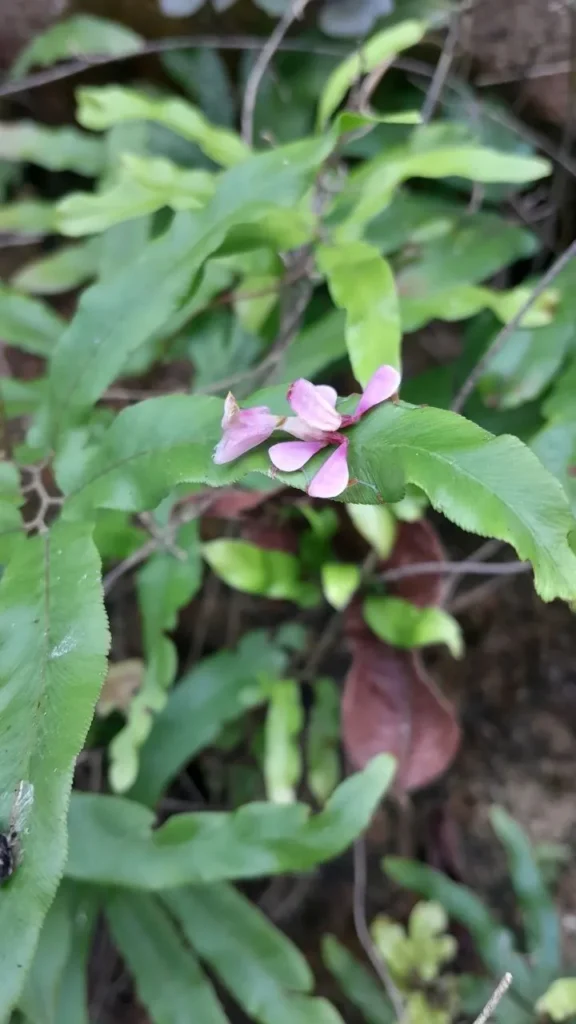
A pink praying mantis looks almost too pretty to be real, which is why photos of one tend to spread fast. Most of the time, the pink mantis in those photos is the orchid mantis (Hymenopus coronatus), a Southeast Asian species that mimics flowers. But it is not the only one. A few other mantises can show pink tones, and the occasional backyard mantis in North America turns up pink as well.
This guide explains which pink mantis you are most likely looking at, how to tell them apart, and what causes pink color in insects that are usually green or brown. It also flags the viral “pink mantis” images that are not real animals at all.
The Short Answer
| If the pink mantis… | It is most likely… |
|---|---|
| Has wide, petal-like lobes on its four walking legs and a white-to-pink body | An orchid mantis (Hymenopus coronatus) |
| Is small, spiny, cream or pink-green, with a spiral “eye” pattern on its wings | A spiny flower mantis (Pseudocreobotra species) |
| Looks like an ordinary slim mantis but happens to be pink, found in the western US | A rare color form of a native species, such as the California mantis |
| Looks like a flower that unfolds into an insect, in a polished video | Probably an AI-generated clip, not a real species |
The Orchid Mantis: The Classic Pink Praying Mantis
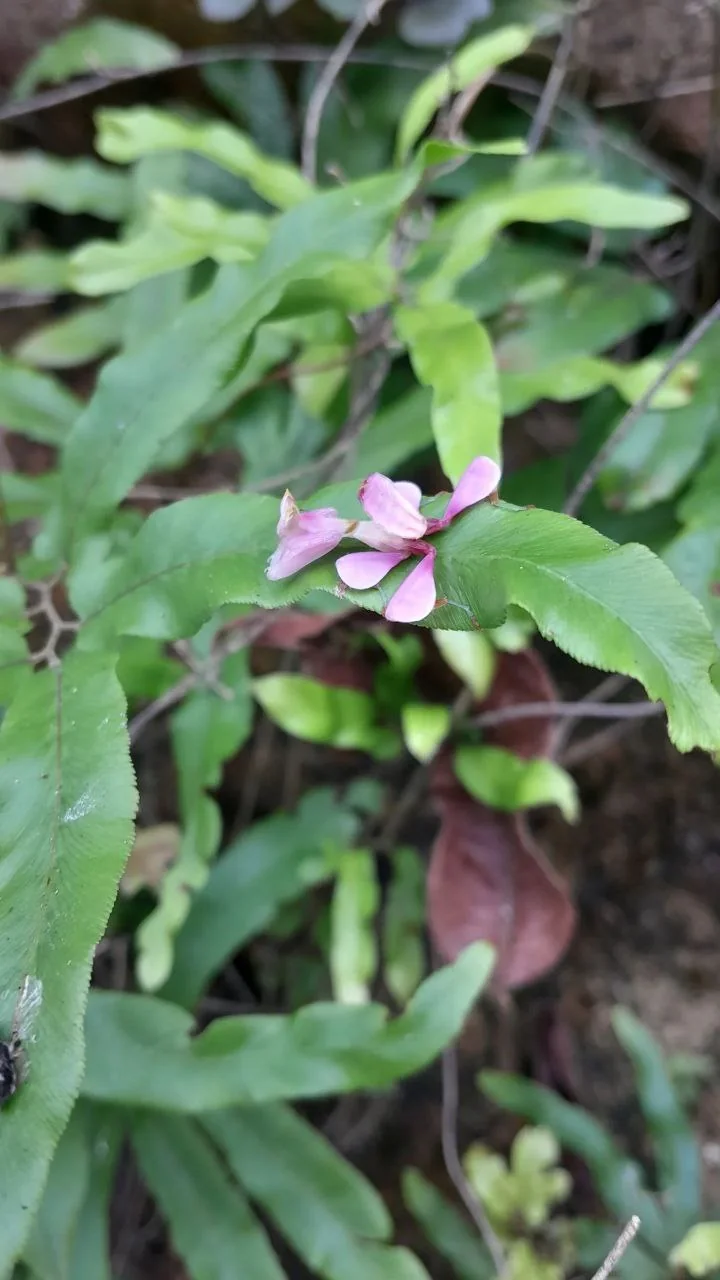
When people search for a pink mantis, the orchid mantis is usually the insect they have in mind. It lives in the tropical forests of Southeast Asia, from Malaysia and Indonesia to Thailand and Vietnam, and it is one of the most requested species in the pet insect hobby.
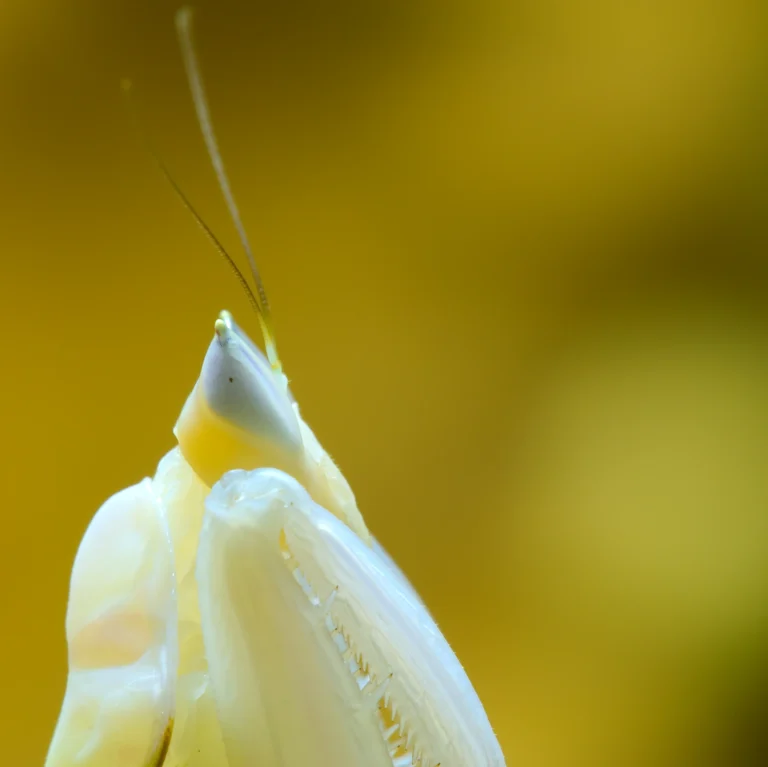
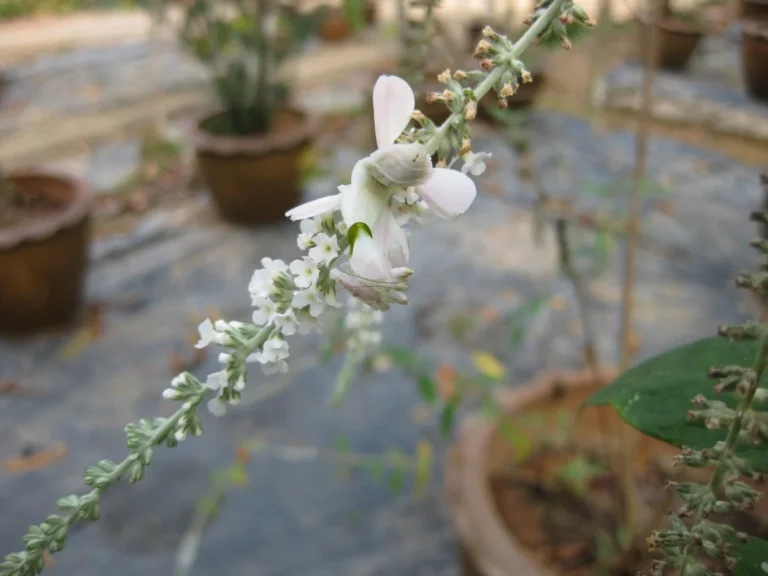
A 2013 study by James O’Hanlon and colleagues in the Journal of Orthoptera Research described the species as predominantly white, often with pink or yellow hues. So while “pink orchid mantis” is a common name, a typical orchid mantis is better described as white with a pink blush. The amount of pink varies a great deal between individuals:
- Some are almost pure white with faint pink edges on the leg lobes.
- Some have a soft, even pink across the body.
- Some show yellow or cream tones instead of pink.
- Adult males are a different story: they are small and mostly greenish brown, not pink.
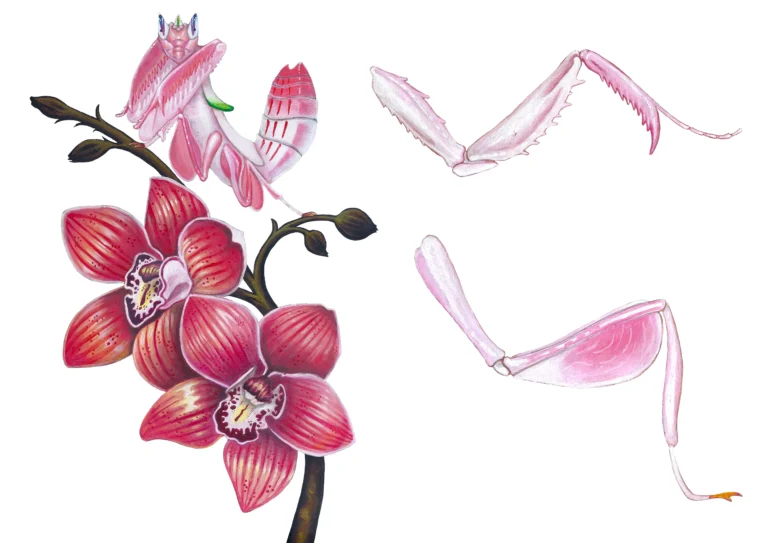
What makes the orchid mantis instantly recognizable is shape, not only color. Its four walking legs carry broad, flat lobes that look like flower petals. No other common pink mantis has lobes that wide.
The pink and white coloring is not decoration. Field research published in The American Naturalist in 2014 found that, to the eyes of pollinating insects, the orchid mantis’s color could not be told apart from local flowers, and that the mantis attracted pollinators at a higher rate than real flowers did. The pink orchid praying mantis is, in effect, a flower that bites. For the full story, see our guide to orchid mantis camouflage.
What a pollinator sees
Pink is how the orchid mantis looks to us, not necessarily to its prey. Bees and many other pollinators see ultraviolet light, which people cannot. The 2013 study measured the mantis’s color with this in mind and found that orchid mantises mainly reflect what the authors call UV-absorbing white. Visual models of bee vision suggested that the variation within one mantis’s body would be hard for a pollinator to tell apart.
In plain terms, the pink blush that makes the mantis so appealing in photos may matter less for hunting than its overall pale, flower-like signal. That helps explain why white orchid mantises catch prey just as well as pink ones, and why breeders cannot select for a “better hunting” shade.
Why some orchid mantises are pinker than others
Young orchid mantises can shift color over days or weeks. The Natural History Museum of Utah notes that the color changes among white, pink, purple and yellowish green, that it is gradual rather than instant, and that it happens while the mantis is young and still growing. Keepers often see a nymph look whiter or pinker after a molt.
That means you cannot pick a “pink” orchid mantis as a baby and be sure it will stay pink. Our orchid mantis colors guide explains the shades, and why some individuals turn brown when something in their care is off.
Baby orchid mantises are not pink at all
Newly hatched orchid mantises are red and black. Insect suppliers describe nymphs emerging in black and red, with those colors fading after the first molt. The pink and white appearance only comes later. We cover each stage in the orchid mantis life cycle guide.
Other Pink Flower Mantises
Several flower mantises can show pink tones, especially in captivity where they are bred for their looks. None of them is as consistently pink as the orchid mantis, but they are often mistaken for it.
Spiny flower mantis
The spiny flower mantis (Pseudocreobotra wahlbergii and its relative P. ocellata) is native to southern, eastern and western Africa. It is a small mantis, roughly 1 to 2 inches long as an adult according to Mental Floss’s profile, covered in short spines on the abdomen. Its color varies: cream, green, yellow and pink-tinged individuals are all seen. When threatened it opens its wings to show a large spiral pattern that looks like a number 9 or an eye.
A pink spiny flower mantis is easy to separate from an orchid mantis. It has no broad petal lobes on its legs, it is spiny rather than smooth, and its wings carry that bold eye pattern.
Other flower mantises
Many species in the flower mantis group use pale, flower-like colors. Some Creobroter species, for example, have cream and pink markings and eyespots on their wings. Our flower mantis guide compares the main species side by side.
Pink Mantises in North America
Pink mantises do sometimes show up in ordinary gardens. In a post from the University of California’s Bug Squad blog, entomology writers shared a photo of a pink California mantis (Stagmomantis californica) found in Davis, California. The California mantis normally comes in green, yellow and brown forms, which is what made the pink one notable.
So if you find a pink praying mantis outside in the United States or Europe, it is not an escaped orchid mantis in most cases. Tropical orchid mantises cannot survive cold winters outdoors. A slim, ordinary-shaped mantis with a pink tint is far more likely to be an unusual color form of a local species.
What causes pink color in insects?
Pink insects that are normally green are often explained by erythrism, a condition where an animal produces more red pigment than usual. The US Fish and Wildlife Service, describing a pink grasshopper found at Aransas National Wildlife Refuge in Texas, said the color comes from overproduction of red pigments and underproduction of dark pigments.
Erythrism is best documented in grasshoppers and katydids. Pink katydids are well known, and some leaf-like katydids from Borneo are pink as a normal trait in females, according to the Insect Asylum’s write-up on pink grasshoppers. Whether every pink praying mantis found in the wild has the same cause has not been studied in detail, so treat erythrism as a likely explanation rather than a confirmed one for mantises.
A pink insect in a green or brown landscape is easy for birds to spot. The same Fish and Wildlife Service post noted that the pink grasshopper’s color is bad news for its survival. That is one reason pink individuals of normally green species are rare: they tend not to last long enough to be seen.
Pink Mantis Photos That Are Not Real
Since 2025, social media has been flooded with videos of pink “flower mantises” that open like blossoms, glow, or sit on lotus flowers in misty mountains. Many of these are generated with AI tools. Fact-checkers have traced clips of the so-called lotus mantis and celestial mantis back to accounts that tag their posts with AI hashtags, and a “sleeping rose mantis” video was debunked by Lead Stories after its creator credited tools such as Midjourney and Kling.
Some clues that a pink praying mantis image is fake:
- The insect transforms into or out of a flower on camera.
- The body has symmetrical petals growing from the back or thorax, which no real mantis has.
- The caption claims extreme rarity, such as “only three sightings in 150 years.”
- The hand holding it has the wrong number of fingers, a common AI error.
- The account’s other posts show impossible animals.
We take a closer look at the most viral ones in lotus mantis: real or fake? and celestial, cherry blossom and rose mantis.
Pink Mantis or Another Pink Insect?
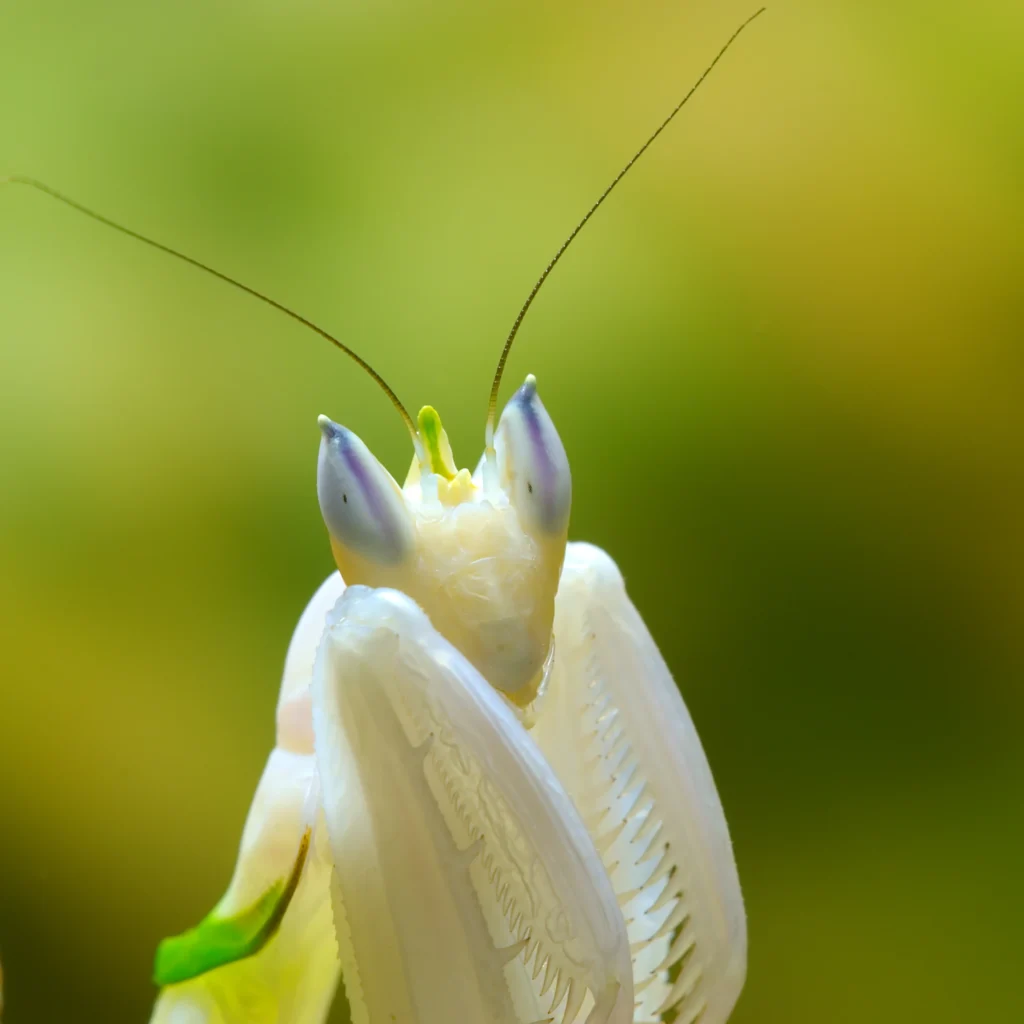
Not every pink insect on a leaf is a mantis. A quick way to check is to look at the front legs. A mantis always has a pair of folded, spined forelegs held in front of the body, and a long, neck-like section (the prothorax) between the head and the wings. Its head is triangular and can swivel to look at you.
Pink katydids and grasshoppers, by contrast, have long jumping hind legs and no grasping forelegs. Pink moths and some pink beetles also turn up in gardens, but neither has the mantis’s raptorial arms. If the insect has those spined forelegs and a mobile triangular head, you are looking at a mantis.
How to Identify a Pink Mantis: A Quick Checklist
Work through these points with a clear photo:
- Look at the four walking legs. Wide, rounded, petal-like lobes mean orchid mantis. Thin legs mean something else.
- Check the texture. A spiny, knobbly abdomen points to a spiny flower mantis.
- Check the wings. A spiral or eye-shaped pattern on the forewings suggests a spiny flower mantis or a Creobroter.
- Think about location. Outdoors in a temperate country, a pink mantis is almost certainly a local species, not a tropical orchid mantis.
- Think about size. An adult female orchid mantis is about 6 to 7 cm long. A spiny flower mantis is smaller. Our orchid mantis size guide has exact figures.
- Check the source. If it is a viral video with no photographer named, check whether the account uses AI tools.
Can You Keep a Pink Praying Mantis as a Pet?
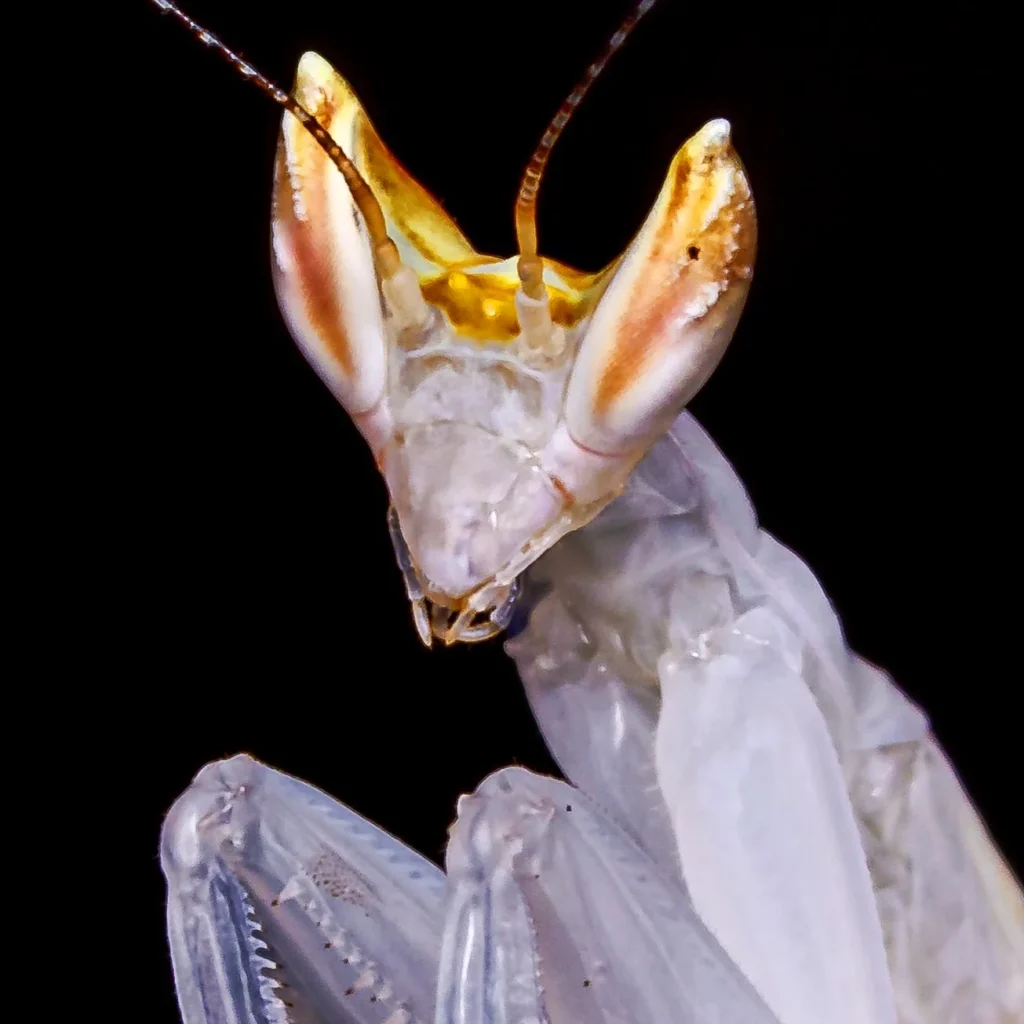
The orchid mantis is kept by hobbyists around the world, and captive-bred nymphs are sold by specialist breeders. It is not the easiest mantis to raise. It needs warm, humid air with good ventilation, enough height to molt, and live flying insects to eat. Our orchid mantis care sheet covers the details, and the orchid mantis as a pet helps you decide whether it suits you.
Two warnings before you buy one:
- You cannot guarantee a pink color. Breeders sell nymphs, and adult color varies. A seller promising a specific shade of pink is guessing.
- Check the law. In the United States, USDA APHIS says many non-native invertebrates kept as pets may need a permit or be illegal to own, and asks buyers to check with its Plant Protection and Quarantine program first. See can you own an orchid mantis?
When you are ready, our orchid mantis price guide explains typical costs.
Related Guides
If you want to go deeper, these guides pick up where this page leaves off:
- Orchid mantis colors: white, pink, yellow and why they change.
- Flower mantis species: every major flower-mimicking mantis compared.
- Orchid mantis: the complete guide: everything about the species in one place.
- Where to buy an orchid mantis: how to choose a safe seller.
Frequently Asked Questions
Is there a real pink praying mantis?
Yes. The orchid mantis is a real species that is white with pink or yellow hues. Spiny flower mantises can also show pink tones, and native mantises are occasionally found in pink color forms.
Are pink orchid mantises rare?
The species itself is widely bred in captivity, so it is not hard to buy. Strong pink individuals are less common than white ones with a light blush. In the wild the orchid mantis is seldom seen, partly because it blends in so well.
Is a pink mantis dangerous?
No. Pink mantises have no venom and cannot seriously hurt people. A large female orchid mantis may grip a finger with its forelegs, but this is harmless.
Why is my orchid mantis not pink?
Many orchid mantises are mostly white, and adult males are greenish brown. Color also shifts during the nymph stages. If a mantis turns dark or brown suddenly, check humidity and ventilation first.
What is the pink and white praying mantis called?
A pink and white praying mantis with petal-shaped legs is the orchid mantis, Hymenopus coronatus. It is also called the walking flower mantis.
Do pink mantises live in the United States?
Orchid mantises are not native to the United States. Pink mantises found outdoors in the US are usually rare color forms of native species, such as the California mantis.
Sources
- O’Hanlon, J.C., Li, D. and Norma-Rashid, Y. (2013). Coloration and morphology of the orchid mantis. Journal of Orthoptera Research 22(1): 35-44. https://hdl.handle.net/1959.11/27641
- O’Hanlon, J.C. et al. (2014). Pollinator deception in the orchid mantis. The American Naturalist. https://www.journals.uchicago.edu/doi/reader/10.1086/673858
- Natural History Museum of Utah, “The Orchid Mantis: Breathtakingly Beautiful, Deceptively Deadly”: https://nhmu.utah.edu/articles/orchid-mantis-breathtakingly-beautiful-deceptively-deadly
- InsectStore, Hymenopus coronatus care sheet: https://insectstore.com/mantids/hymenopus-coronatus-orchid-mantis
- Mental Floss, “6 Spectacular Praying Mantises”: https://www.mentalfloss.com/animals/insects/6-spectacular-praying-mantises
- Wikipedia, Flower mantis (species table): https://en.wikipedia-on-ipfs.org/wiki/Flower_mantis
- UC Agriculture and Natural Resources, Bug Squad, “Ever Seen a Pink Praying Mantis?”: https://ucanr.edu/node/156582
- PetaPixel, report on the US Fish and Wildlife Service pink grasshopper post: https://petapixel.com/2023/05/11/rare-pink-grasshopper-may-not-be-long-for-this-world/
- Insect Asylum, “Pink Grasshoppers”: https://insectasylum.net/pink-grasshoppers.html
- Lead Stories, “Sleeping Rose Mantis Is NOT Real Insect”: https://leadstories.com/hoax-alert/2025/04/fact-check-sleeping-rose-mantis-is-not-real-insect.html
- USDA APHIS, Invertebrate Pets: https://www.aphis.usda.gov/organism-soil-imports/invertebrate-pets