35 Orchid Mantis Facts, Checked Against the Science
The orchid mantis attracts more myths than most insects. Some are harmless exaggerations, and some, like the viral “lotus mantis,” are pure fiction. Below are 35 orchid mantis facts grouped by topic, each based on research papers, museums, zoos or other reliable sources listed at the end. Where sources disagree, we say so.
Identity and Name
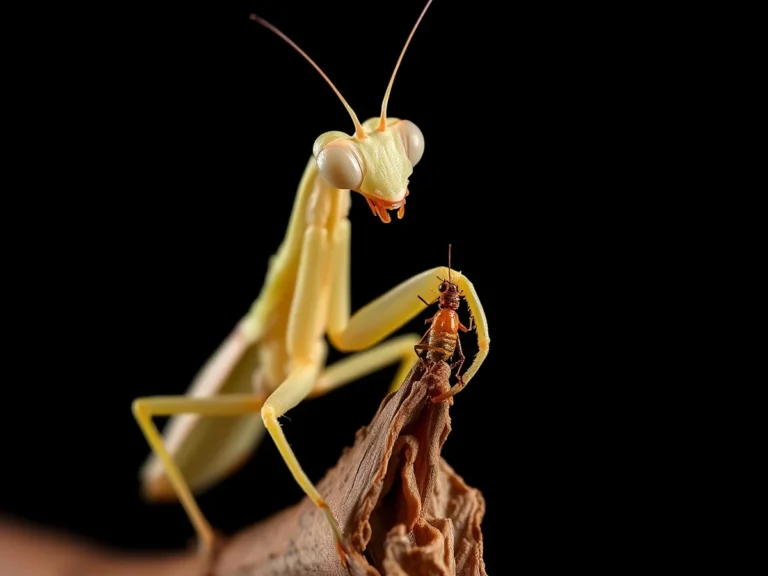
1. It is a real insect
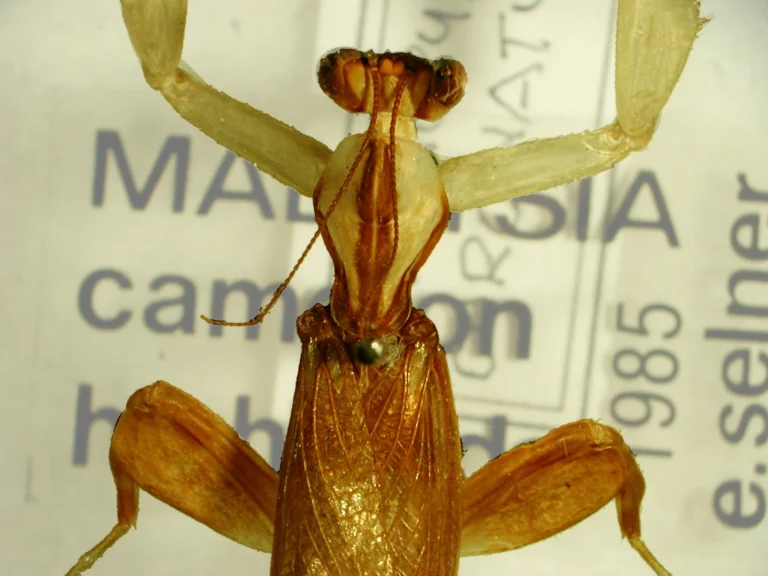
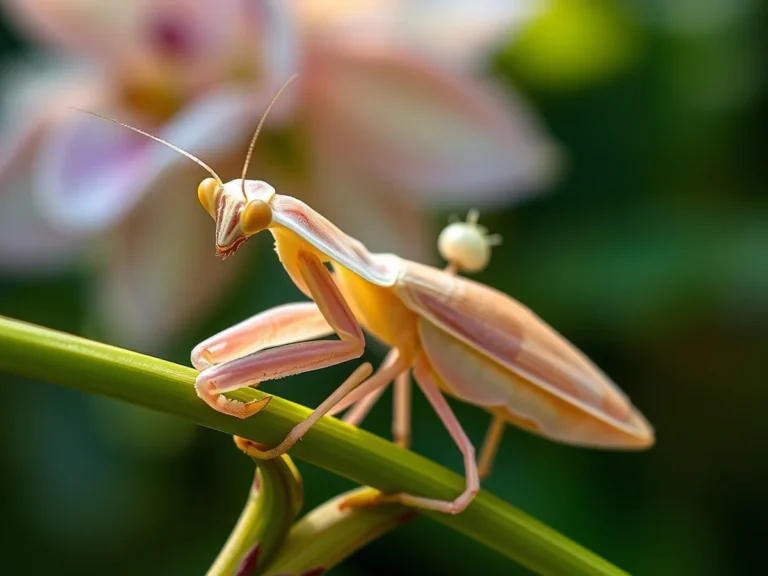
The orchid mantis is a real, scientifically described species, Hymenopus coronatus. It is not an AI creation or a myth. The confusion comes from AI videos of fake flower insects that borrow its look. See lotus mantis: real or fake?
2. Its name dates to the 1790s
The species was published in 1797, in a description credited to Manuel in Olivier’s work, according to Wikispecies. Some sources give 1792. The holotype, the original specimen used for the description, is presumed lost.
3. Its type locality is Ambon, Indonesia
Wikispecies lists the type locality as Ambon in the Maluku Islands. That is where the specimen behind the original description is said to have come from.
4. It has many names
English names include orchid mantis, walking flower mantis, orchid-blossom mantis and pink orchid mantis. Keepers also use nicknames such as “kung fu mantis.” In older literature you may see the synonym Hymenopus bicornis.
5. It is a praying mantis
“Praying mantis” covers every member of the order Mantodea, which has more than 2,400 species according to the Natural History Museum of Utah. The orchid mantis is one of them, in the family Hymenopodidae.
6. Its closest insect relatives are cockroaches and termites
Wikipedia’s mantis overview notes that mantises, cockroaches and termites are grouped together in the superorder Dictyoptera.
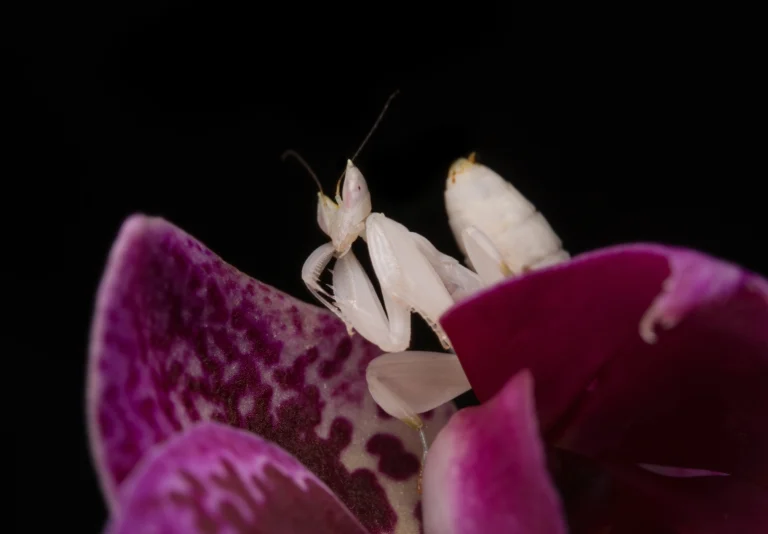
Hunting and Mimicry
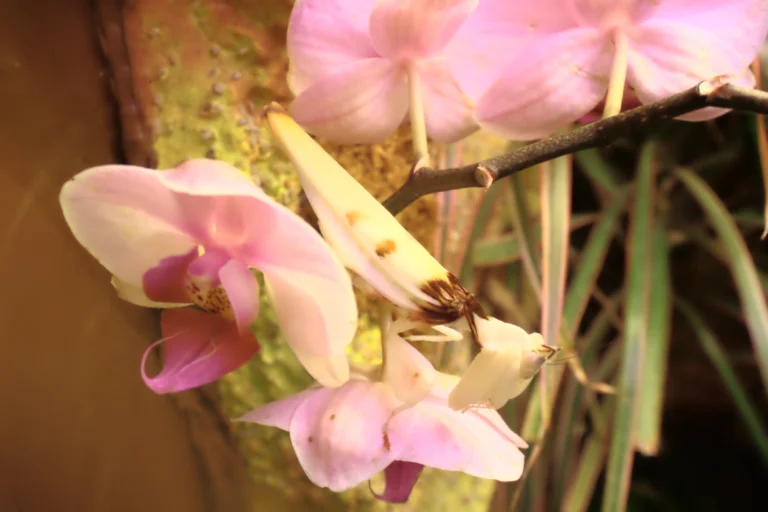
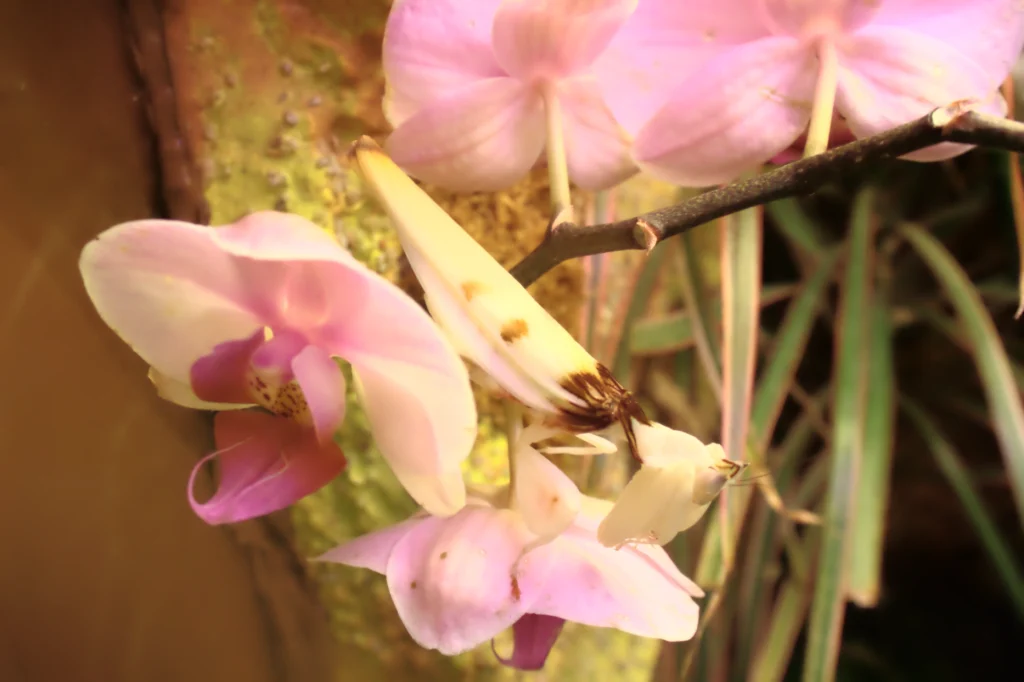
7. It attracts more pollinators than real flowers
In a 2014 study in The American Naturalist, James O’Hanlon and colleagues found that orchid mantises attracted pollinating insects at a higher rate than nearby flowers. It was the first experimental evidence of this kind of pollinator deception in the species.
8. It does not copy one specific orchid
Despite its name, follow-up research found no single flower species that it matches. Its color sits within the range of many local flowers. Science Friday’s summary quotes the researchers finding “no compelling evidence” of a single model.
9. Pollinators see it as flower-colored
A 2013 study measured the mantis’s color through models of bee vision. It found that orchid mantises mainly reflect UV-absorbing white and that, to a pollinator, the color matches local flowers.
10. Young mantises may use scent as well
Research by Takafumi Mizuno and colleagues, published in Zoological Science in 2014, reported that juvenile orchid mantises attract Oriental honeybees using both visual and chemical cues, a “double trick.” The team detected two compounds, known as 3HOA and 10HDA, released while juveniles were hunting. These chemicals are components of honeybee communication signals. The study also found that juvenile females often caught honeybees while adult females often failed.
11. It sits in plain sight
Most camouflaged predators hide. Orchid mantises often sit openly on leaves and flowers. Science Friday notes that they catch more prey in flower-rich areas.
12. It sways like a flower in the breeze
Like many mantises, it rocks gently from side to side. Wikipedia describes it climbing twigs, holding on with its rear legs and swaying to mimic wind.
13. It eats mostly flying insects
Its prey includes flies, bees, butterflies and moths. The Cincinnati Zoo says its orchid mantises will only eat flying prey, so keepers rear several kinds of flies and moths. Read more in what orchid mantises eat.
14. It was recorded hunting on rhododendron flowers
Around 1900, naturalist Nelson Annandale described it hunting on the flowers of the Straits rhododendron (Melastoma polyanthum). It does not live inside orchids.
Body and Senses
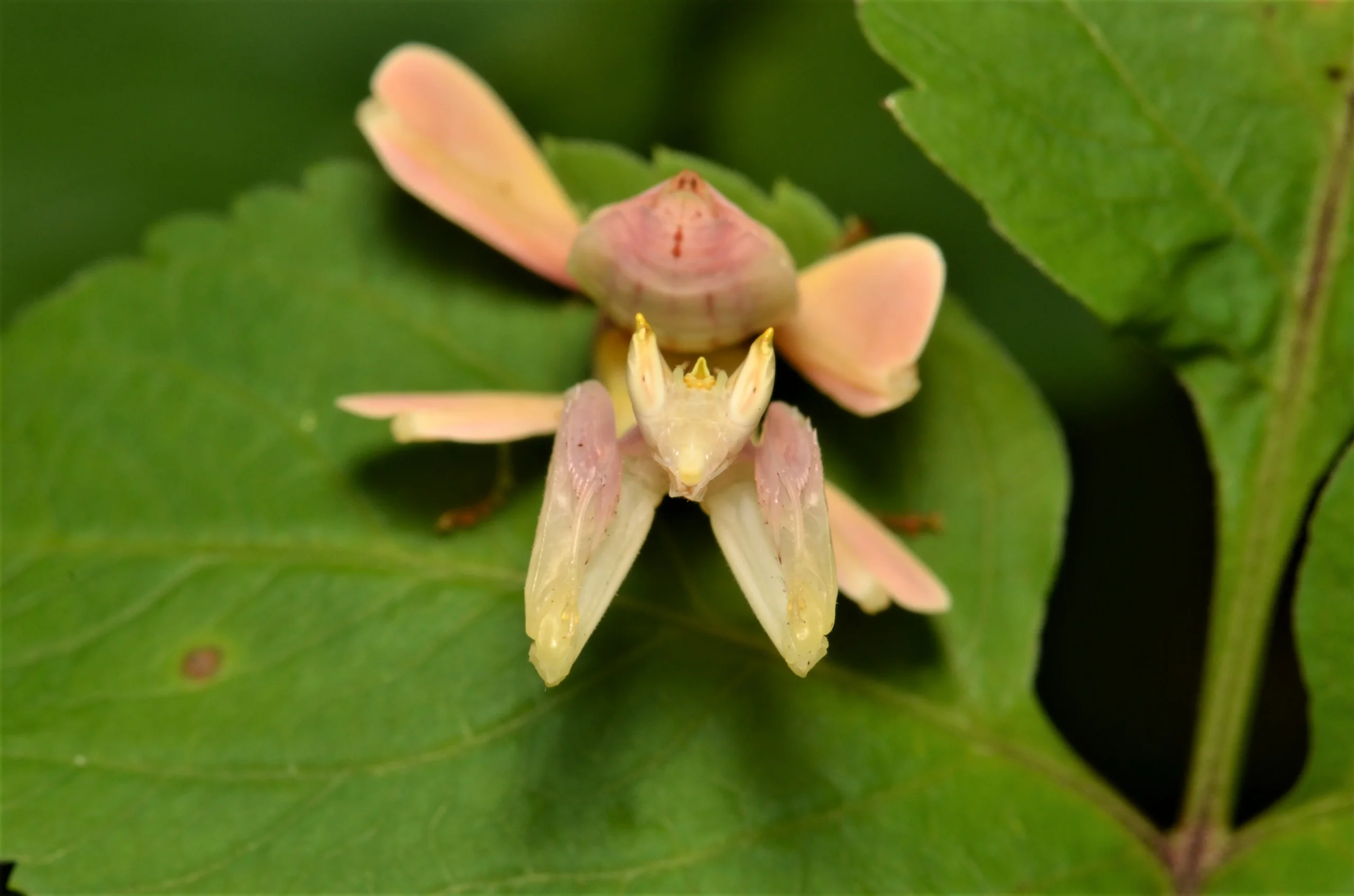
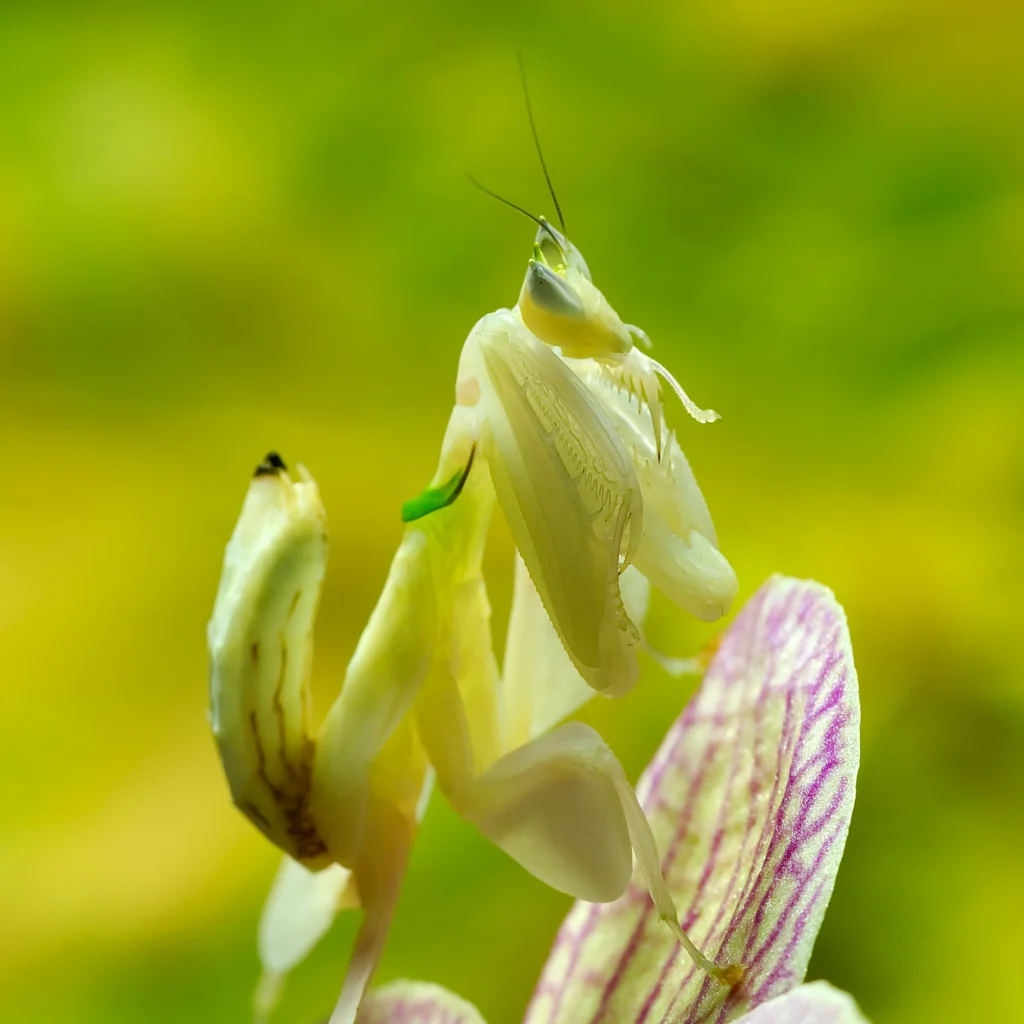
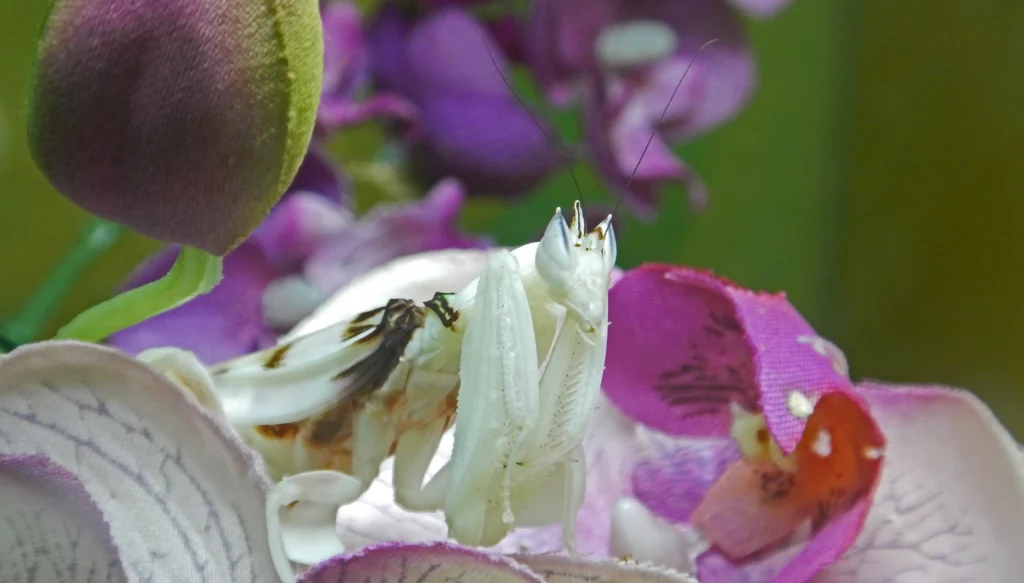
15. Its “petals” are flattened legs
The petal-like parts are expanded lobes on the femur of the middle and hind legs. Scientists call them femoral lobes.
16. It has five eyes
Mantises have two large compound eyes and three small simple eyes called ocelli, according to Wikipedia and EarthSky. The compound eyes judge distance and movement; the ocelli sense light and shadow.
17. The “pupils” are an illusion
The small black dots that seem to follow you are pseudopupils, not real pupils. EarthSky explains they are areas of the eye that absorb light, which is why they look black.
18. It hears with a single ear on its chest
Most mantises have one ear, in the middle of the thorax. Entomologist David Yager discovered this “cyclopean” ear in the late 1980s, according to National Wildlife Federation. It detects ultrasound, such as the calls of hunting bats.
19. It can turn its head to look at you
Mantises have a flexible neck joint. Wikipedia notes some species can rotate their heads nearly 180 degrees.
20. Adults have wings, and males fly well
Both sexes have full wings as adults. Small males fly readily; heavy females rarely do. See orchid mantis anatomy.
Males, Females and Growth
21. Females are more than twice as long as males
Adult females reach about 6 to 7 cm, males about 2.5 to 3 cm. It is one of the most extreme size differences in any mantis.
22. Females can weigh about 12 times as much
A US Mantis care sheet describes adult females as roughly 12 times more massive than males.
23. Big females evolved to hunt big prey
A 2016 study led by Gavin Svenson concluded that females became large because it helped them catch large pollinators, not to lay more eggs. Entomologist Hojun Song called the finding “entirely novel,” according to National Geographic.
24. Males are camouflaged, not flowery
Adult males are dull and greenish brown. Staying small and hidden helps them avoid predators while searching for mates. More in male vs female orchid mantis.
25. Babies are red and black
Newly hatched nymphs are red and black, not pink. Wikipedia notes that first-stage nymphs mimic assassin bugs (Reduviidae), which bite and taste bad. See the orchid mantis life cycle.
26. Colors shift slowly, not instantly
Juveniles can shift between white, pink and other tones over days or weeks, mostly while growing, according to the Natural History Museum of Utah. They cannot change color on the spot. See orchid mantis colors.
27. It lives less than a year
Keepers usually report about 8 to 9 months for females and 5 to 6 months for males. Warmth speeds growth and shortens life. See orchid mantis lifespan.
28. One egg case can hold dozens of babies
US Mantis reports an average of about 40 nymphs per hatch after roughly 40 days at 80°F, though numbers vary widely. InsectStore says an ootheca can produce up to about 90.
Safety and Status
29. It is not dangerous or poisonous to people
The orchid mantis has no venom and is not poisonous. A large female may grip a finger, which can feel like a pinch, but it cannot harm a person.
30. Are praying mantises deadly?
Not to humans. They are deadly to their prey, though. National Geographic notes that the larger of the world’s mantis species will also eat small reptiles, amphibians and birds. The orchid mantis, being smaller, sticks to insects.
31. Do orchid mantises bite?
They have chewing mouthparts and can nip, but they rarely do so to people and a nip is harmless. They prefer to stay still or move away.
32. Is the orchid mantis endangered?
We could not find a global IUCN Red List assessment for Hymenopus coronatus, so it has no official threat category. Its rainforest habitat is under pressure, and wild collection is a concern.
33. Is the orchid mantis rare?
In the wild, it is rarely seen, partly because it hides so well. In captivity it is widely bred, so it is not hard to buy. Wikipedia describes it as favored by breeders and expensive.
34. It has predators too
Its camouflage likely protects it from predators as well as fooling prey, according to Wikipedia’s account. Insect-eating birds, lizards, spiders and other mantises are typical predators of mantises in general. Cannibalism also happens, so keepers house them separately.
35. Smuggling is a real problem
The Cincinnati Zoo has described raising orchid mantises hatched from nine egg cases confiscated by the US Fish and Wildlife Service. After months of care, it shipped 110 mantises to five other accredited zoos to build a healthy captive population.
Bonus: Orchid Mantis Fun Facts
- It is a video game boss. In the survival game Grounded, the Orchid Mantis is a summonable boss in the orchid pot on the shed’s porch. See orchid mantis in Grounded.
- It is worth 2,400 Bells in Animal Crossing. Nookipedia lists it as a bug found on white flowers. See orchid mantis in Animal Crossing.
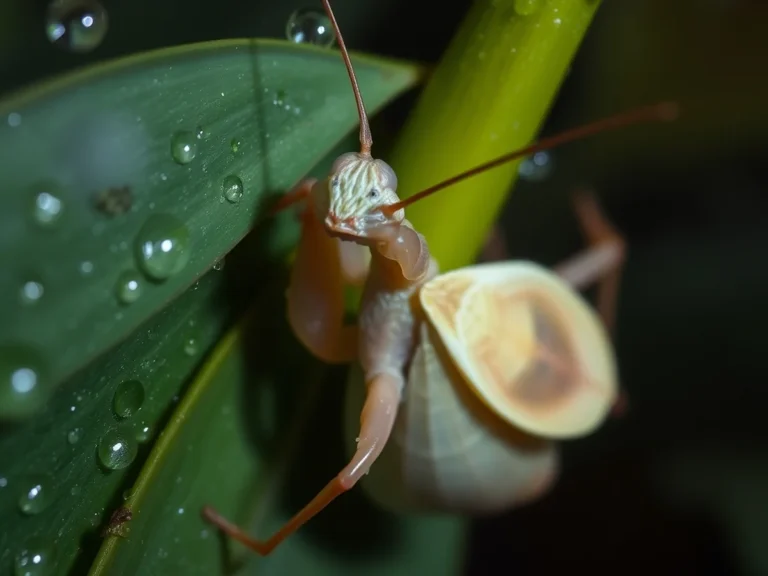
- It drinks water droplets. Keepers mist enclosures partly so mantises can drink from droplets, and videos show them sipping water from a fingertip.
- Victorian naturalists argued about it. Alfred Russel Wallace and Edward Bagnall Poulton both wrote about its flower-like hunting in the late 1800s, more than a century before it was tested.
Five Common Myths, Corrected
| Myth | What the evidence says |
|---|---|
| “It lives inside orchids.” | It hunts on many flowering shrubs and leaves, and has been recorded on Melastoma flowers. |
| “It changes color instantly to match any flower.” | Color shifts are gradual, happen mainly in juveniles, and stay within white, pink and nearby tones. |
| “Blue and rainbow orchid mantises exist.” | Those photos are edited or show other species, such as the devil’s flower mantis. See blue orchid mantis. |
| “The female always eats the male.” | Sexual cannibalism can happen in mantises, but it is not guaranteed. Keepers reduce the risk by feeding the female well first. |
| “The lotus mantis is a rare relative.” | The lotus mantis is an AI creation with no scientific record. |
Another fact that is often left out: in 2020, a Chinese Academy of Sciences report described orchid mantises ambushing foraging butterflies in the wild, eating the abdomen and discarding the wings. It was a reminder that the species hunts more than bees.
Quick Reference Table
| Fact | Answer |
|---|---|
| Real or fake? | Real, Hymenopus coronatus |
| Dangerous to people? | No |
| Poisonous? | No |
| Endangered? | No IUCN assessment found |
| Female size | About 6 to 7 cm |
| Male size | About 2.5 to 3 cm |
| Lifespan | Under a year |
| Number of eyes | Five (two compound, three simple) |
| Number of ears | One, on the thorax |
| Native range | Southeast Asia |
How We Checked These Facts
Many fact lists repeat the same claims without sources. For this page we checked each fact against at least one research paper, museum, zoo or reference work, and dropped claims we could not confirm. Where sources disagree, such as the exact lifespan or the year of first description, we give the range. If you spot something that has changed, our about page explains how to contact us.
Related Guides
If you want to go deeper, these guides pick up where this page leaves off:
- Orchid mantis: the complete guide: everything about the species in one place.
- Orchid mantis camouflage: the science of its flower disguise.
- Orchid mantis anatomy: eyes, ear, wings and petal-shaped legs.
- Lotus mantis: real or fake?: the viral AI mantis fact-checked.
Frequently Asked Questions
Is the orchid mantis real or fake?
Real. It is a well-studied species from Southeast Asia. Fake “lotus” and “celestial” mantis videos are AI creations inspired by it.
Are orchid mantises dangerous?
No. They have no venom and cannot hurt people. They are dangerous only to the insects they eat.
Are orchid mantises poisonous?
No. They are not poisonous to touch or to pets that might eat one, though no one should feed mantises to pets.
Do orchid mantises bite people?
Very rarely, and a nip is harmless. They usually stay still or walk away.
Are orchid mantises rare?
They are rarely seen in the wild but commonly bred in captivity.
Can an orchid mantis kill a bee?
Yes. Bees are among its regular prey. Juvenile females are especially good at catching Oriental honeybees, according to the 2014 Zoological Science study.
What eats an orchid mantis?
In general, mantises are eaten by birds, lizards, spiders and other mantises. The orchid mantis’s camouflage likely helps protect it from predators.
Sources
- Wikipedia, Hymenopus coronatus: https://en.wikipedia.org/wiki/Hymenopus_coronatus
- Wikispecies, Hymenopus coronatus: https://species.wikimedia.org/wiki/Hymenopus_coronatus
- O’Hanlon, J.C. et al. (2014). Pollinator deception in the orchid mantis. The American Naturalist. https://www.journals.uchicago.edu/doi/reader/10.1086/673858
- O’Hanlon, J.C., Li, D. and Norma-Rashid, Y. (2013). Coloration and morphology of the orchid mantis. https://hdl.handle.net/1959.11/27641
- Mizuno, T. et al. (2014). “Double-Trick” visual and chemical mimicry by the juvenile orchid mantis. Zoological Science 31(12): 795-801. https://bioone.org/journals/zoological-science/volume-31/issue-12/zs140126/Double-Trick-Visual-and-Chemical-Mimicry-by-the-Juvenile-Orchid/10.2108/zs140126.short
- Chinese Academy of Sciences, “Orchid Mantis Ambushes Foraging Butterflies” (2020): https://english.cas.cn/newsroom/research_news/life/202003/t20200312_231167.shtml
- Science Friday, “Unraveling the Orchid Mantis Mystery”: https://www.sciencefriday.com/articles/unraveling-the-orchid-mantis-mystery/
- National Geographic, “Praying Mantis Looks Like a Flower, And Now We Know Why”: https://www.nationalgeographic.com/animals/article/orchid-mantises-evolution-insects
- National Geographic, Praying mantis: https://www.nationalgeographic.com/animals/invertebrates/p/praying-mantis/
- Natural History Museum of Utah: https://nhmu.utah.edu/articles/orchid-mantis-breathtakingly-beautiful-deceptively-deadly
- Wikipedia, Mantis: https://Www.Wikipedia.org/wiki/Mantis
- EarthSky, “The praying mantis is a predator”: https://earthsky.org/earth/praying-mantis-ferocious-insect-lifeform-of-the-week/
- National Wildlife Federation, “The Better to Hear You With”: https://www.nwf.org/Magazines/National-Wildlife/2009/The-Better-to-Hear-You-With
- US Mantis, orchid mantis care sheet (PDF): https://cdn.shopify.com/s/files/1/1296/7335/files/Orchid_Mantis_care_sheet.pdf
- InsectStore, Hymenopus coronatus: https://insectstore.com/mantids/hymenopus-coronatus-orchid-mantis
- Cincinnati Zoo and Botanical Garden, “Mantis Mayhem”: https://cincinnatizoo.org/mantis-mayhem/
- Mahoning Matters, report on confiscated orchid mantis egg cases: https://www.mahoningmatters.com/news/nation-world/article301345229.html
- Grounded Wiki, Mantis: https://grounded.fandom.com/wiki/Mantis
- Nookipedia, Orchid mantis: https://nookipedia.com/wiki/Orchid_mantis