
Orchid Mantis as a Pet: Is It Right for You?
An orchid mantis pet is unlike any other animal you can keep at home. It looks like a living flower, sits calmly where you can watch it, and hunts with startling speed. It is also short-lived, fussy about food and humidity, and not the cheapest insect to buy. Many keepers love the species; some find it more work than they expected.
This guide gives you an honest picture before you commit: what an orchid mantis is like to live with, what it needs, what it costs in time and money, and who should start with an easier mantis instead.
The Short Answer
| Question | Answer |
|---|---|
| Can you keep an orchid mantis as a pet? | Yes, captive-bred orchid mantises are widely kept by hobbyists. |
| Is it a good beginner pet? | Not ideal. It is generally rated intermediate. |
| How long does it live? | Usually under a year; females often about 8 to 9 months. |
| What does it eat? | Live flying insects such as fruit flies and house flies. |
| Can you handle it? | Gently and rarely; it is best treated as a pet to watch. |
| Is it legal? | Depends on where you live. In the US, check with USDA APHIS first. |
What Is an Orchid Mantis Like as a Pet?
Temperament and personality
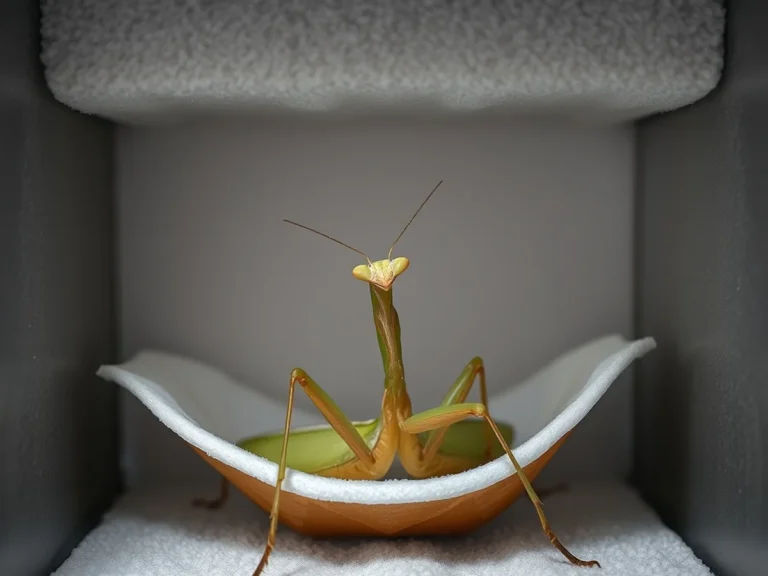
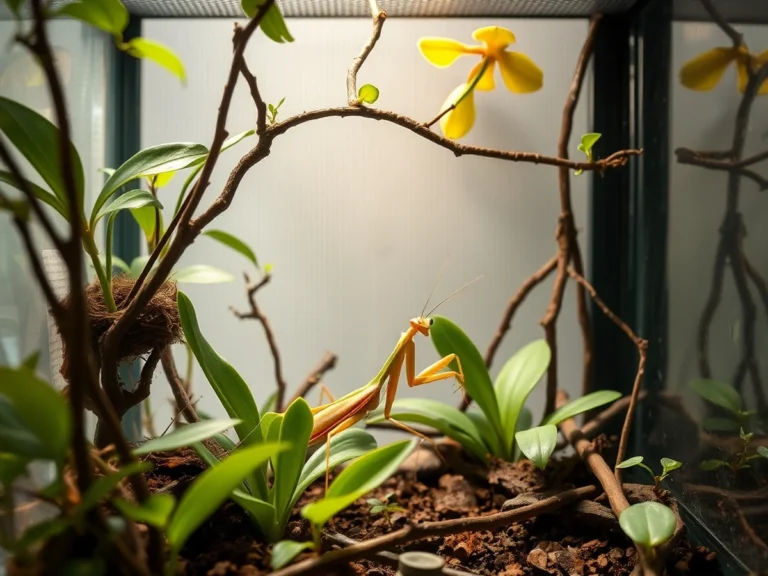
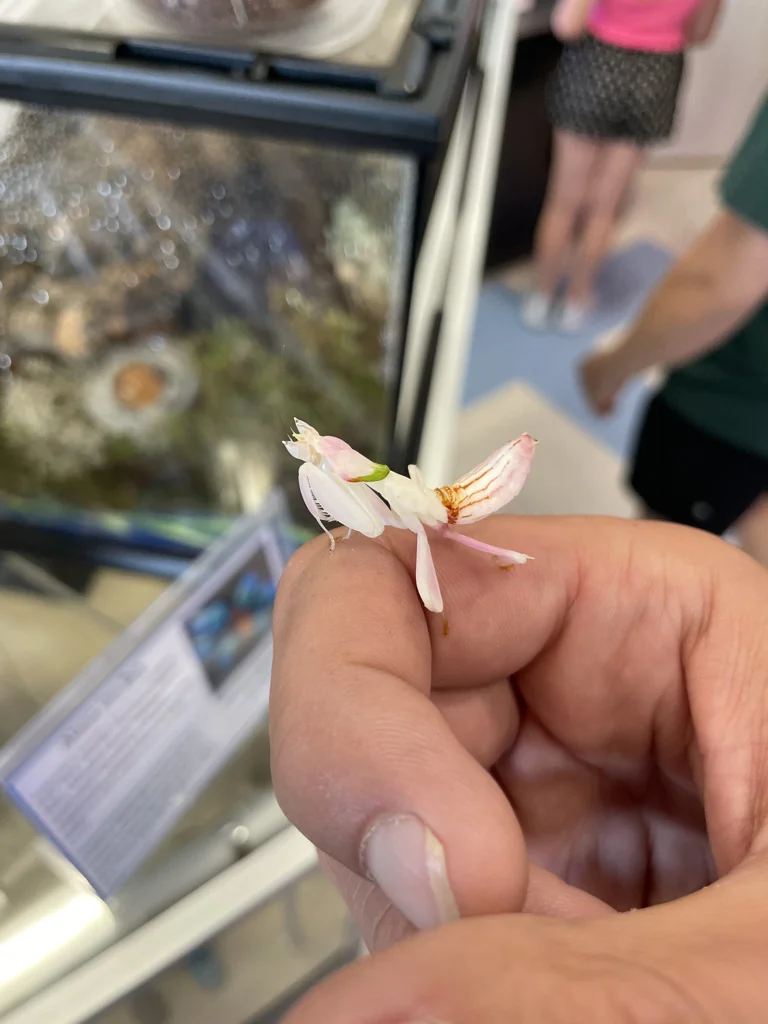
Female orchid mantises are calm. They tend to choose a perch and stay there for hours, waiting for prey. This makes them easy to observe and photograph. They rarely run or fly, and many will walk slowly onto an offered hand.
Males are more active and skittish. Once adult, they fly readily, so you need to open the enclosure carefully.
Do orchid mantises have personalities? Many keepers describe individual differences: some are bolder at feeding time, some more reactive to movement. They do not bond with owners the way mammals do, but they do watch you. Their large compound eyes track movement, and they often turn their heads to follow you around the room.
What you will see
Owning an orchid mantis is mostly about watching:
- A red and black nymph turning white and pink after its first molts
- The flower-like femoral lobes growing with each molt
- Hunting: the stillness, the sway, the lightning strike
- Molting, as the mantis hangs and slowly pulls itself out of its old skin
- The final change into a winged adult
For many keepers, these moments are the reason to keep the species.
Pros of an Orchid Mantis Pet
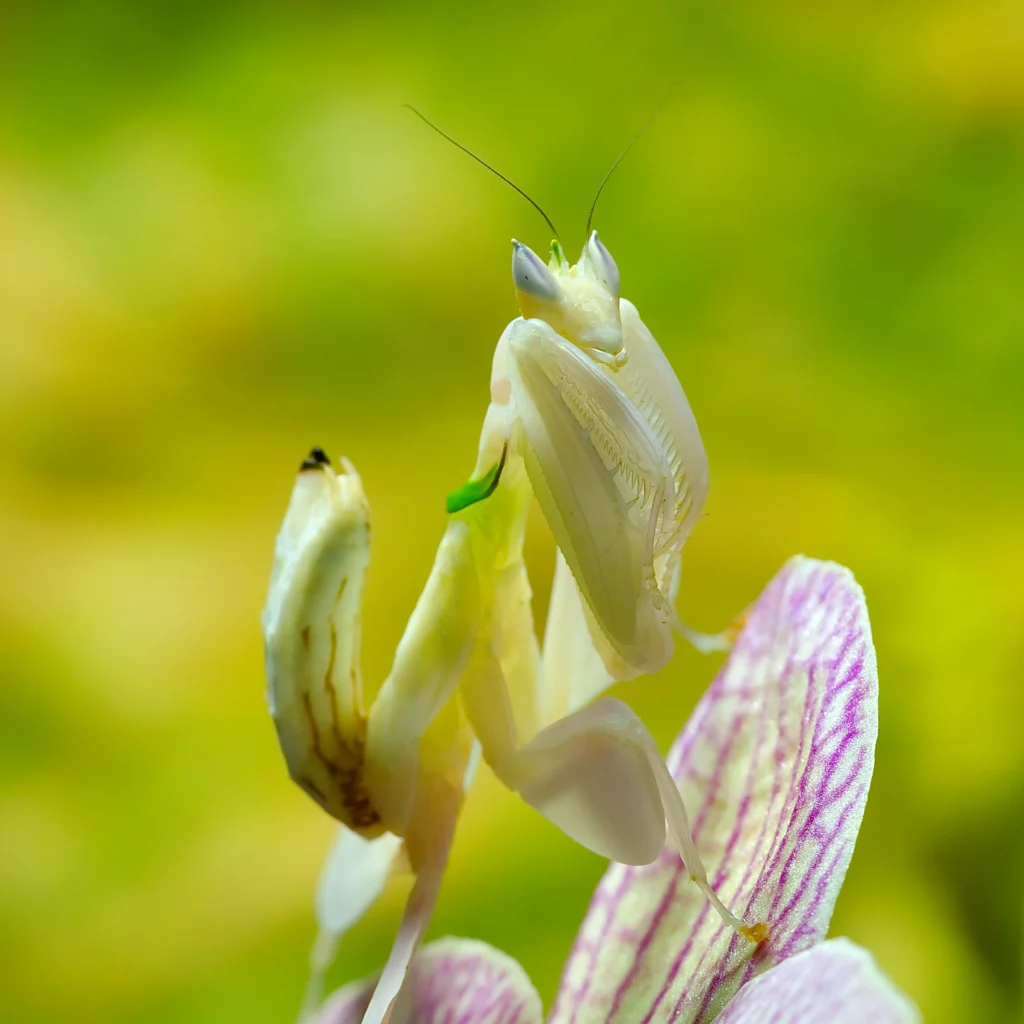
- One of the most beautiful insects you can keep. Few pets turn heads like a pink and white orchid mantis.
- Calm, observable behavior. Females often sit in full view.
- Small space needs. An adult female needs an enclosure roughly 6 x 6 x 9 inches or a little larger, according to Dubia Roaches.
- Quiet and odor-free. Mantises make no noise, and a clean enclosure has little smell.
- Fascinating science. The species is a famous example of aggressive mimicry. See orchid mantis camouflage.
Cons of an Orchid Mantis Pet
- Short lifespan. Usually under a year, and males live only a few months as adults. See orchid mantis lifespan.
- Live food only. The Cincinnati Zoo says its orchid mantises will only eat flying prey. You will need a steady supply of fruit flies or flies.
- Humidity and ventilation balance. A US Mantis care sheet warns that high humidity without adequate ventilation will kill them.
- Molting risks. A poor setup can lead to fatal molting problems.
- Higher price than many mantises. See orchid mantis price.
- Solitary. Each mantis needs its own enclosure.
- Legal questions in some places.
How Hard Is It to Keep an Orchid Mantis?
US Mantis and Dubia Roaches both rate the orchid mantis as intermediate. The species is not fragile in the way some think, but it is less forgiving than beginner mantises. The main challenges are:
| Challenge | What it takes |
|---|---|
| Humidity with airflow | Misting about twice a day in a well-ventilated enclosure |
| Molting | Enough height (about 3 times the mantis’s length) and a mesh ceiling |
| Food | Live flying insects sized to the mantis, every other day or so |
| Temperature | About 75 to 85°F during the day |
If you can commit to these, an orchid mantis is manageable. The orchid mantis care sheet explains each one in full.
Time Commitment
Orchid mantis care does not take long each day, but it does need to happen every day.
- Daily: a few minutes to mist and check temperature.
- Every other day: feeding, and removing uneaten prey after about a day.
- Weekly: cleaning and refreshing substrate; maintaining fruit fly cultures.
- During molts: patience. You leave the mantis alone and avoid disturbing it.
Plan for help if you travel. A mantis can skip a few meals, but it needs misting daily.
Your First Month With an Orchid Mantis
Here is what the first few weeks often look like with a middle-stage nymph:
- Day 1. The nymph arrives by overnight shipping. You let it walk into its prepared enclosure and leave it alone to settle. No food yet if it looks stressed.
- Days 2 to 3. You offer a few fruit flies or a small fly. Many nymphs eat right away; some wait a day.
- Week 1. You fall into a rhythm: mist morning and evening, feed every other day, remove leftovers.
- Week 2 or 3. The nymph stops eating and hangs still from the ceiling. You remove prey and resist the urge to check on it. A day later, it has molted and looks larger and more flower-like.
- Week 4. It is eating again, you have restarted a fruit fly culture, and you are already planning the next enclosure upgrade.
That cycle of eating, growing and molting repeats until the final molt into an adult.
Where to Keep the Enclosure at Home
Choose a spot that is:
- Stable in temperature, away from heaters, air conditioners and drafts.
- Out of direct sun, which can overheat an enclosure fast.
- Bright during the day, since orchid mantises are active in daylight.
- Away from other pets, such as cats that may knock the enclosure over.
- Free of sprays, including insecticides and air fresheners, which can harm insects.
Captive-Bred vs Wild-Caught
Always buy captive-bred orchid mantises. Wild collection puts pressure on a species that is rarely seen in nature; a 2020 report from the Chinese Academy of Sciences listed its threatened status in the wild as an open question because of its rarity. Smuggling also happens. The Cincinnati Zoo has described raising orchid mantises from egg cases confiscated by the US Fish and Wildlife Service. Captive-bred animals are also more likely to be healthy and used to captive conditions.

Can You Handle an Orchid Mantis?
Gently and rarely. Dubia Roaches describes invertebrates as “look but don’t touch” pets. An orchid mantis can walk onto your hand calmly, and many keepers enjoy that occasionally. To do it safely:
- Let it walk onto your hand; never grab it.
- Keep your hand low over a soft surface in case it drops.
- Avoid handling within about three days of a molt.
- Watch adult males, which may fly off.
An orchid mantis will not hurt you. It has no venom, and a grip from its forelegs is harmless.
Is an Orchid Mantis a Good Pet for Children?
It can be a wonderful family pet to watch, with an adult in charge of care. Children often love seeing it hunt and molt. But the short lifespan, delicate molts and need for live food mean an adult should manage feeding, misting and handling. Talk with children beforehand about how long it is likely to live.
Costs at a Glance
| Item | Notes |
|---|---|
| The mantis | Captive-bred nymphs from US breeders commonly sell for roughly $40 to $100; sexed females often cost more |
| Shipping | Many sellers ship overnight only, which adds to the total |
| Enclosure | A deli cup for nymphs; a mesh or glass enclosure for an adult female |
| Feeders | Fruit fly cultures and fly pupae, bought regularly |
| Tools | Spray bottle, thermometer, hygrometer; optional heat and light |
See orchid mantis price for a fuller breakdown.
Easier Alternatives to Start With
If you are new to mantises, consider starting with a more forgiving species and moving to an orchid mantis later. The ghost mantis (Phyllocrania paradoxa) is a common first choice: Jack of All Inverts lists a humidity range of 35 to 50% for it, lower and more forgiving than the orchid mantis needs. Compare the two in orchid mantis vs ghost mantis.
Mental Floss’s profile of spectacular mantises quotes a keeper recommending that beginners start with species such as the giant African mantis, ghost mantis or giant Asian mantis before attempting the most demanding flower mantises.
Legality: Check Before You Buy
In the United States, USDA APHIS warns that many non-native invertebrates kept as pets may require a permit or be illegal to own, because they could harm agriculture or the environment if they escape. It asks buyers to contact its Plant Protection and Quarantine program before buying. Other countries have their own rules. See can you own an orchid mantis?
Never release a pet mantis outdoors.
Male or Female?
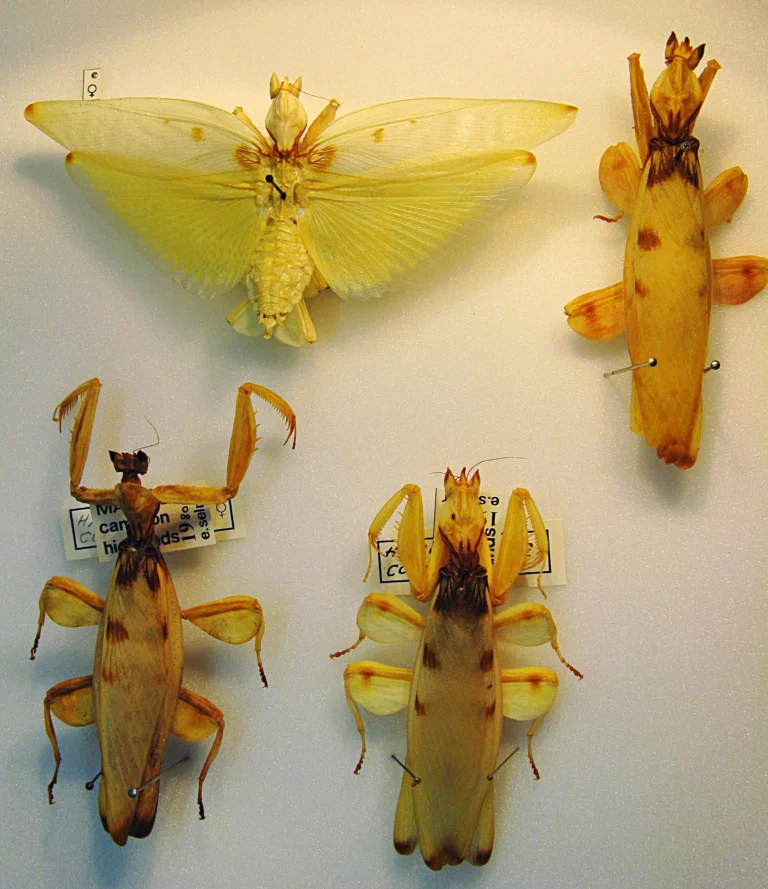
If you want the classic flower-like look and a longer life, choose a female. Males are small, greenish brown and short-lived. Many breeders sell young nymphs unsexed; ask for a sexed female or a subadult if it matters to you. See male vs female orchid mantis.
Orchid Mantis Names
Naming your mantis is half the fun. Some ideas, grouped by theme:
| Theme | Name ideas |
|---|---|
| Flowers | Orchid, Petal, Blossom, Lotus, Sakura, Peony, Lily, Magnolia |
| Pink and white | Rosie, Blush, Pearl, Ivory, Coral |
| Southeast Asia | Melati (jasmine in Malay and Indonesian), Kuala, Borneo |
| Hunters | Ninja, Kung Fu, Strike, Mantra |
| Scientists and naturalists | Wallace, Darwin, Annandale |
Since orchid mantises live under a year, many keepers also keep a photo log under the mantis’s name, recording each molt.
A Pre-Purchase Checklist
Before buying, make sure you can answer yes to each:
- I have checked that owning an orchid mantis is legal where I live.
- I have the enclosure set up and stable at the right temperature and humidity.
- I have a reliable source of live flying insects in the right sizes.
- I can mist daily and feed every other day for the next several months.
- I accept that the mantis will likely live less than a year.
- I know whether I want a female, a male or an unsexed nymph.
- I have found a reputable breeder in my own country. See where to buy an orchid mantis.
Related Guides
If you want to go deeper, these guides pick up where this page leaves off:
- Orchid mantis care sheet: temperature, humidity, feeding and molting.
- Orchid mantis price: what nymphs and adults cost.
- Can you own an orchid mantis?: permit and legal rules explained.
- Orchid mantis vs ghost mantis: two popular species compared.
Frequently Asked Questions
Are orchid mantises good pets?
They are rewarding pets for people who can supply live flying insects, manage humidity with good airflow and accept a short lifespan. They are not ideal for complete beginners.
Can you have an orchid mantis as a pet?
Yes, captive-bred orchid mantises are widely kept, but check local laws first.
Do orchid mantises need a companion?
No. They are solitary and do best alone in their own enclosure.
Do orchid mantises recognize their owners?
There is no evidence that they bond with people. They do track movement and may turn to watch you.
Can orchid mantises live together?
No. They are solitary and may eat each other. Keep one per enclosure.
Can an orchid mantis survive outside its cage?
Not for long in a typical home, and never outdoors in a temperate climate. An escaped mantis can dehydrate, starve or fall. Never release one outside.
Do orchid mantises bite?
They can nip with their mouthparts, but it is rare and harmless to people. They usually stay still or walk away.
Is an orchid mantis worth the price?
For keepers who value the experience of raising a striking, flower-like insect through its molts, many say yes. If you want a long-lived pet, it may not be the right choice.
Are orchid mantises easy to take care of?
They are moderately difficult. The main challenges are humidity, ventilation, molting space and live food.
Sources
- US Mantis, orchid mantis care sheet (PDF): https://cdn.shopify.com/s/files/1/1296/7335/files/Orchid_Mantis_care_sheet.pdf
- Dubia Roaches, Orchid mantis care sheet: https://dubiaroaches.com/blogs/invert-care/orchid-mantis-care-sheet
- Cincinnati Zoo and Botanical Garden: https://cincinnatizoo.org/?p=252752
- Jack of All Inverts, Ghost Mantis care sheet: https://jackofallinverts.github.io/caresheets/ghost.html
- Mental Floss, “6 Spectacular Praying Mantises”: https://www.mentalfloss.com/animals/insects/6-spectacular-praying-mantises
- AOL / A-Z Animals, “Orchid Mantis: The Expensive Exotic Insect”: https://www.aol.com/articles/orchid-mantis-expensive-exotic-insect-154459188.html
- Chinese Academy of Sciences, “Orchid Mantis Ambushes Foraging Butterflies”: https://english.cas.cn/newsroom/research_news/life/202003/t20200312_231167.shtml
- Cincinnati Zoo, “Mantis Mayhem”: https://cincinnatizoo.org/mantis-mayhem/
- Bugs in Cyberspace, Orchid Mantis: https://bugsincyberspace.com/product/buy-orchid-mantis-live-pet/
- USDA APHIS, Invertebrate Pets: https://www.aphis.usda.gov/organism-soil-imports/invertebrate-pets