Orchid Mantis Male vs Female: How to Tell Them Apart
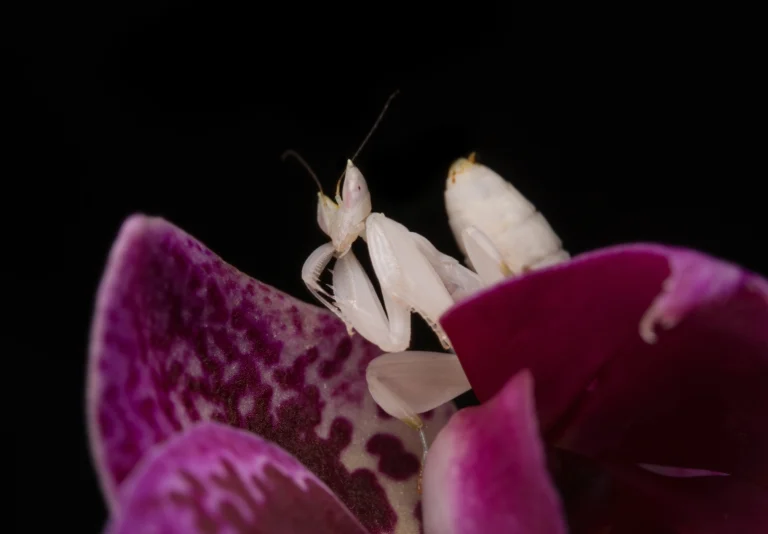
When it comes to orchid mantis male vs female differences, the two sexes are so unlike each other that you could mistake them for two species. The adult female is large, white to pink and flower-like. The adult male is small, slim, greenish brown and a strong flier. Research has shown that this difference is not a quirk but the result of each sex evolving for a different job.
This guide compares the two sexes trait by trait, shows you how to sex orchid mantis nymphs by counting abdominal segments, and explains what the differences mean for keeping and breeding them.
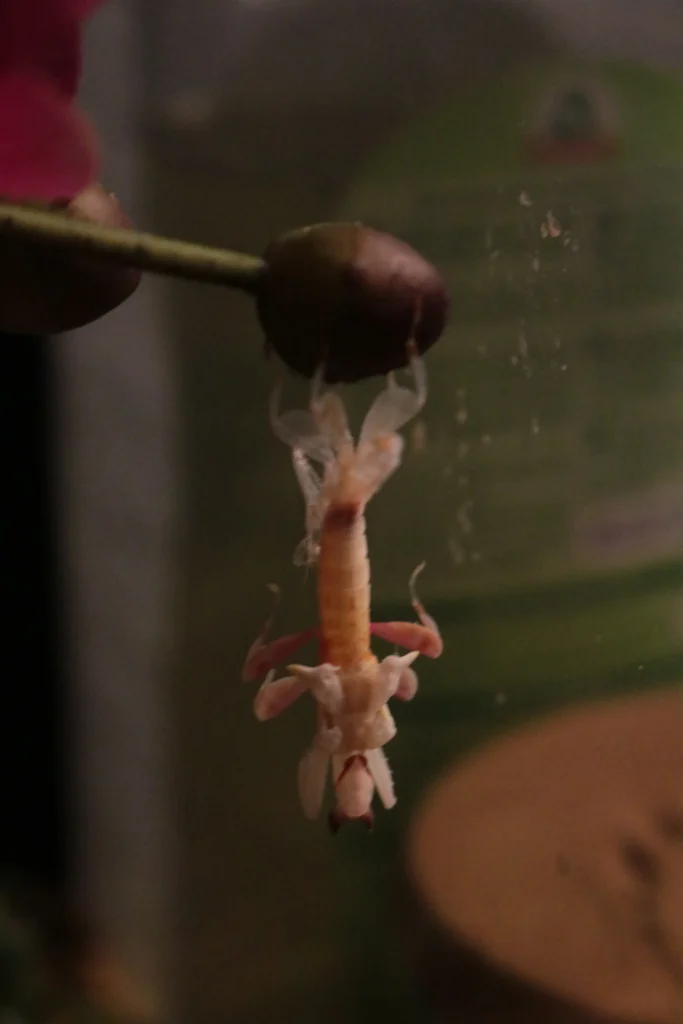
Quick Comparison
| Trait | Female orchid mantis | Male orchid mantis |
|---|---|---|
| Adult length | About 6 to 7 cm (2.4 to 2.8 in) | About 2.5 to 3 cm (around 1 in) |
| Adult mass | Roughly 12 times heavier than the male | Light |
| Color | White to pink, sometimes yellow; flower-like | Duller, often greenish brown |
| Flower resemblance | Strong, especially as a juvenile | Weak |
| Visible abdominal segments | 6 or 7 | 8 |
| Molts to adulthood (keeper reports) | Around 7 to 8 | Around 5 to 6 |
| Flight | Has wings but rarely flies | Flies readily |
| Behavior | Calm, sits and waits | Active, skittish |
| Lifespan (keeper reports) | About 8 to 9 months from hatching | About 5 to 6 months from hatching |
Sources for these figures include InsectStore, US Mantis and keeper reports, listed at the end of this page.
Size: The Most Obvious Difference
The female orchid mantis is the large, showy sex. InsectStore’s care sheet gives females a length of up to 6 cm, with wild-caught specimens usually slightly longer, and males a maximum of about 3 cm, mostly under half the female’s length. National Geographic describes adult males as about half the size of females.
Mass shows the gap even more clearly. A US Mantis care sheet states that adult females are about 12 times more massive than males. A female has a broad, heavy abdomen; a male is slim and light.
For full growth figures, see orchid mantis size.
Color and Appearance
Female orchid mantis
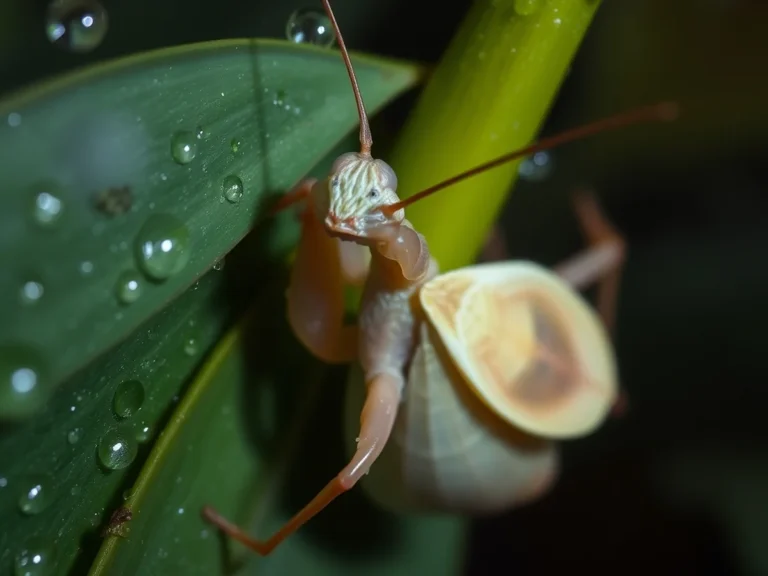
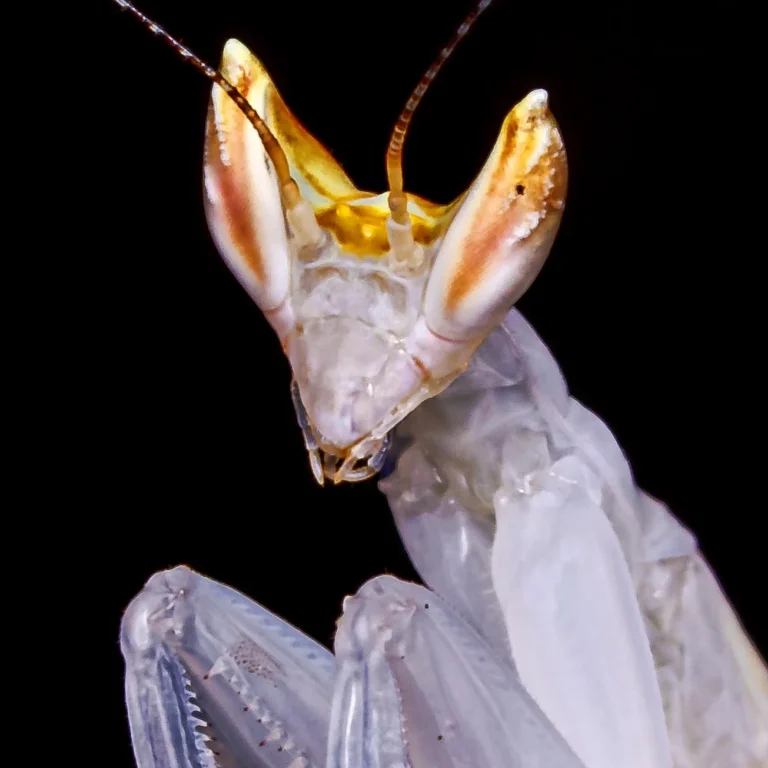
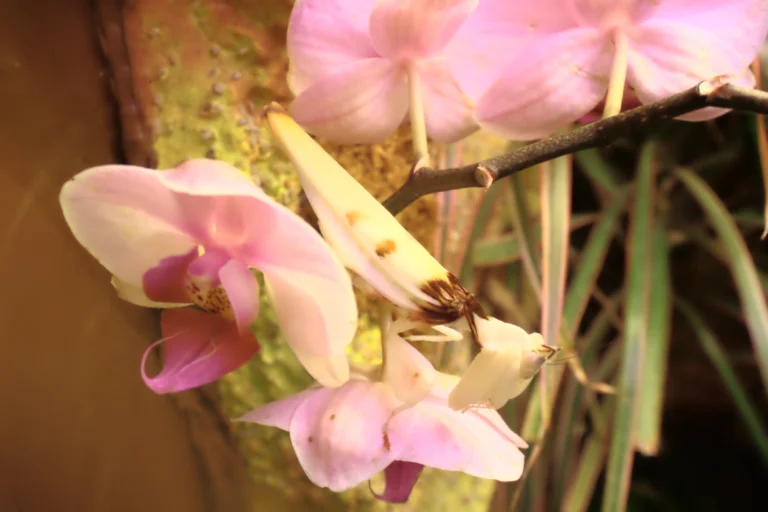
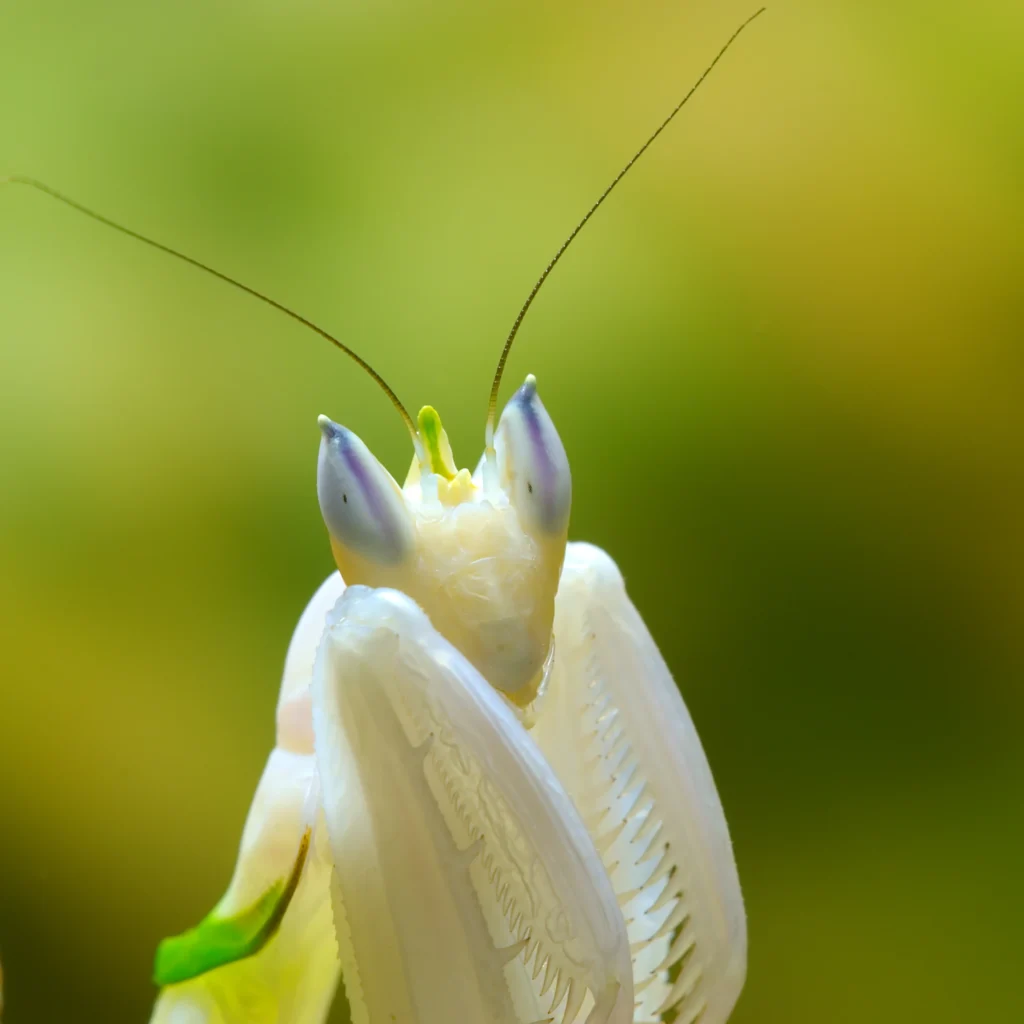
Female orchid mantises carry the classic flower look. A 2013 study by James O’Hanlon and colleagues described the species as predominantly white, often with pink or yellow hues, with broad, petal-like lobes on the middle and hind legs. National Geographic describes adult females with petal-like legs and a yellow or whitish pink color.
As an adult, the female’s wings cover much of her back and abdomen. She still looks flower-like, but juveniles often look even more like a blossom because their broad abdomen is fully visible.
Male orchid mantis
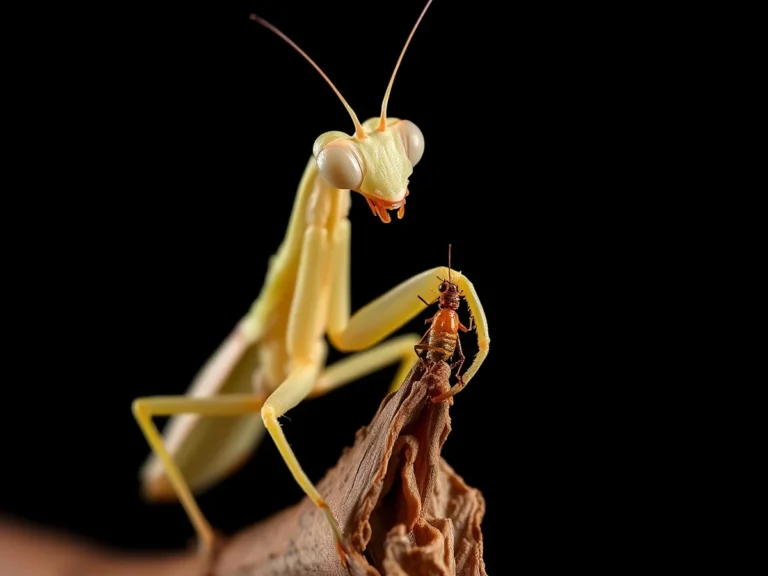
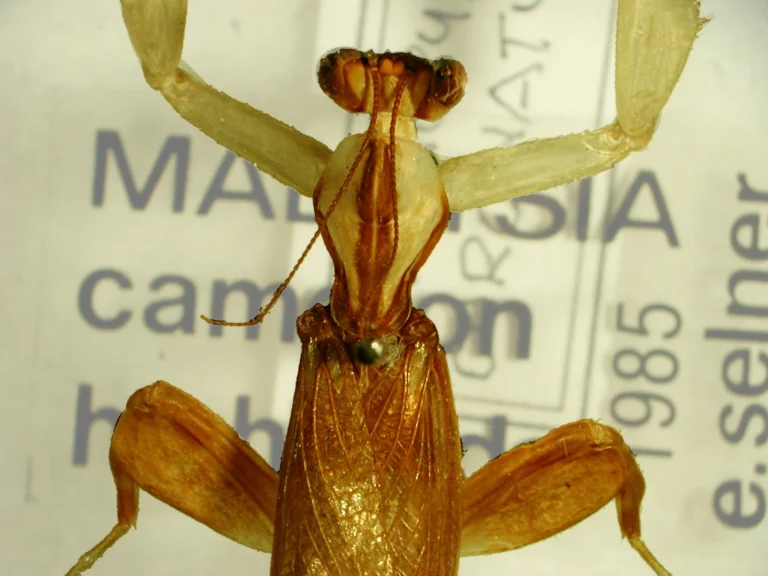
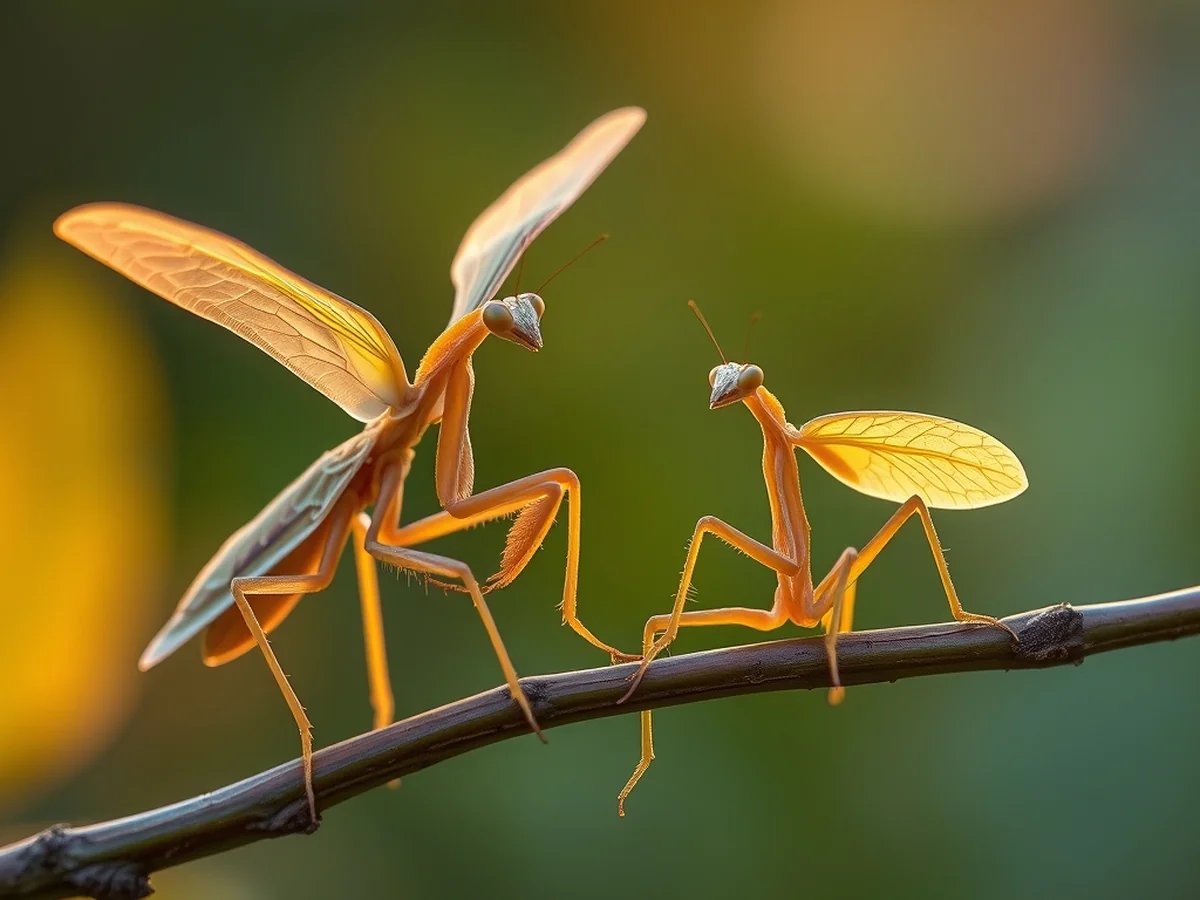
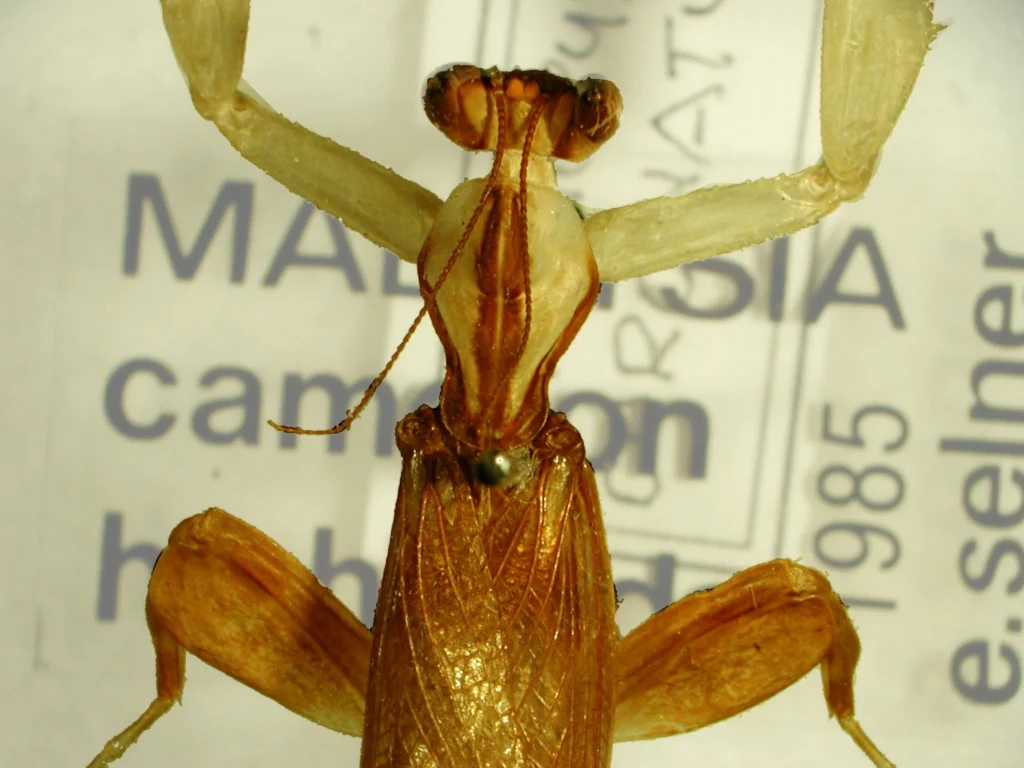
Adult males are much plainer. National Geographic describes them as a dull, greenish brown. They have the same basic body plan, including small leg lobes, but nothing like the female’s dramatic flower shape. Their wings are large compared with their light bodies, which suits their role as fliers.
Why the Sexes Are So Different
In many insects, females are bigger because size helps produce more eggs. A 2016 study in Scientific Reports, led by Gavin Svenson of the Cleveland Museum of Natural History, tested whether that applied here.
According to National Geographic’s coverage, the team measured more than 100 specimens and reconstructed the evolutionary history of the orchid mantis and its relatives. The results suggested this sequence:
- Ancestors began spending time around flowers, where pollinating insects were plentiful prey.
- A lineage evolved larger females, which could catch a wider range of prey.
- In the orchid mantises, females then developed bright white, yellow and pink colors that let them mimic flowers and attract prey.
Males kept their small, camouflaged form. Svenson explained the logic: a male that looked like a large, conspicuous flower while moving around to find mates would give himself away. Staying small and dull helps males avoid predators and travel.
The study concluded that predatory success, not egg production, drove the evolution of large females. Entomologist Hojun Song called this “entirely novel,” according to National Geographic.
Behavior
Females are calm and slow. They tend to settle in one spot and wait for prey to come to them, which suits their role as flower mimics. They have wings as adults but rarely fly.
Males are active and skittish. InsectStore notes that adult males can fly very well. In the wild, flight lets them find females scattered across the forest. In captivity, this means you need a secure lid and care when opening the enclosure.
Hunting Differences
Both sexes are ambush predators, but they hunt in different ways.
Females lure. The female’s flower-like body is what pollinators are drawn to. Field research by James O’Hanlon and colleagues, published in 2014, found that orchid mantises attracted pollinators at a higher rate than nearby flowers. Females can then tackle large prey such as bees and butterflies.
Juvenile females may be the best hunters of all. A 2014 study in Zoological Science by Takafumi Mizuno and colleagues found that juvenile female orchid mantises often succeeded in catching Oriental honeybees, while adult females often failed. The team linked the juveniles’ success to chemical cues they released while hunting, in addition to their appearance.
Males stay hidden. A small, greenish brown male does not attract prey the way a female does. He catches smaller insects that come within reach and relies on camouflage rather than display.
In captivity, this means males need smaller prey and less of it. InsectStore advises feeding males less than females, and Dubia Roaches recommends prey no longer than half the mantis’s body length.
How Males Find Females
In the wild, orchid mantises are spread thinly across the forest, so males have to travel. Their light bodies and large wings make them good fliers. Flying brings its own risk from bats, and here the mantis’s hidden ear helps. National Wildlife Federation describes how most mantises have a single ear in the thorax that detects bat ultrasound, letting a flying mantis swerve or dive away. For a small, flying male, that ear is a survival tool. More on this in orchid mantis anatomy.
Can a Male and Female Live Together?
No, except briefly for supervised mating. Orchid mantises are solitary, and a hungry female may treat a male as prey. Even two females should be kept apart. Every orchid mantis needs its own enclosure. Our orchid mantis care sheet covers housing in detail.
How to Sex Orchid Mantis Nymphs
Size and color are reliable only in older nymphs and adults. For younger nymphs, keepers count the visible segments on the underside of the abdomen.
Step-by-step
- Wait until the nymph is a few molts old. Segments are easier to see in middle instars, often from around L3 or L4 onward. Very young nymphs are hard to sex.
- Let the mantis climb onto a clear surface. The side of a clear deli cup or a sheet of acrylic works well. Do not grab it.
- Look at the underside of the abdomen. Use a magnifying glass or your phone’s camera zoom.
- Count the segments. InsectStore notes that males have eight visible segments and females have six or seven.
- Check the tip. In females, the last large segment (a plate at the tip) tends to be broad and covers what is beneath. In males, the segments continue in a more even series to the tip.
- Confirm as they grow. If unsure, check again after the next molt. By the subadult stage, size alone usually gives it away.
Common mistakes
- Counting from the top. Segments are clearest on the underside.
- Counting the thorax. Start counting from the first segment behind the hind legs.
- Relying on color. Young nymphs of both sexes can be white and pink.
- Stressing the nymph. Never sex a mantis just before or after a molt. Its body is soft and easily damaged.
Molts and Maturity
Males reach adulthood after fewer molts than females. Keepers commonly report about 5 to 6 molts for males and 7 to 8 for females. A US Mantis care sheet notes molts roughly every three weeks, with the final molt taking about twice as long.
The result is that a male hatched on the same day as a female can be an adult months before she is. For breeders, this is the central challenge. More on growth stages in orchid mantis life cycle.
Lifespan
Females live longer. Most keepers report about 8 to 9 months for females and 5 to 6 months for males, counted from hatching. The Montreal Insectarium gives longer ranges (12 to 18 months for females and 7 to 10 months for males), which shows how much conditions matter. See orchid mantis lifespan.
Breeding: Why the Differences Matter
The size and maturity gaps make orchid mantis breeding a careful process.
Timing the pair
Because males mature faster, breeders slow them down. InsectStore suggests keeping males cooler, at about 15 to 18°C, and feeding them less, so that a male reaches adulthood around the time the female does. A US Mantis care sheet notes that mating takes place about 3 to 4 weeks after the female’s final molt.
Courtship
The Montreal Insectarium describes the male making advances by drumming on the female’s thorax with his forelegs. It reports that mating can take 24 to 36 hours.
The risk of cannibalism
With a female up to 12 times his mass, a male is in real danger. The Montreal Insectarium notes that the female sometimes feeds on him during mating, though it describes this as infrequent. Keepers reduce the risk by feeding the female well before the pairing, supervising, and separating the two afterward.
After mating
Females typically produce around three egg cases, according to US Mantis. Full details on egg cases, incubation and hatching are in orchid mantis eggs and breeding.
Buying: Male, Female or Unsexed?
Breeders often sell young orchid mantis nymphs unsexed, because sexing is unreliable at that age. Some sell sexed subadults or pairs at a higher price. A few things to know:
- Females cost more. Because females are the showpiece and live longer, sexed females usually carry a premium. Bugs in Cyberspace, for example, listed unsexed nymphs at $50 and females at $75.
- Males are short-lived. If you buy a male, expect a shorter life and a less flower-like adult.
- Unsexed is a gamble. You may get either sex. If you want a flower-like display animal, ask for a female or a subadult that can be sexed.
See orchid mantis price and where to buy an orchid mantis for more.
Related Guides
If you want to go deeper, these guides pick up where this page leaves off:
- Orchid mantis size: how big males and females get.
- Orchid mantis eggs and breeding: ootheca, mating and hatching.
- Orchid mantis lifespan: how long males and females live.
- Orchid mantis life cycle: from red and black nymph to adult.
Frequently Asked Questions
What is the difference between a male and female orchid mantis?
Females are about twice as long and roughly 12 times heavier, white to pink and flower-like. Males are small, greenish brown and fly readily. Females have 6 or 7 visible abdominal segments; males have 8.
How do you sex an orchid mantis?
Count the segments on the underside of the abdomen: 8 for males, 6 or 7 for females. This is easiest from the middle nymph stages onward.
Is a male or female orchid mantis better as a pet?
Most keepers prefer a female. She lives longer, grows larger and shows the flower-like look the species is known for. A male is a good choice only if you plan to breed.
Are male orchid mantises pink?
Not usually. Adult males are generally dull and greenish brown. Pink and white coloring is mainly a feature of females and juveniles.
Do male orchid mantises fly?
Yes. Adult males fly well. Adult females have wings but rarely fly.
Do female orchid mantises eat the males?
They can, especially during or after mating, but it does not always happen. Feeding the female well before pairing reduces the risk.
At what age can you tell if an orchid mantis is male or female?
Segment counting usually becomes practical in the middle nymph stages, often from around L3 or L4. By the subadult stage, the size difference makes it obvious.
Which lives longer, male or female?
Females live longer, often several months more than males.
Sources
- InsectStore, Hymenopus coronatus care sheet: https://insectstore.com/mantids/hymenopus-coronatus-orchid-mantis
- US Mantis, orchid mantis care sheet (PDF): https://cdn.shopify.com/s/files/1/1296/7335/files/Orchid_Mantis_care_sheet.pdf
- National Geographic, “Praying Mantis Looks Like a Flower, And Now We Know Why”: https://www.nationalgeographic.com/animals/article/orchid-mantises-evolution-insects
- O’Hanlon, J.C., Li, D. and Norma-Rashid, Y. (2013). Coloration and morphology of the orchid mantis. https://hdl.handle.net/1959.11/27641
- O’Hanlon, J.C. et al. (2014). Pollinator deception in the orchid mantis. The American Naturalist. https://www.journals.uchicago.edu/doi/reader/10.1086/673858
- Mizuno, T. et al. (2014). Zoological Science 31(12): 795-801. https://bioone.org/journals/zoological-science/volume-31/issue-12/zs140126/Double-Trick-Visual-and-Chemical-Mimicry-by-the-Juvenile-Orchid/10.2108/zs140126.short
- Dubia Roaches, Orchid mantis care sheet: https://dubiaroaches.com/blogs/invert-care/orchid-mantis-care-sheet
- National Wildlife Federation, “The Better to Hear You With”: https://www.nwf.org/Magazines/National-Wildlife/2009/The-Better-to-Hear-You-With
- Montreal Insectarium (Espace pour la vie), Orchid praying mantis: https://espacepourlavie.ca/en/insects-arthropods/orchid-praying-mantis?mode=76
- Bugs in Cyberspace, Orchid Mantis listings: https://bugsincyberspace.com/product/buy-orchid-mantis-live-pet/ and https://bugsincyberspace.com/product/orchid-mantis-female
- Wikipedia, Hymenopus coronatus: https://en.wikipedia.org/wiki/Hymenopus_coronatus