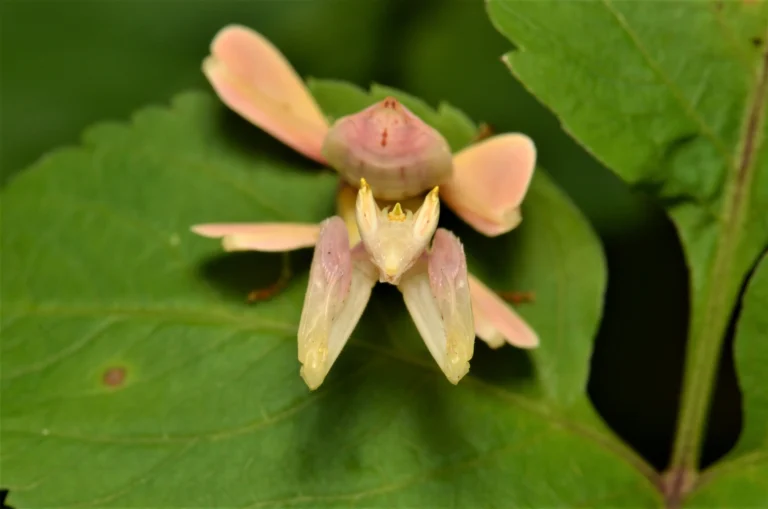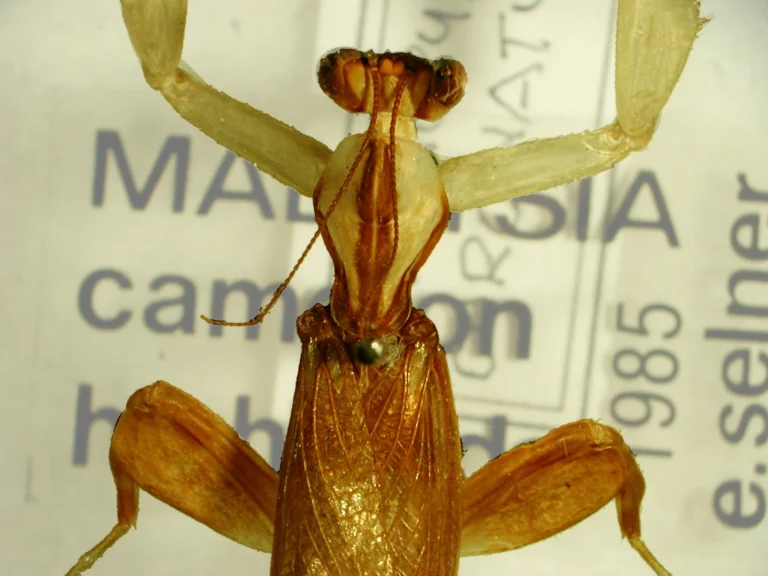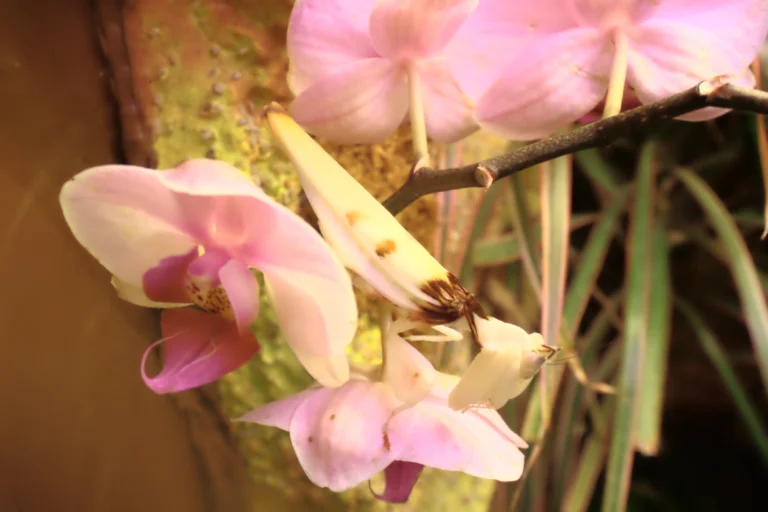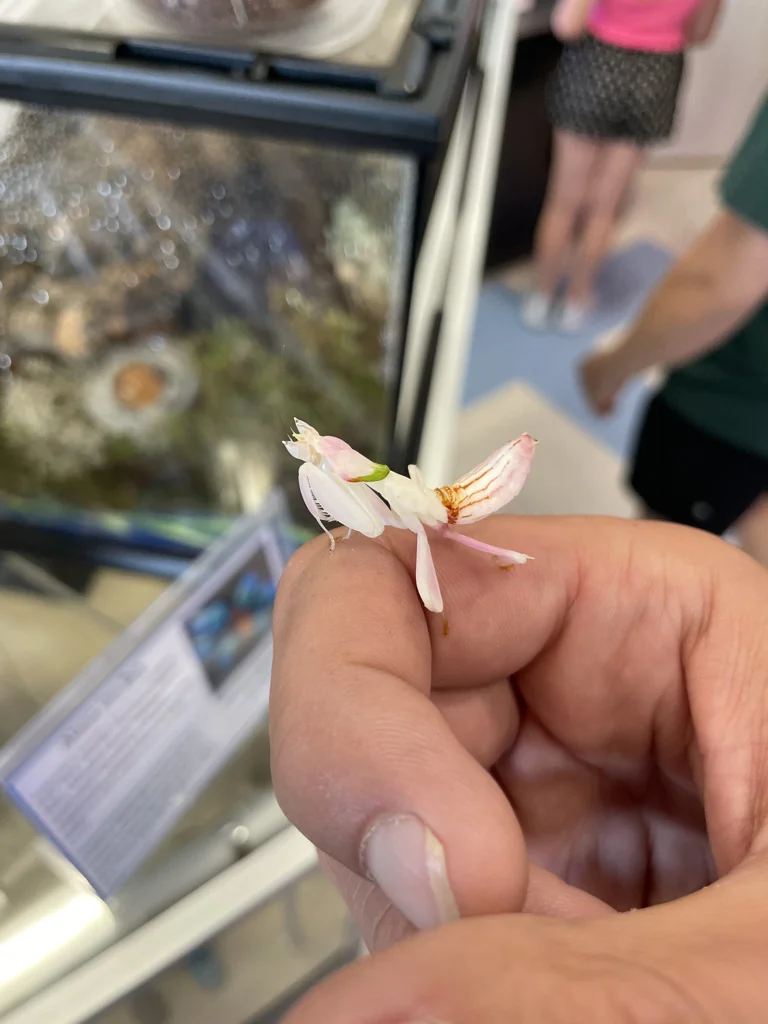
Orchid Mantis Lifespan: How Long Do Orchid Mantises Live?
Orchid mantises live short lives. Most keepers report that females live about 8 to 9 months and males about 5 to 6 months, counted from hatching. Some sources give longer figures, especially for females kept at cooler temperatures, and others give shorter ones. The differences come down to how lifespan is measured and how the mantis is kept.
This guide brings together what zoos, museums and experienced breeders report, explains why the numbers vary, and shows what you can do to give a pet orchid mantis a full life.
Orchid Mantis Lifespan at a Glance
| Source | Female | Male | What is measured |
|---|---|---|---|
| Common keeper reports | About 8 to 9 months | About 5 to 6 months | From hatching |
| AOL / A-Z Animals | 8 to 10 months | 4 to 6 months | Total life |
| Dubia Roaches care sheet | 5 to 9 months total for the species; females live longer, especially at lower temperatures | Total life | |
| Dimensions.com | 5 to 9 months for the species | Total life | |
| US Mantis care sheet | Adults live 3 to 6 months, rarely much longer | Adult stage only | |
| Montreal Insectarium | 12 to 18 months | 7 to 10 months | Total life |
Two things stand out. First, every source agrees that females outlive males. Second, the ranges overlap only loosely, because some sources count from hatching and others from adulthood, and because temperature has a large effect.
How Long Do Orchid Mantises Live? The Realistic Answer
For a pet kept at typical tropical temperatures, a reasonable expectation is:
- Female: around 8 to 9 months from hatching, sometimes longer if kept slightly cooler as an adult.
- Male: around 5 to 6 months from hatching, with only a few months as an adult.
The longer figures from the Montreal Insectarium show what is possible under some conditions, but they are not guaranteed. The shorter figures from Dimensions.com and Dubia Roaches are a reminder that many orchid mantises do not reach the top of the range.
Why Males Live Shorter Lives
Male orchid mantises mature faster and die sooner. Keepers commonly report that males reach adulthood after about 5 to 6 molts, compared with about 7 to 8 for females. A US Mantis care sheet notes molts about every three weeks, with the final molt taking about twice as long.
Once mature, a male’s role is to find a female and mate. He is small, light and a good flier, built for travel rather than longevity. Research led by Gavin Svenson found that females evolved large bodies for hunting large prey, while males stayed small and camouflaged to move around and avoid predators. A short adult life fits that strategy.
For breeders, the gap matters. If males and females hatch at the same time, the males can mature and die before the females are ready to mate. That is why breeders slow males down with cooler temperatures and less food. See male vs female orchid mantis.
Lifespan by Life Stage
An orchid mantis’s life is split into three stages. The length of each depends on sex and temperature.
| Stage | What happens | Typical timing |
|---|---|---|
| Egg (ootheca) | Embryos develop inside a foamy egg case | About 40 days at 80°F (US Mantis) |
| Nymph | Grows through a series of molts | Molts about every 3 weeks; males need fewer molts than females |
| Adult | Full wings, no more molts, can breed | US Mantis: about 3 to 6 months, rarely longer |
The full sequence, including what each instar looks like, is in orchid mantis life cycle.
An example timeline for a female
Putting the keeper figures together gives a rough picture of a female’s life. This is an illustration built from the numbers above, not a fixed schedule.
| Period | Approximate time | Running total |
|---|---|---|
| Hatching to first molts | First 3 to 6 weeks | About 1 to 1.5 months |
| Middle nymph stages | Molts roughly every 3 weeks | About 3 to 4 months |
| Subadult to final molt | Final molt can take about twice as long | About 4.5 to 6 months |
| Adult life | Several months | About 8 to 9 months or more |
A male follows the same pattern with fewer molts, so he reaches adulthood sooner and his total is shorter. Warm temperatures compress every step; cooler temperatures stretch them.
What Affects an Orchid Mantis’s Lifespan?
Temperature
Temperature has the strongest effect. Warmth speeds up an insect’s metabolism, growth and molting. Dubia Roaches notes that orchid mantises live longer, particularly females, at lower temperatures. Breeders use the same principle when they keep males cooler, at about 15 to 18°C according to InsectStore, to slow their development.
This does not mean you should keep your mantis cold. Orchid mantises are tropical and need warmth to eat, digest and molt properly. The practical approach is to keep nymphs within the normal range for healthy growth, then avoid running the enclosure at the hot end of the range once a female is adult.
Successful molting
A bad molt, or mismolt, can cripple or kill a mantis. Most mismolts trace back to low humidity, too little height, poor grip on the ceiling, or being disturbed mid-molt. Every successful molt is a step toward a full lifespan.
Food and water
Underfed mantises grow slowly and may be weak at molts. Overfeeding is less dangerous but can lead to a heavy, inactive mantis. A steady supply of suitable flying insects and regular misting for drinking water support a normal life. See what orchid mantises eat.
Humidity and ventilation
Orchid mantises need humid air, but a US Mantis care sheet warns that high humidity without adequate ventilation will kill specimens. Damp, stagnant air encourages mold and bacteria. Good airflow is as important as humidity.
Breeding
Producing eggs takes a lot from a female. US Mantis reports that females typically lay about three egg cases. A female that breeds may not live as long as one that does not. Males that mate are also at risk of being eaten by the female.
Stress and handling
Frequent handling, sudden temperature changes and disturbance near a molt all add stress. Orchid mantises are best treated as “look but don’t touch” pets for most of their lives.
Why Sources Disagree on Orchid Mantis Lifespan
If you compare care sheets, the numbers can look contradictory. Three things explain most of the gap:
- Starting point. Some sources count from hatching, others from the final molt. “Adults live 3 to 6 months” and “females live 8 to 9 months” can both be true.
- Temperature. A mantis kept warm grows and ages faster than one kept cooler.
- Sex. A figure that blends males and females will sit between the two.
When you read a lifespan figure, check which of these it refers to.
Orchid Mantis Lifespan in Captivity vs the Wild
There is little reliable data on how long orchid mantises live in the wild. In nature, they face predators, weather, disease and food shortages, so many likely die young. The orchid mantis is also rarely seen in the wild, which makes long-term observation difficult.
In captivity, with steady conditions and no predators, a mantis is more likely to reach its full natural lifespan. Most published figures come from captive animals, so treat them as captive lifespans.
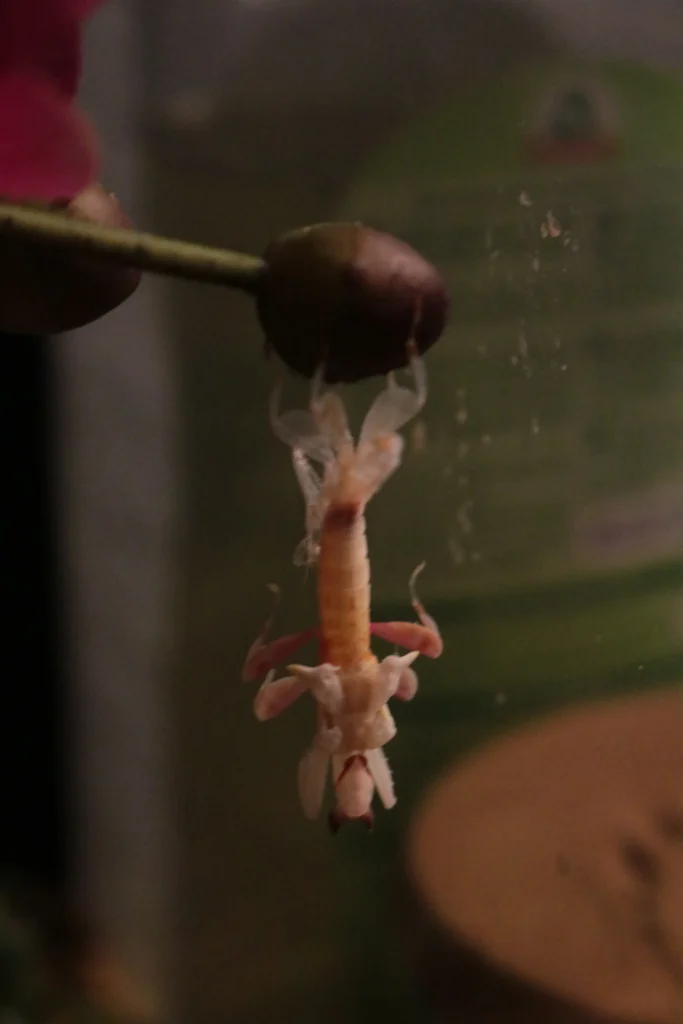
Signs Your Orchid Mantis Is Reaching Old Age
As an adult orchid mantis nears the end of its life, you may notice:
- Eating less or refusing prey more often
- Slower movement and less interest in its surroundings
- Difficulty gripping the walls or ceiling
- Falling or resting on the floor of the enclosure
- Darkening or dull patches on the body
- In females, laying unfertilized egg cases
These changes are normal for an adult mantis that has lived several months past its final molt. If they appear in a young nymph, look for a care problem instead. Our orchid mantis care sheet has a troubleshooting section.
How to Help Your Orchid Mantis Live Longer
- Buy healthy, captive-bred nymphs from a reputable breeder. See where to buy an orchid mantis.
- Choose a female if a longer life matters to you.
- Give enough height for every molt, with a mesh or textured ceiling.
- Keep humidity steady and air moving. Mist, then let surfaces dry.
- Feed suitable flying prey no larger than half the mantis’s body length.
- Avoid the hot end of the temperature range for adult females.
- Handle rarely, and never during or just after a molt.
- House each mantis alone.
Keep a Simple Log
A written record helps you understand your mantis’s life and spot problems early. Note the date you got it, its stage at purchase, the date of each molt, any meals refused, and the temperature and humidity readings. Over time, you will see whether molts are on schedule. A molt that is far overdue, or a sudden run of refused meals in a young mantis, is a signal to check conditions.
A log also helps if you ever ask a breeder or an experienced keeper for advice. Specific dates and readings are far more useful than a general description.
Lifespan and Cost: Is It Worth It?
The short life is the main reason some people hesitate to buy an orchid mantis. Captive-bred nymphs from US breeders commonly cost roughly $40 to $100, and AOL and A-Z Animals report that some buyers pay up to $450. Their profile notes that buyers can find it hard to justify the purchase given the short lifespan and the difficulty of raising nymphs to adulthood.
Seen another way, most of the experience is packed into a few months. You see the red and black hatchling turn white and pink, grow its petal-like legs, molt into a winged adult and, if you breed, start the cycle again. If you know what to expect, a short life is not a disappointment. See orchid mantis price and the orchid mantis as a pet.
Orchid Mantis Lifespan Compared With Other Mantises
| Species | Typical lifespan reported |
|---|---|
| Orchid mantis | Under a year; females about 8 to 9 months, males about 5 to 6 months (keeper reports) |
| Ghost mantis (Phyllocrania paradoxa) | About 7 to 12 months (Dubia Roaches) |
| Devil’s flower mantis (Idolomantis diabolica) | Typically about 12 months (Wikipedia) |
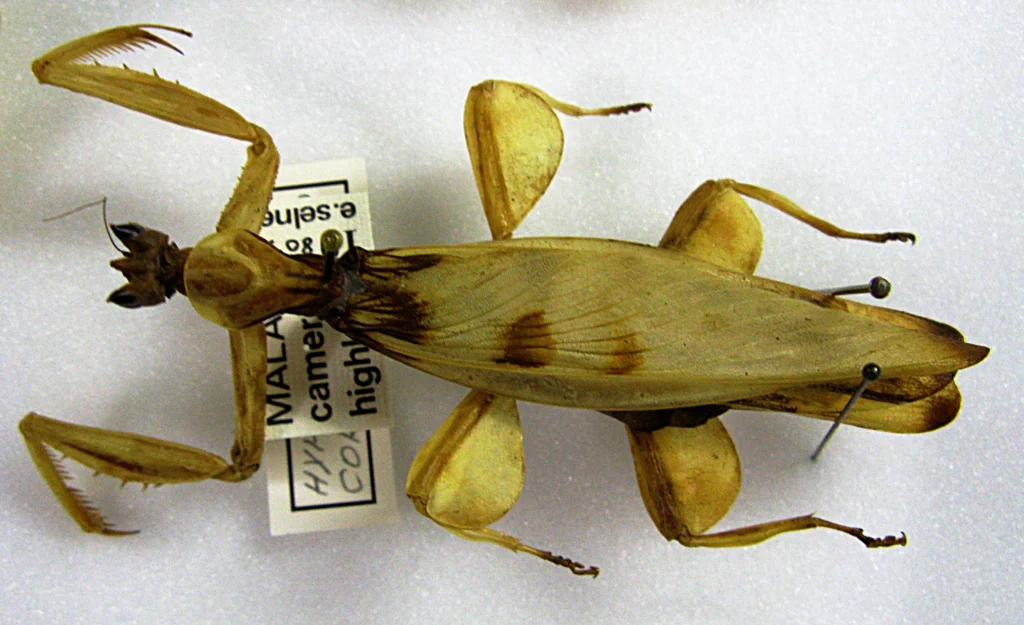
| Wandering violin mantis (Gongylus gongylodes) | Males about 12 months, females about 15 months (Fact Animal) |
The orchid mantis is among the shorter-lived exotic mantises, especially the males. It is one reason the AOL and A-Z Animals profile notes that some buyers find it hard to justify the price.
Related Guides
If you want to go deeper, these guides pick up where this page leaves off:
- Orchid mantis life cycle: from red and black nymph to adult.
- Orchid mantis care sheet: temperature, humidity, feeding and molting.
- Male vs female orchid mantis: how to tell them apart.
- Orchid mantis as a pet: pros, cons and who it suits.
Frequently Asked Questions
How long do orchid mantises live in captivity?
Usually under a year. Females commonly live about 8 to 9 months and males about 5 to 6 months from hatching.
How long does an orchid mantis live as an adult?
US Mantis reports that adults live about 3 to 6 months, rarely much longer. Females usually last longer as adults than males.
Why did my orchid mantis die so young?
Common causes in young mantises are mismolts, low humidity, poor ventilation, the wrong prey or overheating. In adult males, a short life is normal.
Do female orchid mantises live longer than males?
Yes. Every source we reviewed agrees that females outlive males, often by several months.
Does temperature affect orchid mantis lifespan?
Yes. Warmer conditions speed up growth and shorten life. Dubia Roaches notes that females live longer at lower temperatures.
Is a short life a sign of poor care?
Not necessarily. A male that dies a few months after his final molt has lived a normal life. A young nymph that dies before adulthood, however, usually points to a problem with molting conditions, food or ventilation.
Does mating shorten a female’s life?
Producing egg cases takes a lot of energy, and keepers often find that females decline after laying. A female that does not breed may live somewhat longer, though she may still lay unfertilized egg cases.
Can an orchid mantis live for a year?
Some do, especially females. The Montreal Insectarium gives figures of 12 to 18 months for females, but most pet orchid mantises live less.
Sources
- AOL / A-Z Animals, “Orchid Mantis: The Expensive Exotic Insect You Thought Was a Flower”: https://www.aol.com/articles/orchid-mantis-expensive-exotic-insect-154459188.html
- Dubia Roaches, Orchid mantis care sheet: https://dubiaroaches.com/blogs/invert-care/orchid-mantis-care-sheet
- Dimensions.com, Orchid Mantis: https://www.dimensions.com/element/orchid-mantis-hymenopus-coronatus
- US Mantis, orchid mantis care sheet (PDF): https://cdn.shopify.com/s/files/1/1296/7335/files/Orchid_Mantis_care_sheet.pdf
- Montreal Insectarium (Espace pour la vie), Orchid praying mantis: https://espacepourlavie.ca/en/insects-arthropods/orchid-praying-mantis?mode=76
- InsectStore, Hymenopus coronatus: https://insectstore.com/mantids/hymenopus-coronatus-orchid-mantis
- National Geographic, “Praying Mantis Looks Like a Flower, And Now We Know Why”: https://www.nationalgeographic.com/animals/article/orchid-mantises-evolution-insects
- Dubia Roaches, Ghost mantis care sheet: https://dubiaroaches.com/blogs/invert-care/ghost-mantis-care-sheet
- Wikipedia, Idolomantis: https://en.wikipedia.org/wiki/Idolomantis
- Fact Animal, Wandering Violin Mantis: https://factanimal.com/?p=4668