Orchid Mantis Colors: White, Pink, Yellow, Purple and Why They Change
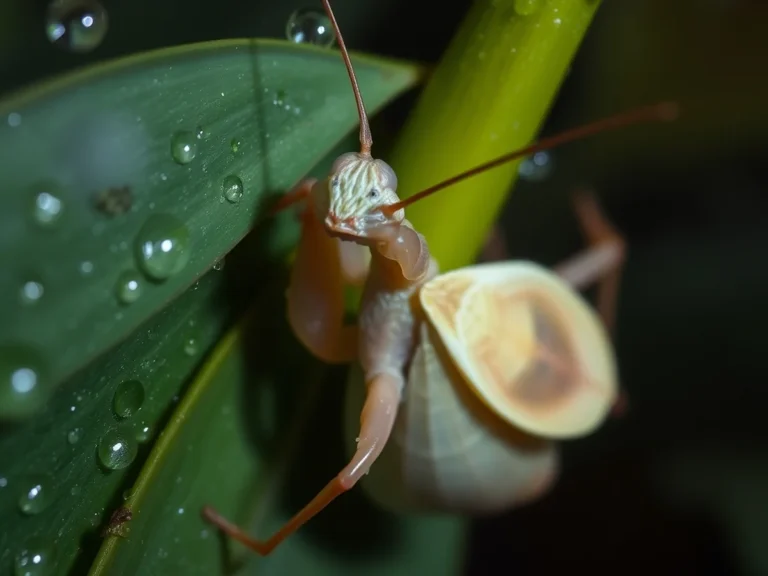
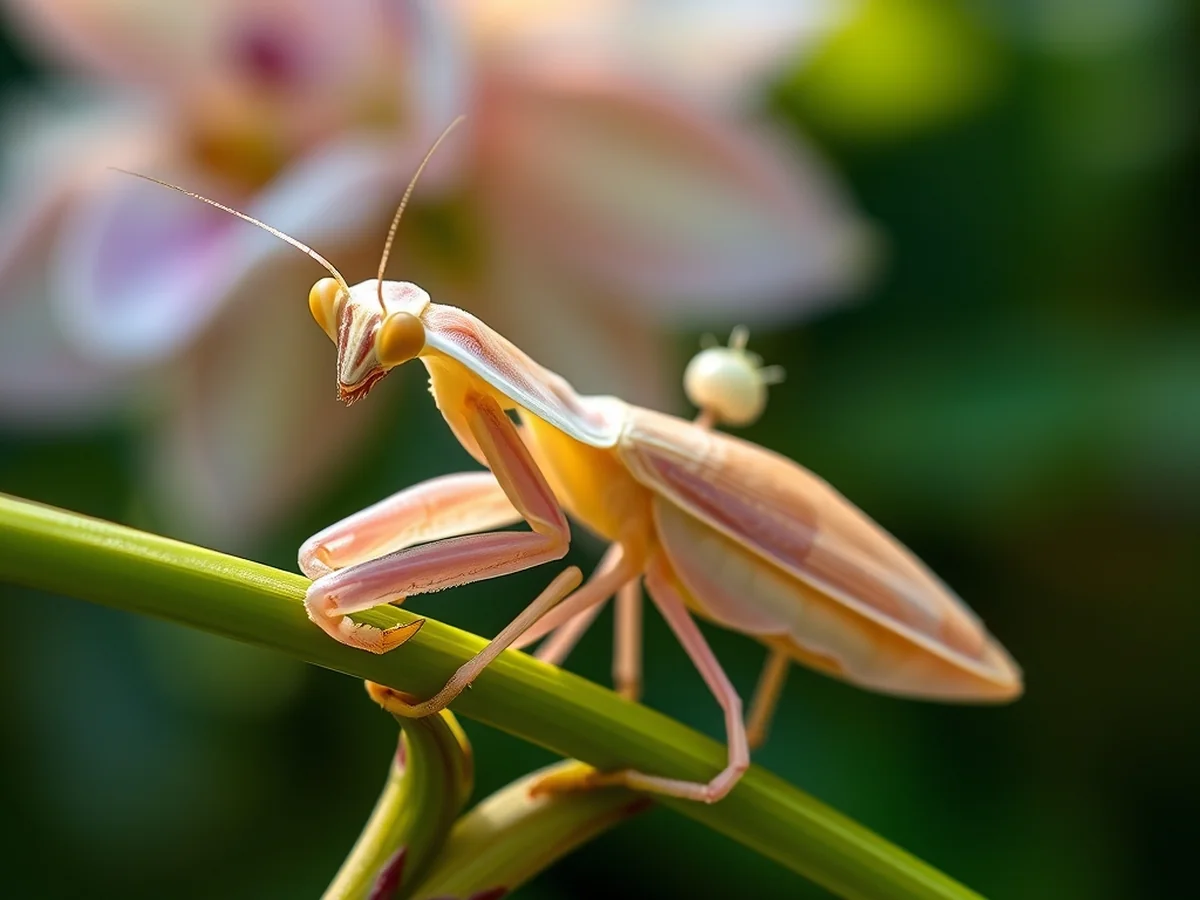
Orchid mantis colors are famous for being pink, but most individuals are better described as white with a pink or yellow blush. Young orchid mantises can shift color over days or weeks, sometimes toward pink, sometimes toward purple, yellow-green or brown. Babies start out red and black, and adult males end up greenish brown. Add edited photos and AI images, and it is easy to see why color is one of the most confusing topics about this species.
This guide explains every color you are likely to see, what causes color changes, which colors are normal and which are signs of a problem, and how to spot an edited “rainbow” orchid mantis.
The Normal Color Range
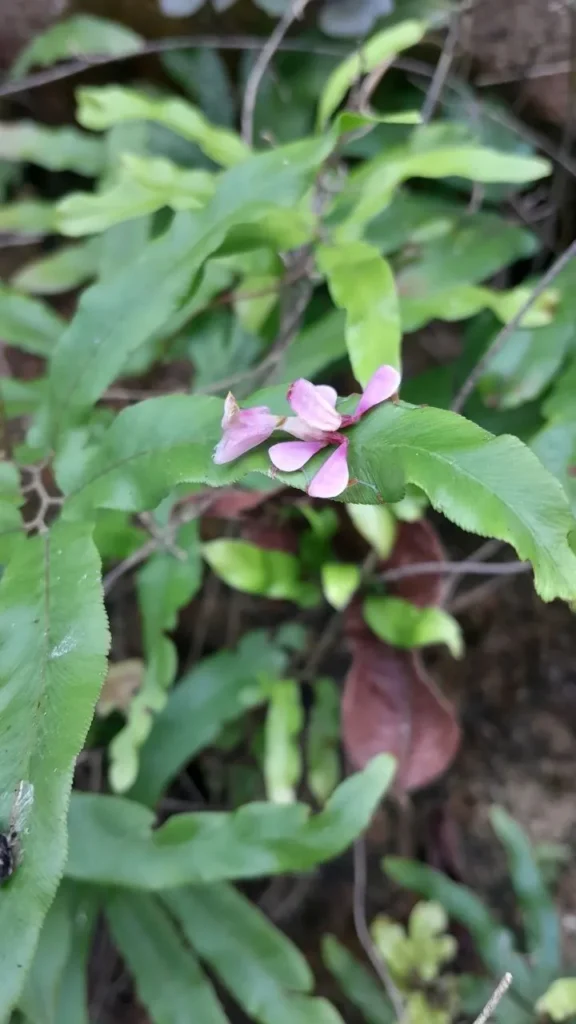
A 2013 study by James O’Hanlon and colleagues in the Journal of Orthoptera Research described the orchid mantis as predominantly white, often with pink or yellow hues. National Geographic notes that Malaysian orchid mantises come in a variety of colors, including white, pink and yellow.
| Color | How common | Notes |
|---|---|---|
| White | Very common | The base color for most individuals |
| Pink | Common as a blush or tint | Strongest on leg lobes and edges in many mantises |
| Yellow or cream | Common | Some individuals lean yellow rather than pink |
| Purple or lilac tint | Occasional, subtle | Reported as part of juvenile color shifts |
| Yellowish green | Occasional | Part of juvenile color shifts |
| Brown | Normal in adult males; possible in others | Adult males are greenish brown; others may darken |
| Red and black | Normal in L1 nymphs | Fades after the first molt |
| Bright blue or rainbow | Not natural | Edited images or other species |
White Orchid Mantis
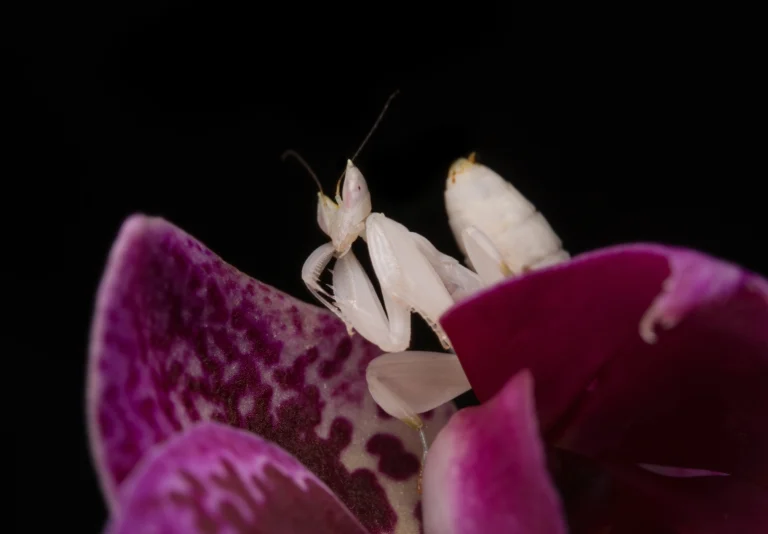
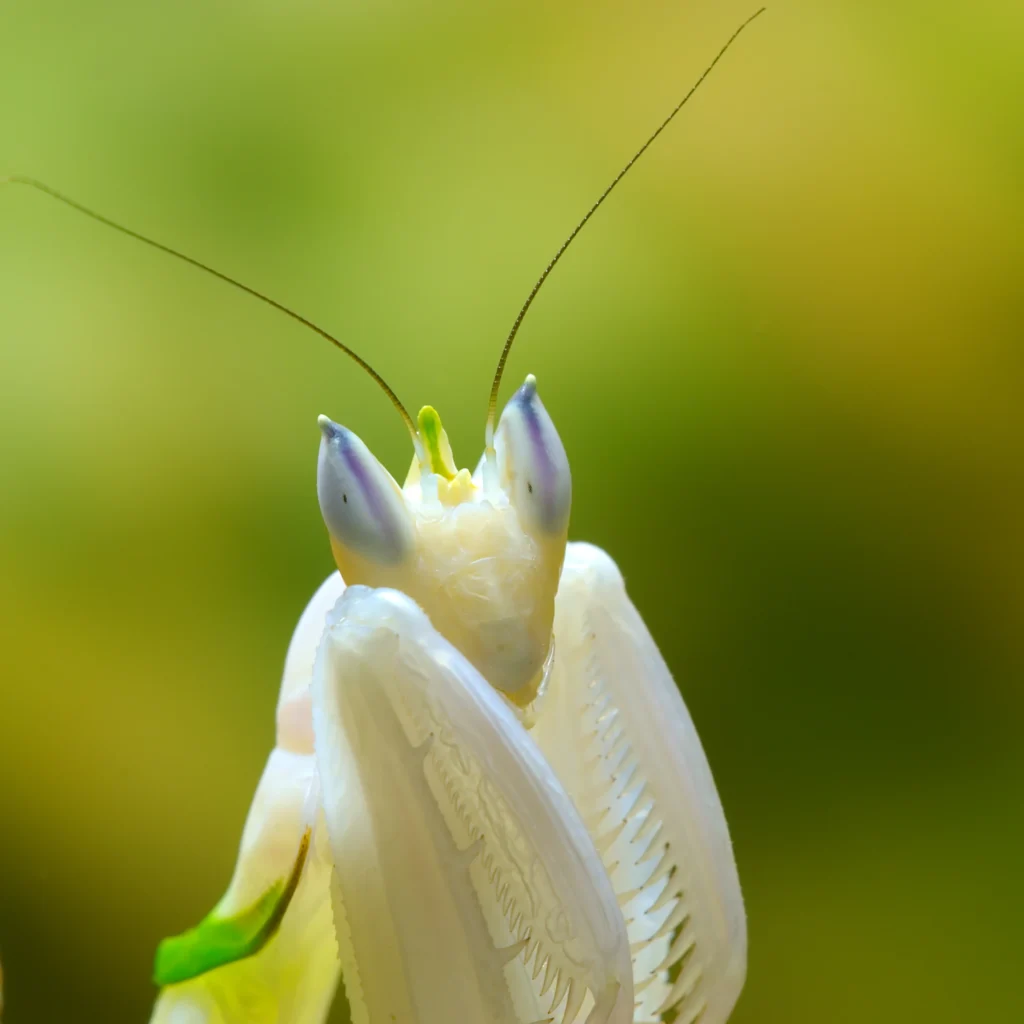
A white orchid mantis is not a rare variety; it is the most common look for the species. The 2013 study found that orchid mantises mainly reflect what the authors called UV-absorbing white. To the eyes of bees and other pollinators, which see ultraviolet light, this white falls within the color range of local flowers.
White is part of what makes the mantis such an effective lure. A 2014 study in The American Naturalist found that orchid mantises attracted pollinators at a higher rate than real flowers did. A mostly white mantis is just as convincing to a pollinator as a pink one.
White mantis vs other white mantises
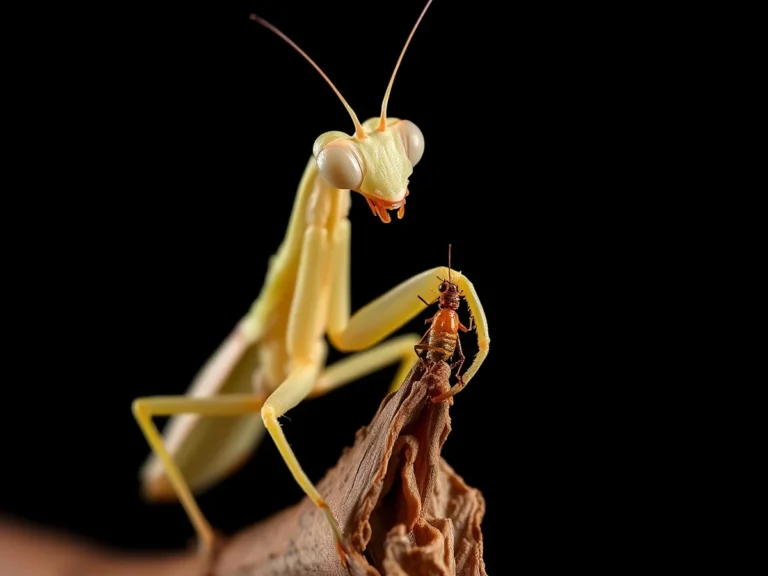
If you searched for a “white mantis” or “white orchid praying mantis” after seeing a pale mantis outdoors, consider one more possibility. Mantises of many species look pale, almost white, right after a molt, before their new exoskeleton hardens and darkens. A white mantis in your garden in a temperate country is far more likely to be a freshly molted local species than an orchid mantis.
Pink Orchid Mantis
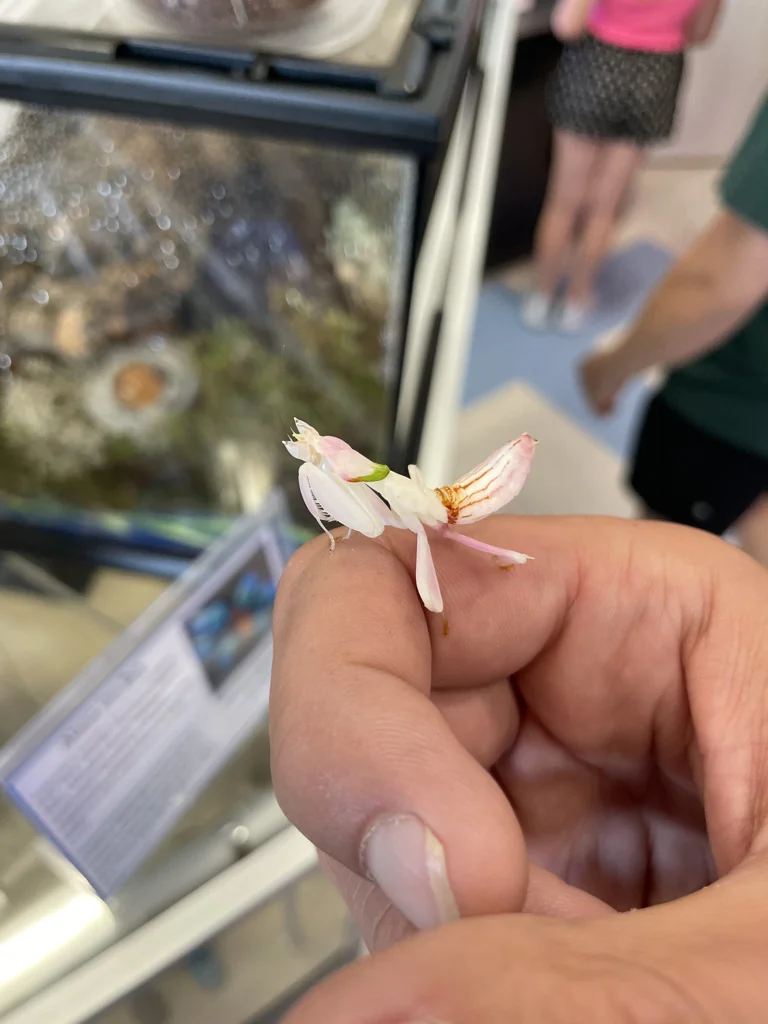
Pink is the color most people associate with the species, and it is what earned the name “pink orchid mantis.” In practice, the pink is usually a blush over a white base, strongest on the edges of the leg lobes, the head and the abdomen. Some individuals are a fuller, more even pink.
Pink is not fixed. A nymph can look pinker or whiter after a molt. Breeders cannot guarantee a pink adult, which is why sellers who promise a specific shade are guessing. For more on pink mantises, including other species that can be pink, see pink praying mantis.
Yellow Orchid Mantis
Some orchid mantises have yellow or cream tones instead of pink. The 2013 study listed yellow alongside pink as a common hue, and National Geographic’s report on the species’ evolution described females with a yellow or whitish pink color. A yellow orchid mantis is a normal variant, not a separate species.
Purple Orchid Mantis
A light purple or lilac tint can appear during color shifts in juveniles. The Natural History Museum of Utah lists purple among the shades young orchid mantises move through, and the Howard Hughes Medical Institute’s Beautiful Biology feature also lists purple among possible colors.
What you will not see in nature is a deep, saturated purple orchid mantis like those in some viral images. Those are usually edited photos or AI creations. Strong purple and blue colors in mantis photos often come from a different species, the devil’s flower mantis, whose forelegs carry real blue and purple patches. See blue orchid mantis.
If you searched “praying mantis purple” after seeing one outdoors, it is likely a different species or a lighting effect, not an orchid mantis.
Green Orchid Mantis
A green tint can appear as part of juvenile color shifts. The Natural History Museum of Utah mentions yellowish green among the shades young orchid mantises take. The HHMI feature also points out a green plate just behind the head on one example.
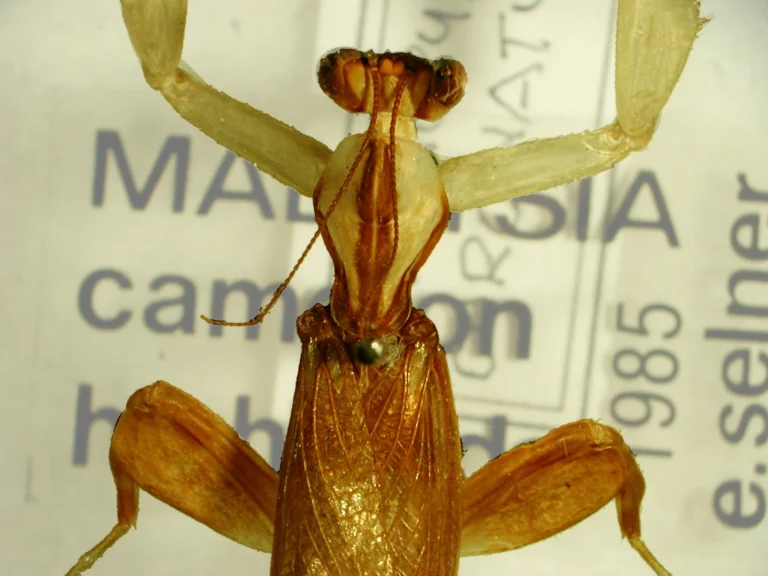
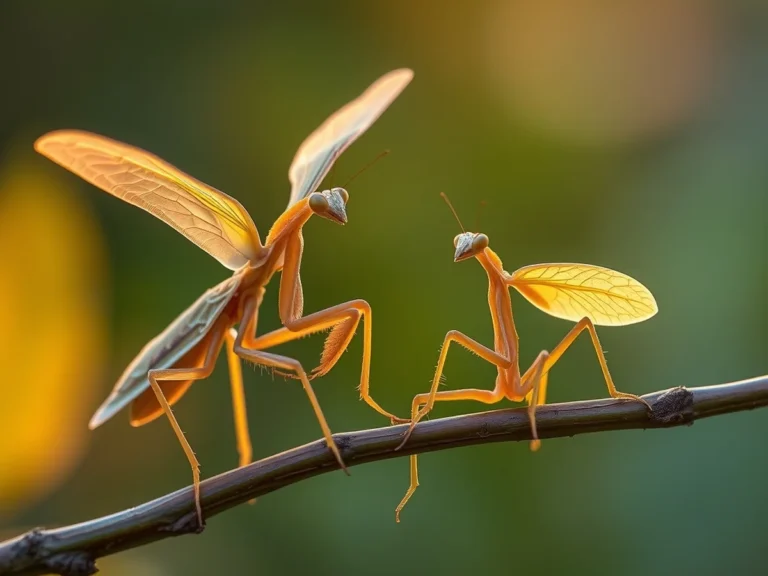
Adult males are often described as greenish brown, according to National Geographic. So a small, green-brown winged orchid mantis is very likely a male.
Brown Orchid Mantis
Brown appears in three situations:
- Adult males. Brown or greenish brown is normal for adult males.
- Color shifts. Wikipedia’s species account states that the mantis can change between pink and brown according to the color of its background, and HHMI lists brown among possible shades.
- Stress or illness. Keepers often report that a mantis turning dark or dull brown suddenly may be dehydrated, stressed or unwell. This is not well studied scientifically, so treat it as a signal to check conditions rather than a diagnosis.
If a juvenile female turns brown gradually while otherwise eating, molting and climbing normally, it may simply be a color shift. If it turns dark quickly and also stops eating or gripping, check humidity, ventilation and temperature right away. Our orchid mantis care sheet has a troubleshooting list.
Black and Red: The Baby Colors
A black orchid mantis is most likely a newly hatched nymph. InsectStore describes nymphs emerging black and red, with those colors fading after the first molt. Wikipedia notes that first-stage nymphs mimic assassin bugs, which bite and taste bad. See orchid mantis life cycle.
An older orchid mantis that turns black is a different matter. Darkening can happen as an insect dies or after death. It is not a normal color for a healthy juvenile or adult.
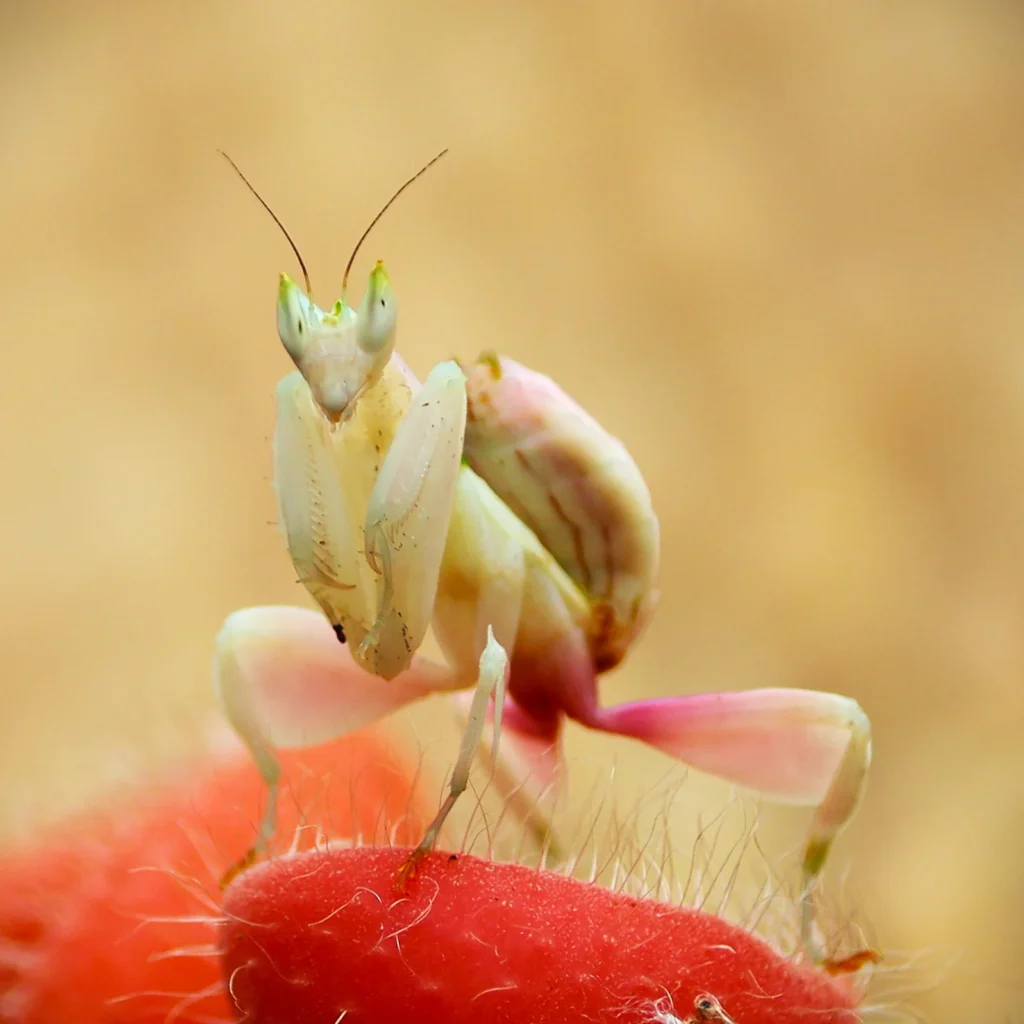
Can Orchid Mantises Change Color?
Yes, but slowly and within limits.
- How fast: The Natural History Museum of Utah explains that color change takes days or weeks, not seconds.
- When: It happens while the mantis is young and still growing, often around molts.
- Which colors: White, pink, purple, yellowish green and brown are all reported.
- Why: Wikipedia and HHMI both link color to the background, and A-Z Animals reports that the mantis can shift its coloration over a few days to better suit its surroundings.
What is not supported is the idea that an orchid mantis changes color instantly to match the exact flower it sits on. That is a myth. Research also suggests it does not copy any single flower’s color; it presents a general flower-like signal. See orchid mantis camouflage.
Does background color really matter?
Background color has been shown to affect color development in other mantises. A 2025 study in Ecology and Evolution on the North American mantis Stagmomantis limbata found that nymphs changed color over development in response to the color of the containers they were reared in. Orchid mantises have not been studied as thoroughly in this way, but keeper reports and museum sources point in the same direction. Some keepers place white or pink flowers, or pale backgrounds, in enclosures to encourage lighter coloring. Results vary, and there is no guaranteed method.
Why Females Are Colorful and Males Are Not
The difference in color between the sexes has an evolutionary explanation. A 2016 study led by Gavin Svenson reconstructed how orchid mantises and their relatives changed over time. National Geographic’s summary explains that the ancestral camouflage of these mantises was green and black. In the orchid mantises, females later developed conspicuous yellow, white and pink colors that let them mimic flowers and attract prey.
Males kept a more camouflaged look. A small, brightly colored mantis moving around to find mates would be easy for predators to spot. That is why an adult male orchid mantis is greenish brown, while an adult female looks like a blossom. See male vs female orchid mantis.
Does Color Affect Hunting?
Probably less than you might think. The 2013 color study found that, to a pollinator’s eyes, the variation in color across a single mantis would be hard to tell apart, and the species as a whole reflects mainly UV-absorbing white. Pink and white individuals both fall within the color range of local flowers as pollinators see them.
Juveniles also have a non-visual trick. A 2014 study in Zoological Science found that juvenile orchid mantises release chemical compounds that attract Oriental honeybees. So a mantis’s hunting success depends on its whole “flower signal,” not just how pink it looks to us.
Orchid Mantis Colors by Life Stage
| Stage | Typical colors |
|---|---|
| L1 nymph | Red and black |
| Early instars | Red and black fading; white appearing |
| Middle instars | White to pink, sometimes yellow, purple or green tints |
| Subadult females | White to pink or yellow; most flower-like |
| Adult females | White to pink or yellow; wings cover part of the body |
| Adult males | Greenish brown |
How to Spot an Edited “Rainbow” Orchid Mantis
Photos of blue, rainbow or neon orchid mantises spread widely online. Most are edited or AI-generated. Clues include:
- Unnatural saturation. Neon blue, teal or rainbow gradients are not part of the species’ range.
- Halos or glow. Bright edges around the body suggest digital editing.
- Mismatched background. The leaves around the mantis look oddly colored too, a sign of a global color shift.
- AI artifacts. Extra legs, fused antennae or a hand with the wrong number of fingers.
If the photo comes with a “for sale” offer, be cautious. See lotus mantis: real or fake? for how viral flower insects are made.
Can You Choose Your Orchid Mantis’s Color?
Not reliably. Breeders sell nymphs, and adult color depends on genetics, sex and conditions. A few practical points:
- Choose a female if you want a white or pink adult. Males become greenish brown.
- Ask to see the parents or older siblings, which can hint at the line’s typical coloring.
- Expect change. Color can shift between molts.
- Do not pay extra for a promised color in a young nymph.
See orchid mantis price for what affects cost.
Related Guides
If you want to go deeper, these guides pick up where this page leaves off:
- Pink praying mantis: which mantises are pink, and why.
- Orchid mantis camouflage: the science of its flower disguise.
- Blue orchid mantis: the devil’s flower mantis behind the blue photos.
- Orchid mantis life cycle: from red and black nymph to adult.
Frequently Asked Questions
What colors do orchid mantises come in?
Mostly white with pink or yellow hues. Juveniles can also show purple, yellowish green or brown tints. Babies are red and black, and adult males are greenish brown.
What color is an orchid mantis right after it molts?
Like other mantises, it looks paler and softer for a short time while its new exoskeleton hardens. Its usual colors return over the following hours to days.
Is there a purple orchid mantis?
A light purple tint can appear in juveniles, but vivid purple orchid mantises in viral photos are usually edited.
Are white orchid mantises rare?
No. White is the most common base color for the species.
Why is my orchid mantis turning brown?
It may be a normal color shift, especially in males or in response to background. A sudden dark brown change with other signs of illness suggests a care problem.
Can orchid mantises change color instantly?
No. Color change in orchid mantises takes days or weeks and mainly happens in juveniles.
Are pink orchid mantises better hunters than white ones?
There is no evidence of that. To pollinators, both fall within the color range of local flowers.
Do pink orchid mantises cost more?
Breeders usually price by age and sex rather than color, because the color of a young nymph cannot be guaranteed. A sexed female often costs more than an unsexed nymph.
Is a black orchid mantis normal?
Only in newly hatched nymphs, which are black and red. An older mantis that turns black is likely seriously ill or dead.
Sources
- O’Hanlon, J.C., Li, D. and Norma-Rashid, Y. (2013). Coloration and morphology of the orchid mantis. Journal of Orthoptera Research 22(1): 35-44. https://hdl.handle.net/1959.11/27641
- O’Hanlon, J.C. et al. (2014). Pollinator deception in the orchid mantis. The American Naturalist. https://www.journals.uchicago.edu/doi/reader/10.1086/673858
- National Geographic, “Praying Mantis Looks Like a Flower, And Now We Know Why”: https://www.nationalgeographic.com/animals/article/orchid-mantises-evolution-insects
- Natural History Museum of Utah: https://nhmu.utah.edu/articles/orchid-mantis-breathtakingly-beautiful-deceptively-deadly
- Howard Hughes Medical Institute, Beautiful Biology, “Orchids with a Bite”: https://www.hhmi.org/beautifulbiology/media-detail/orchids-bite
- Wikipedia, Hymenopus coronatus: https://en.wikipedia.org/wiki/Hymenopus_coronatus
- A-Z Animals, “Orchid Mantis Chemical Tricks Help Lure Honeybees to Their Doom”: https://a-z-animals.com/articles/orchid-mantis-chemical-tricks-help-lure-honeybees-to-their-doom/
- InsectStore, Hymenopus coronatus: https://insectstore.com/mantids/hymenopus-coronatus-orchid-mantis
- Mizuno, T. et al. (2014). Zoological Science 31(12): 795-801. https://bioone.org/journals/zoological-science/volume-31/issue-12/zs140126/Double-Trick-Visual-and-Chemical-Mimicry-by-the-Juvenile-Orchid/10.2108/zs140126.short
- Rosenheim, L.Y. et al. (2025). Coloration in a praying mantis. Ecology and Evolution 15(1). https://pmc.ncbi.nlm.nih.gov/articles/PMC11705439