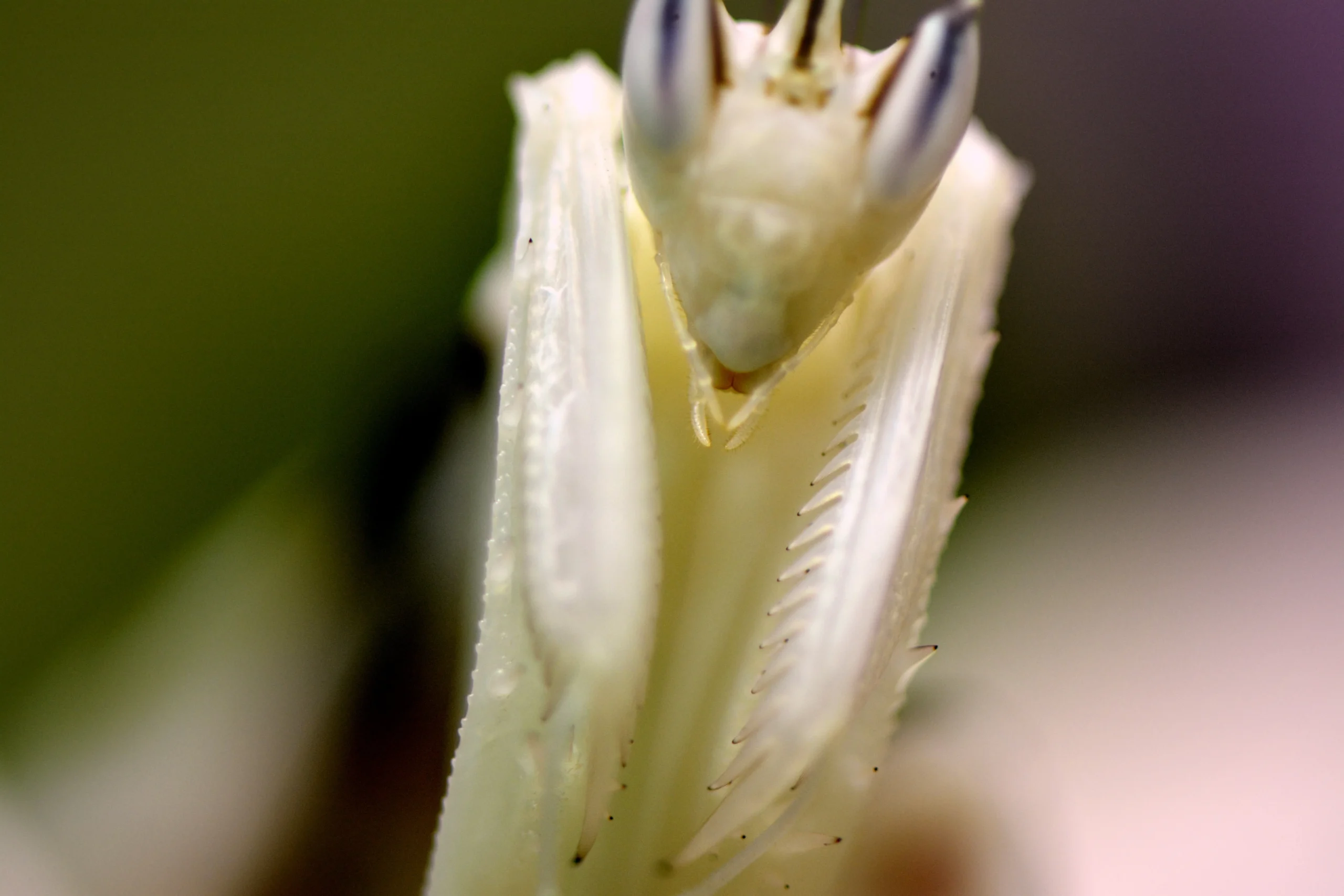
Orchid Mantis Pictures, Images and Drawing Reference
The orchid mantis is one of the most photographed insects in the world, and one of the most faked. Search for orchid mantis pictures and you will find stunning real macro shots side by side with AI images of impossible blue, glowing or lotus-shaped “mantises.” This page helps you find real, properly licensed orchid mantis images, recognize fakes, take better photos of your own mantis, and draw one accurately.
What a Real Orchid Mantis Looks Like
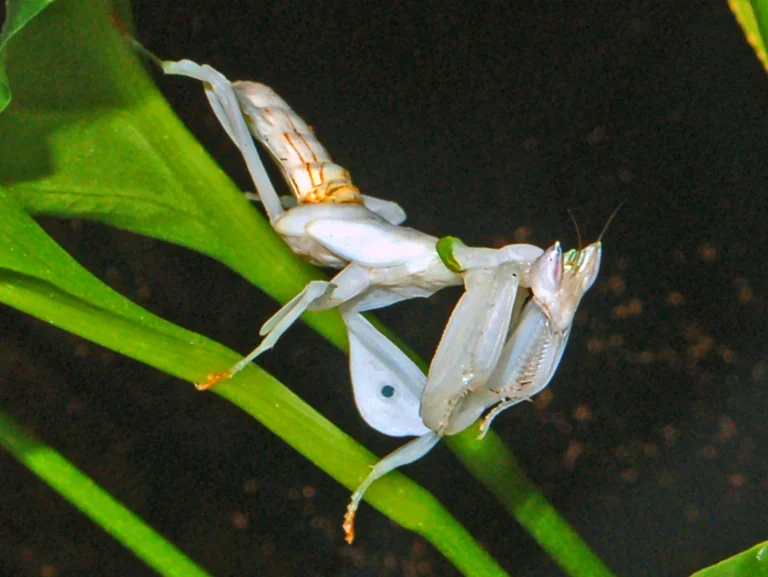
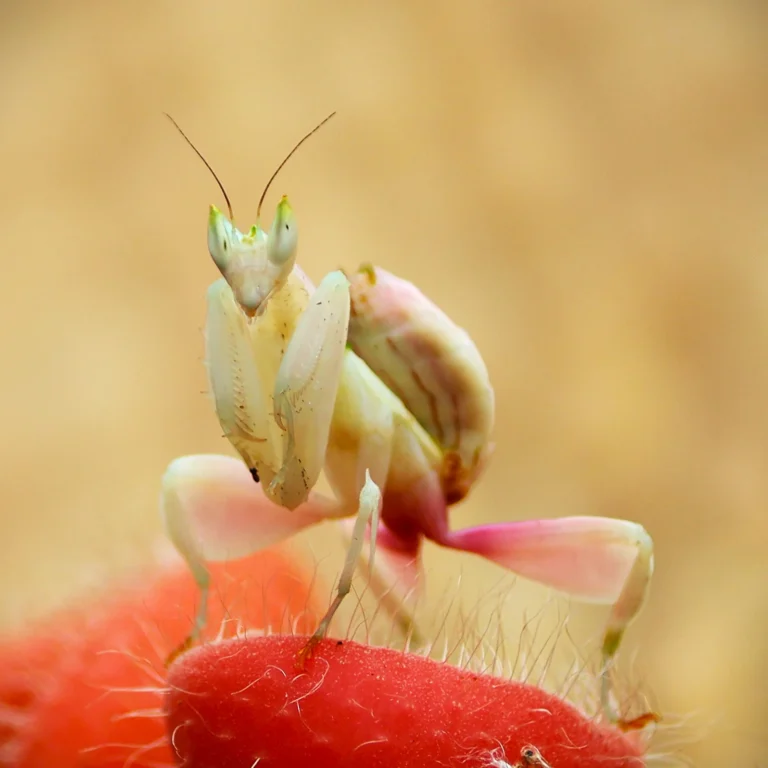
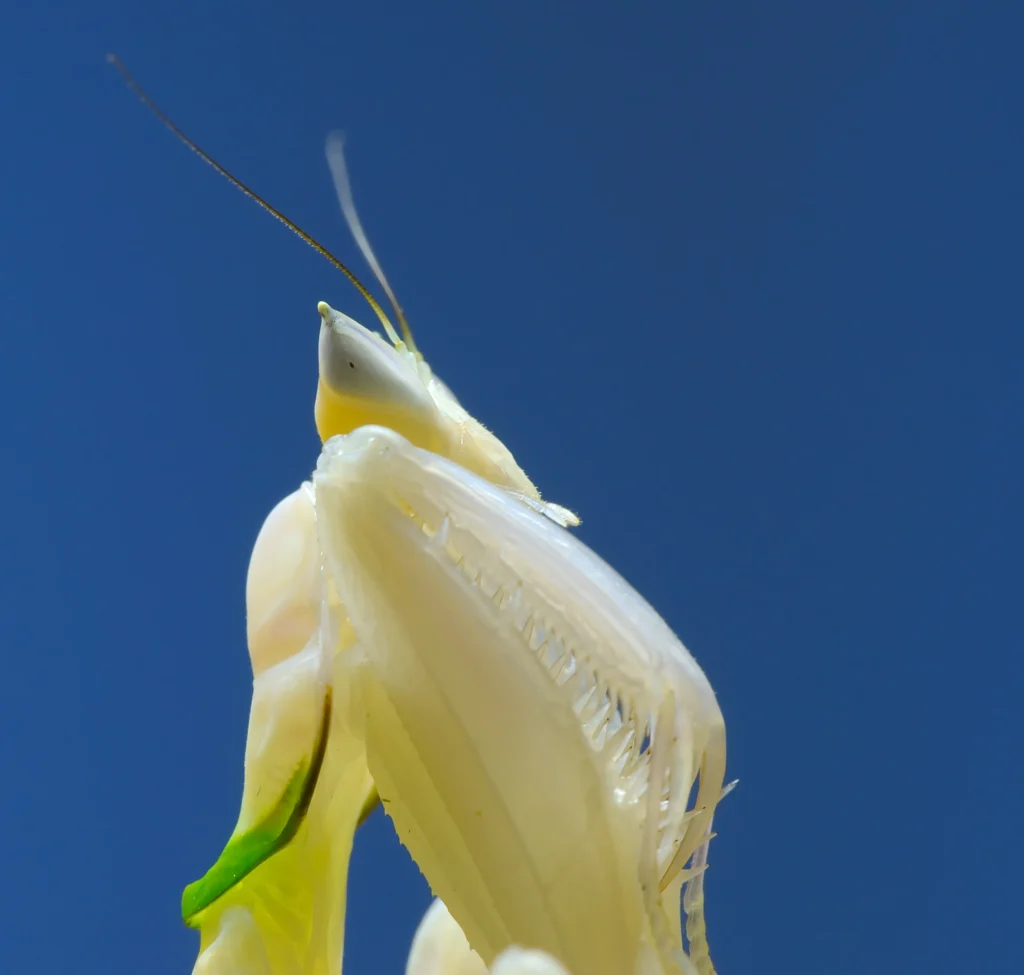
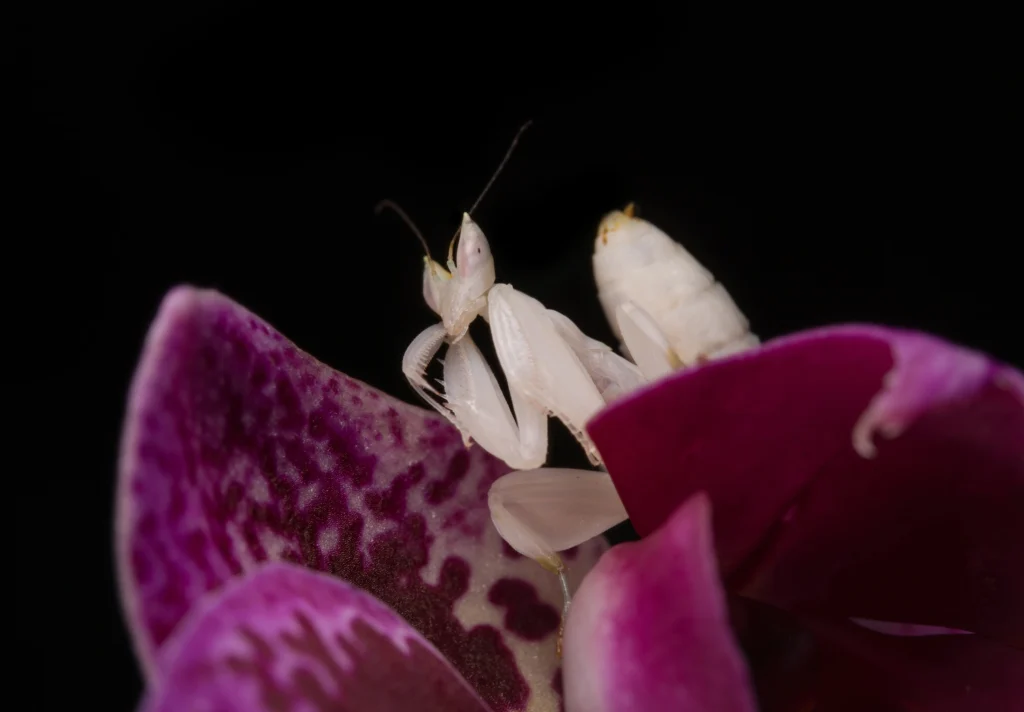
Before looking at pictures, it helps to know what to expect from a genuine orchid mantis (Hymenopus coronatus):
- Body color: predominantly white, often with pink or yellow hues, as described in a 2013 study in the Journal of Orthoptera Research.
- Legs: four walking legs with broad, rounded, petal-like lobes; two spined forelegs folded in front.
- Head: small and triangular, with large compound eyes and a short pointed cone on top.
- Abdomen: broad and often curled upward in juveniles.
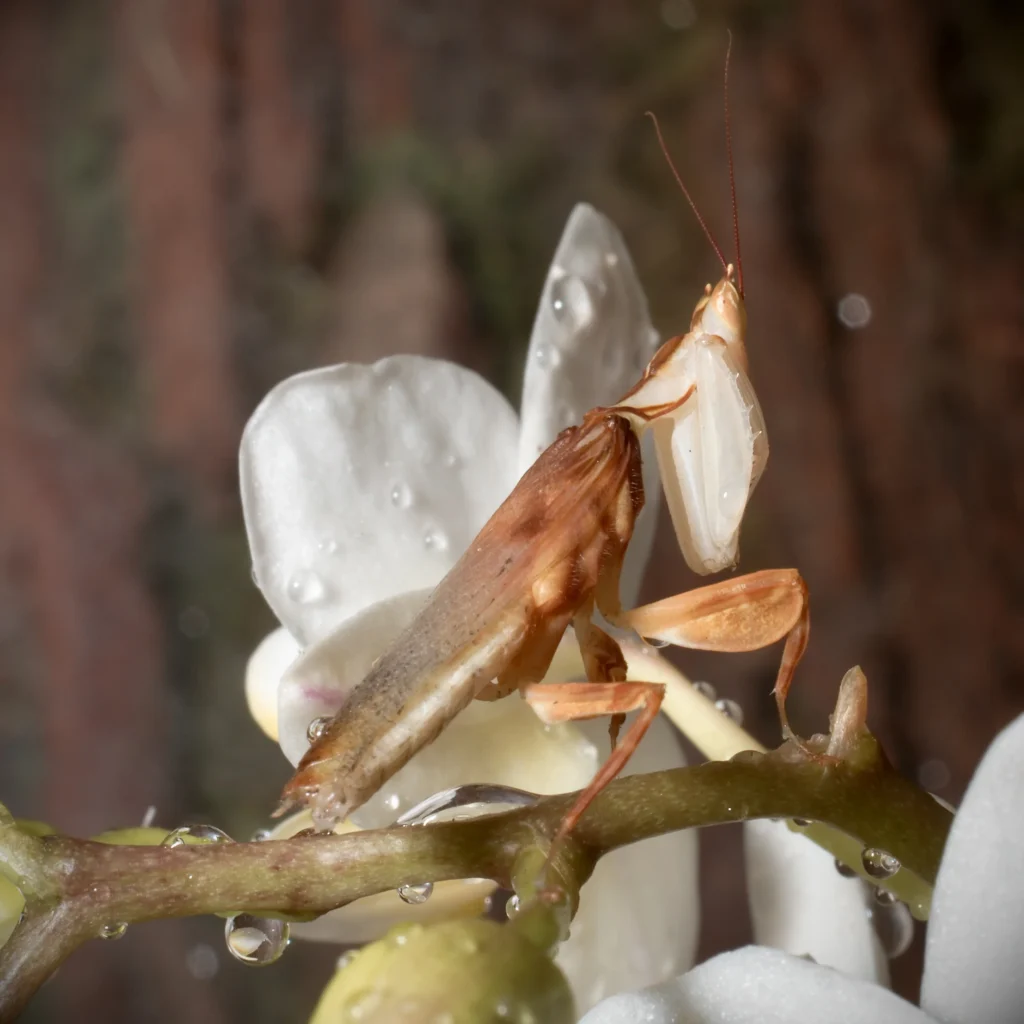
- Adults: wings cover much of the back; males are small and greenish brown.
- Babies: red and black, not pink.
If a picture shows something very different, such as layered real petals growing from the body or bright neon blue, it is probably edited, AI-generated, or a different species.
Where to Find Real, Licensed Orchid Mantis Images
Using an image you found online without permission can infringe copyright. These sources make licensing clear:
| Source | What you will find | Licensing |
|---|---|---|
| Wikimedia Commons | Many orchid mantis photos, including a well-known series by photographer Luc Viatour | Varies by image; many are Creative Commons with attribution required |
| Encyclopedia of Life (EOL) | Mirrors Commons images with license details, such as Luc Viatour’s CC BY-SA photos | Shown on each image page |
| Flickr | Photos by hobbyists, such as the widely used images by “Frupus” | Many are CC BY-NC 2.0 (non-commercial only) |
| iNaturalist | Real observations, including wild records | Each photo has its own license; some are all rights reserved |
| HHMI Beautiful Biology | Educational orchid mantis images with labeled anatomy | Marked for educational use only |
| Stock agencies (Adobe Stock, Science Source and others) | Professional images, some AI-generated | Paid licenses; check for “Generated with AI” labels |
A few practical rules:
- Read the license on each image, not just the site. On Commons and Flickr, licenses vary from photo to photo.
- Follow the credit wording. Luc Viatour’s EOL pages, for example, specify how he wants to be credited and ask for a link.
- Non-commercial means non-commercial. A CC BY-NC image may not be allowed on a site with ads or sales.
- Educational-use images such as HHMI’s are not free for general publishing.
- Stock sites now label AI images. Adobe Stock, for instance, marks some mantis images as “Generated with AI.” Avoid these if you want a true picture of the species.
How to Spot an AI or Edited Orchid Mantis Picture
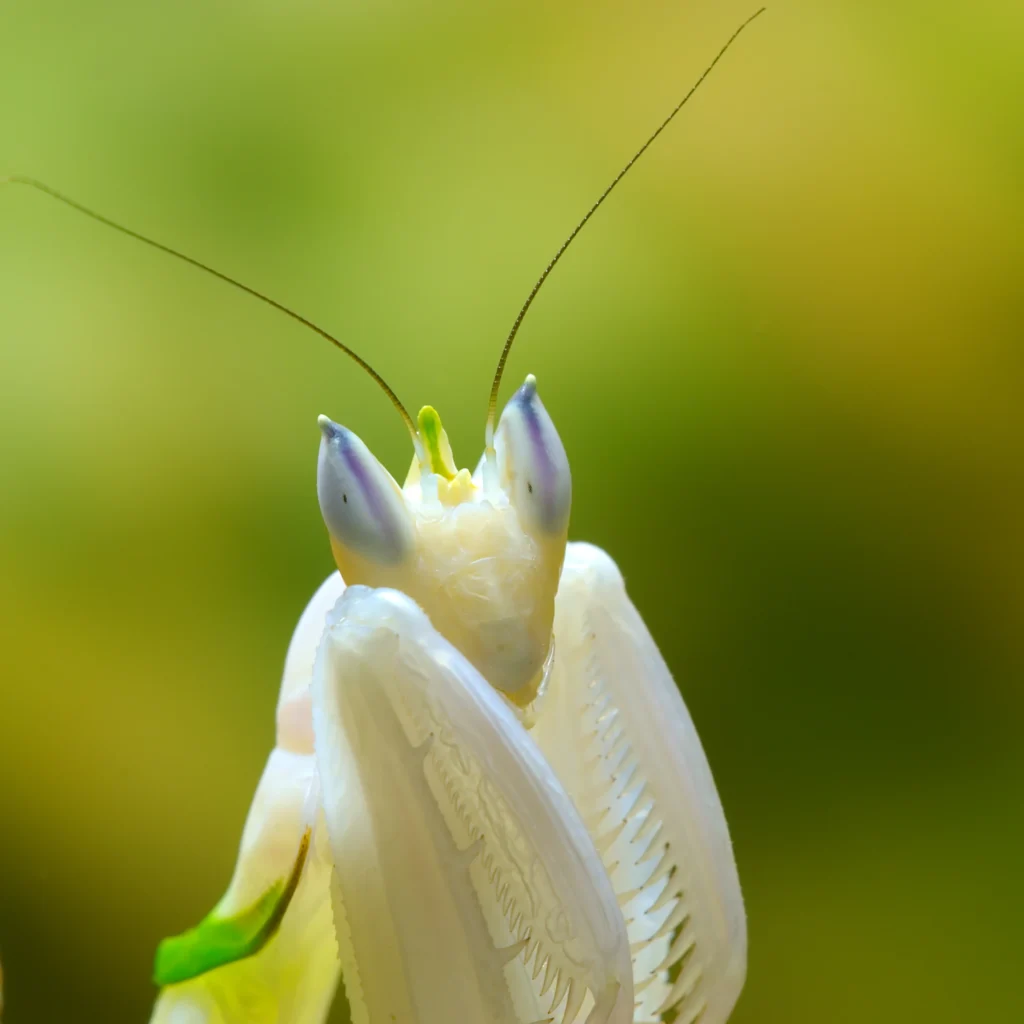
AI images of “flower mantises” are everywhere. Fact-checkers have shown that viral creatures like the lotus mantis and the sleeping rose mantis were made with AI tools. Look for:
- Wrong number of legs. A mantis has six. An entomology outreach blog, BIC Bugs, notes that AI often gives insects extra or missing legs.
- Petals that grow from the body. Real orchid mantises use flat leg lobes, not layered petals.
- Neon blue, purple or rainbow colors. Not natural for the species.
- A hand with the wrong number of fingers. A common AI error noted in the celestial mantis video.
- Melting details. Antennae, legs or wings blending into the background.
- No photographer, date or location.
More detail is in lotus mantis: real or fake? and blue orchid mantis.
Orchid Mantis Photography: Tips for Your Own Pictures
If you keep an orchid mantis, your own photos can be the best on the web. A few tips for orchid mantis macro and close-up photography:
Light
- Use soft, even daylight or a neutral white LED. Harsh flash can blow out the white body.
- Avoid colored lights, which can tint a white mantis blue or orange.
- Set white balance manually or tap on a neutral surface before shooting.
Background
- A plain green leaf or a soft, out-of-focus background makes the white and pink colors stand out.
- White flowers look beautiful but can make the mantis disappear, which is the point of its camouflage.
Focus and angle
- Focus on the eyes. Sharp eyes make a macro photo feel alive.
- Shoot from the side to show the leg lobes, or from slightly above and in front to show the face.
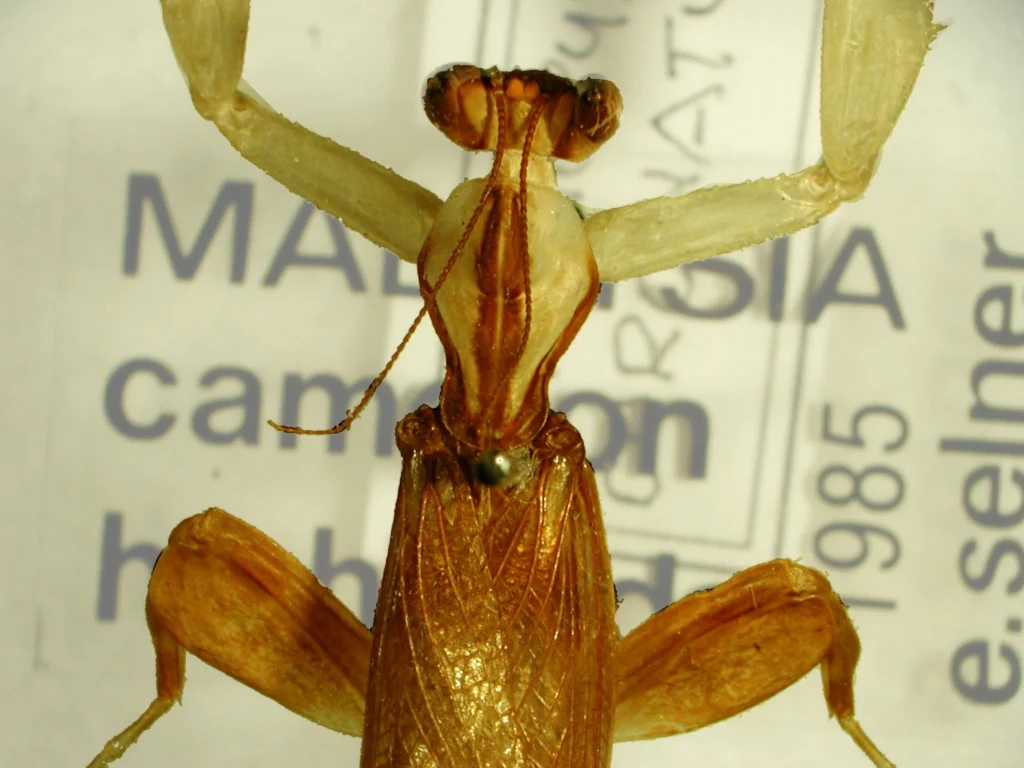
- For top-view shots, which are useful for drawing reference, keep the camera parallel to the mantis’s back.
Welfare
- Photograph inside or near the enclosure when you can, rather than handling the mantis.
- Never photograph during or just after a molt.
- Keep sessions short and avoid heat from lights.
Orchid Mantis Drawing: A Step-by-Step Guide
Orchid mantis drawing is a popular subject for illustrators and tattoo artists. Accurate anatomy makes the difference between a generic “bug” and a recognizable orchid mantis. For anatomical detail, see our orchid mantis anatomy guide.
Step 1: Block in the body
Draw three linked shapes: a small triangle for the head, a long narrow rectangle for the prothorax (the “neck”), and a broad oval for the abdomen. In a juvenile, tilt the abdomen upward.
Step 2: Add the forelegs
From the front of the prothorax, draw the two raptorial forelegs folded in an upside-down “V,” held in front of the head. Mark small spines along the inner edges.
Step 3: Place the walking legs
Add two pairs of walking legs from the middle of the body. These are the middle and hind legs.
Step 4: Draw the petal lobes
On the upper part of each walking leg (the femur), draw a wide, rounded, slightly flattened lobe, like a flower petal. Make them overlap the body outline slightly. These lobes are what make the drawing read as an orchid mantis.
Step 5: Refine the head
Add two large compound eyes at the outer corners of the triangle, a short pointed cone on top, and thin antennae.
Step 6: Add wings (adults only)
For an adult female, draw folded wings covering the back and much of the abdomen. Skip this for a juvenile.
Step 7: Color
Start with white, then add soft pink or yellow to the leg lobes, edges and abdomen. Keep shading gentle; the real insect looks almost translucent at the edges.
Common drawing mistakes
| Mistake | Fix |
|---|---|
| Drawing petals on the back | Put the “petals” on the upper legs, as femoral lobes |
| Six identical legs | Make the front pair thicker, spined and folded |
| A round head | Keep the head triangular, with eyes at the outer corners |
| Short neck | The prothorax is long and narrow |
| Bright neon pink | Use soft blush tones over white |
| Wings on a juvenile | Only adults have full wings; nymphs have small wing buds |
Drawing different life stages
- Newly hatched nymph: slim body, thin legs, no lobes yet, colored red and black. It looks more like an ant or assassin bug than a flower.
- Juvenile female: the most flower-like stage. Broad, upturned abdomen and large lobes, no wings.
- Adult female: larger, with folded wings covering much of the back. Still white to pink.
- Adult male: about half the length of the female, slim and greenish brown, with large wings.
Showing a male beside a female makes a striking illustration, because the size difference is so extreme. See male vs female orchid mantis.
Historic and Scientific Orchid Mantis Images
The orchid mantis has a long history in scientific illustration. According to Wikipedia’s species account, entomologist James Wood-Mason supplied a drawing of the mantis to Alfred Russel Wallace in the 1870s, and a drawing was published in Edward Bagnall Poulton’s 1890 book The Colours of Animals, where Poulton described an “Indian Mantis” that attracts insects with its flower-like shape and pink color.
Modern science communication continues the tradition. The Howard Hughes Medical Institute’s Beautiful Biology feature labels the body parts of an orchid mantis on a flower, and the Natural History Museum of Utah has published an orchid mantis anatomy diagram by illustrator Sara Bea Delgado. Both are good references for accurate proportions, but check their usage terms before reproducing them.
An Orchid Mantis Color Palette
A simple palette for illustration, based on the species’ typical white, pink and yellow tones:
| Use | Suggested color | Hex |
|---|---|---|
| Base white | Warm white | #FBF7F4 |
| Soft blush | Pale pink | #F6D3DF |
| Mid pink | Orchid pink | #E8A3BE |
| Accent | Deep pink edge | #C76B92 |
| Yellow variant | Pale cream yellow | #F4E7B8 |
| Eyes | Soft green-grey | #9DB3A3 |
| Shadow | Lilac grey | #B9A9C2 |
Adjust these to your style. For a male, swap in greenish brown tones. For a newborn nymph, use red and black.
Using Orchid Mantis Images in School Projects
Students often need orchid mantis images for reports and presentations. A few tips:
- Use Creative Commons images and include the photographer’s name and license under the picture.
- Label the parts you discuss: compound eyes, raptorial forelegs, femoral lobes, abdomen and wings.
- Pair a photo with a fact. For example, “Field studies found orchid mantises attract more pollinators than real flowers.”
- Avoid viral images without a source. If you cannot find who took a photo, it may be AI-generated.
Our orchid mantis facts page has checked facts that work well as captions.
Orchid Mantis Coloring Page Ideas
If you are making an orchid mantis coloring page for children or a classroom:
- Use clean outlines of the body, head, forelegs and four petal-shaped leg lobes.
- Add a simple flower branch so children can see how the mantis blends in.
- Include a small fact box: “Orchid mantises attract bees by looking like flowers.”
- Offer a second page showing the red and black baby, to teach the life cycle. See orchid mantis life cycle.
Orchid Mantis Wallpaper and Art
People often search for orchid mantis wallpaper, painting or illustration ideas. If you use a photo as a wallpaper for personal use, check its license anyway; many photographers allow personal use but not redistribution. For commercial art, use your own photos as reference or license images properly. Famous wildlife photographers, such as Art Wolfe, publish orchid mantis images that are fully copyrighted and not free to reuse.
For tattoo designs, see our orchid mantis tattoo ideas and meaning.
Related Guides
If you want to go deeper, these guides pick up where this page leaves off:
- Orchid mantis anatomy: eyes, ear, wings and petal-shaped legs.
- Orchid mantis tattoo meaning: symbolism and design ideas.
- Orchid mantis colors: white, pink, yellow and why they change.
- Lotus mantis: real or fake?: the viral AI mantis fact-checked.
Frequently Asked Questions
Where can I find free orchid mantis pictures?
Wikimedia Commons and Flickr have many Creative Commons orchid mantis images. Always check the specific license and credit the photographer.
Are orchid mantis pictures online real?
Many are, but many viral images are AI-generated or edited. Check for natural colors, six legs, flat leg lobes rather than petals, and a named photographer.
How do I draw an orchid mantis?
Block in a triangular head, a long neck and a broad abdomen, add folded spined forelegs, then four walking legs with wide petal-shaped lobes, and color in white with soft pink.
What colors should I use to draw an orchid mantis?
White as a base with soft pink or pale yellow accents. Males are greenish brown, and newborn nymphs are red and black.
Can I use orchid mantis images on my website?
Only if the license allows it. Creative Commons images usually require credit, and non-commercial licenses do not allow commercial use.
Why do orchid mantis photos look so different from each other?
Real orchid mantises vary from white to pink or yellow, juveniles look different from adults, and males look very different from females. Lighting and editing add more variation.
What does an orchid mantis look like up close?
Up close you see large compound eyes, a pointed cone on the head, spined forelegs and smooth, petal-like lobes on the walking legs.
Sources
- O’Hanlon, J.C., Li, D. and Norma-Rashid, Y. (2013). Coloration and morphology of the orchid mantis. https://hdl.handle.net/1959.11/27641
- Encyclopedia of Life, “Mantis Hymenopus coronatus 7, Luc Viatour”: https://www.eol.org/media/29016517
- Encyclopedia of Life, “Mantis Hymenopus coronatus 2, Luc Viatour”: https://www.eol.org/media/29016507
- Dubia Roaches, orchid mantis care sheet (credits a CC BY-NC 2.0 photo by Frupus): https://dubiaroaches.com/blogs/invert-care/orchid-mantis-care-sheet
- Howard Hughes Medical Institute, Beautiful Biology, “Orchids with a Bite”: https://www.hhmi.org/beautifulbiology/media-detail/orchids-bite
- Wikiwand / Wikipedia, Orchid mantis (history of illustrations): https://www.wikiwand.com/en/articles/Orchid_mantis
- Natural History Museum of Utah (anatomy diagram by Sara Bea Delgado): https://nhmu.utah.edu/articles/orchid-mantis-breathtakingly-beautiful-deceptively-deadly
- Adobe Stock, example of an AI-labeled mantis image: https://stock.adobe.com/images/spiny-flower-mantis-created-with-generative-ai-technology/610061759
- Science Source, orchid mantis stock image: http://www.sciencesource.com/1746941-orchid-mantis-stock-image-rights-managed.html
- Art Wolfe, orchid mantis: https://artwolfe.com/showcase/orchid-mantis-sawarak-malaysia
- BIC Bugs, “Entomologist Spotlight: Bug Hoaxes”: https://bicbugs.com/entomologist-spotlight-anna-maria-sibylla-merian-1867-1923/
- Sportskeeda, celestial mantis debunk: https://www.sportskeeda.com/pop-culture/is-celestial-mantis-real-fake-viral-footage-debunked-video-floors-netizens
- Lead Stories, “Sleeping Rose Mantis Is NOT Real Insect”: https://leadstories.com/hoax-alert/2025/04/fact-check-sleeping-rose-mantis-is-not-real-insect.html