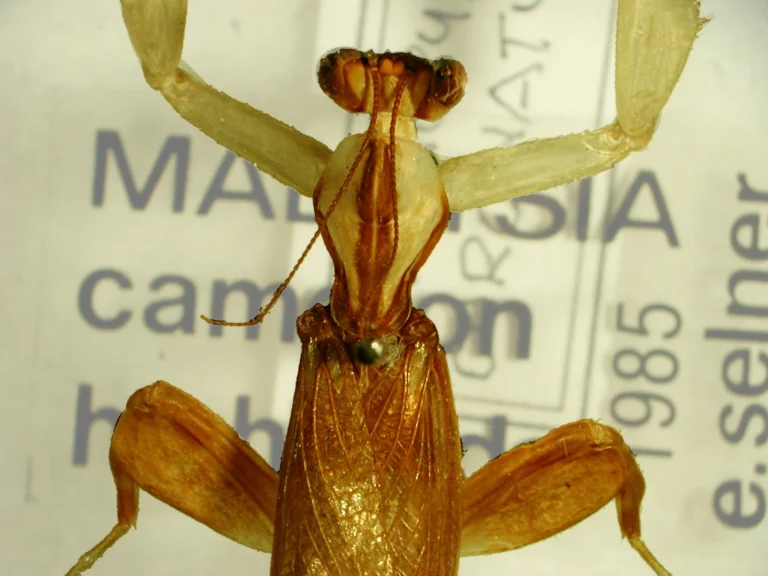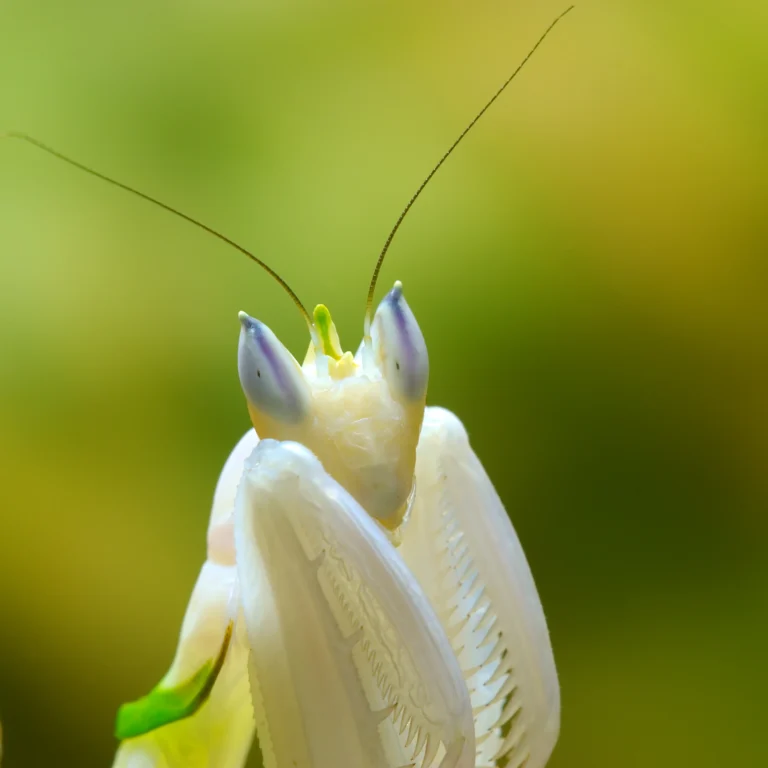
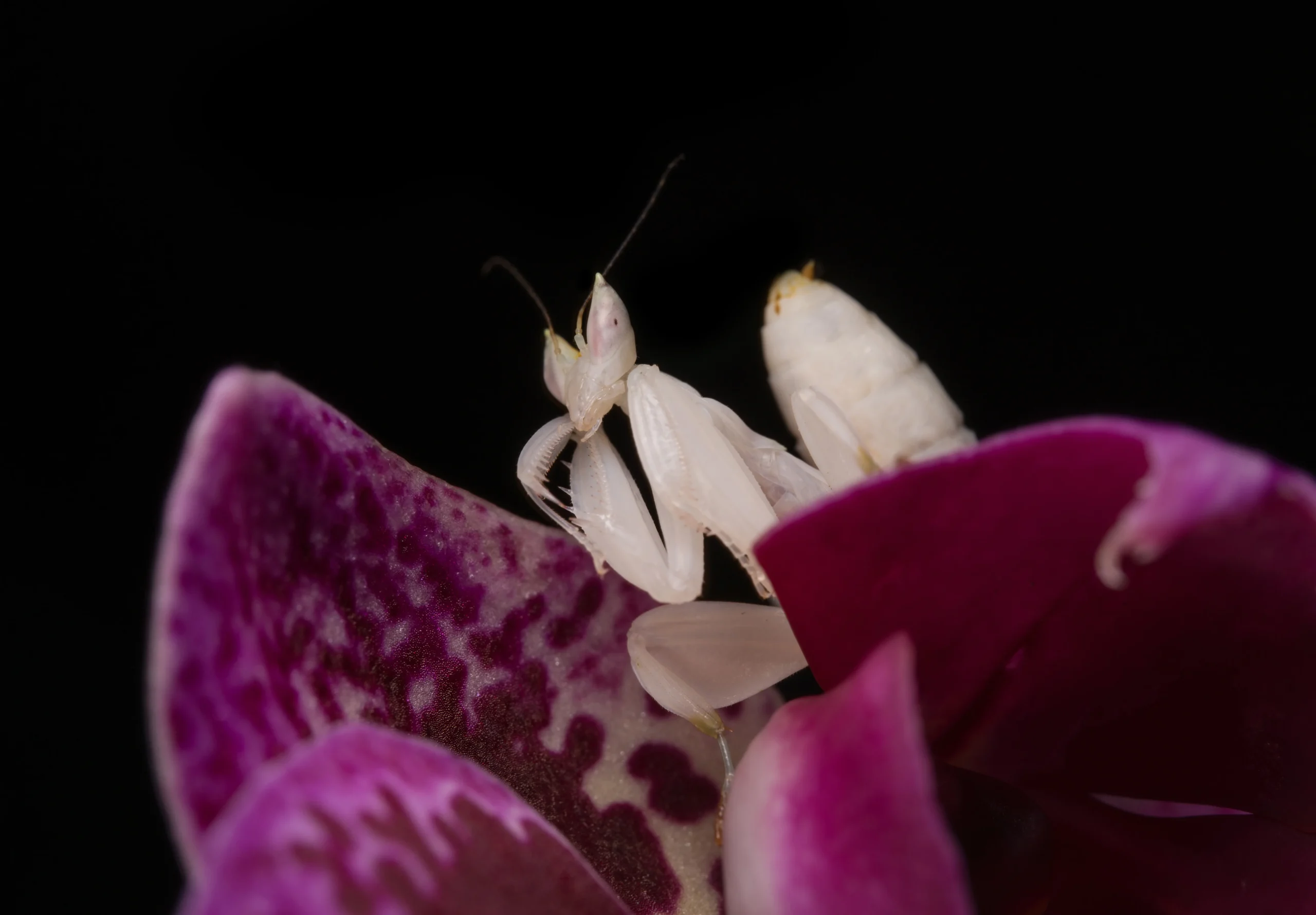
Orchid Mantis Habitat: Where Do Orchid Mantises Live?
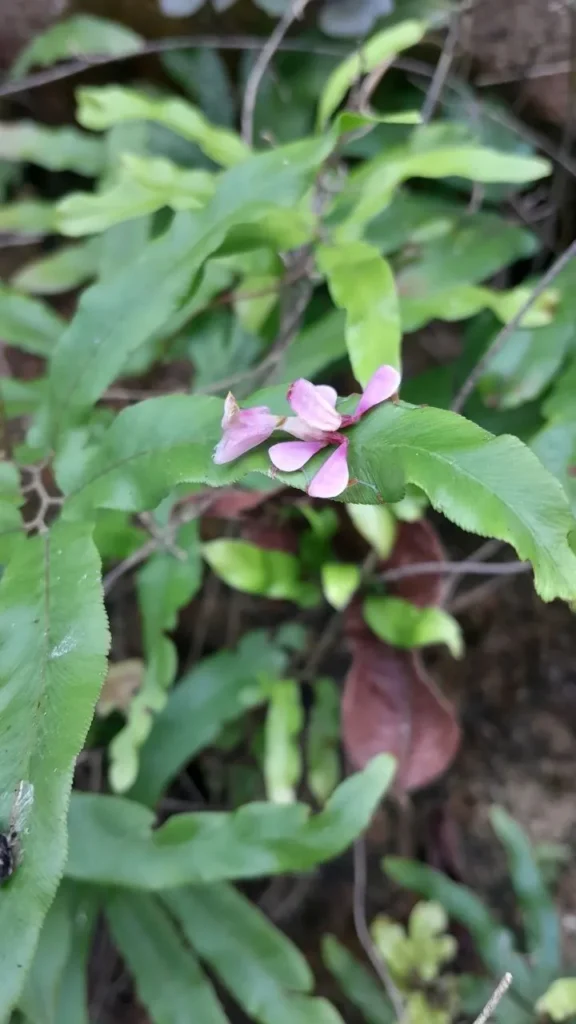
The orchid mantis habitat is the warm, humid tropical forest of Southeast Asia. Its range covers mainland countries such as Thailand, Myanmar, Cambodia, Laos and Vietnam, and extends south through Malaysia and Singapore to Indonesia. In the wild it is rarely seen, partly because it blends so well into the flowering shrubs where it hunts.
This guide maps the orchid mantis’s native range country by country, describes the exact places within the forest where it lives, explains the climate it depends on, and covers where you can see one today.
Native Range at a Glance
| Region | Countries listed in reference sources |
|---|---|
| Mainland Southeast Asia | Thailand, Myanmar, Cambodia, Laos, Vietnam |
| Malay Peninsula | Malaysia, Singapore |
| Island Southeast Asia | Indonesia |
| Possible range edges | Far eastern India and Bangladesh (observations); a historic record from Assam, India |
| Listed by some sources only | The Philippines |
Wikipedia’s species account lists Cambodia, Indonesia, Laos, Malaysia, Myanmar, Singapore, Thailand and Vietnam, and notes that iNaturalist observations suggest the range may extend into far eastern India and Bangladesh. Some other sources, including Asian Geographic and Earth.com, also list the Philippines. Because sources disagree on the edges of the range, the core region of Malaysia, Indonesia and Thailand is the most certain.
Where Do Orchid Mantises Come From?
Malaysia: the classic home
The species is so closely tied to Malaysia that the pet trade often calls it the Malaysian orchid mantis. Much of what scientists know about its behavior in the wild comes from Malaysia. The landmark 2014 study by James O’Hanlon and colleagues was carried out in forested areas of Peninsular Malaysia where orchid mantises are known to occur naturally, and the team obtained captive mantises from private insect keepers there.
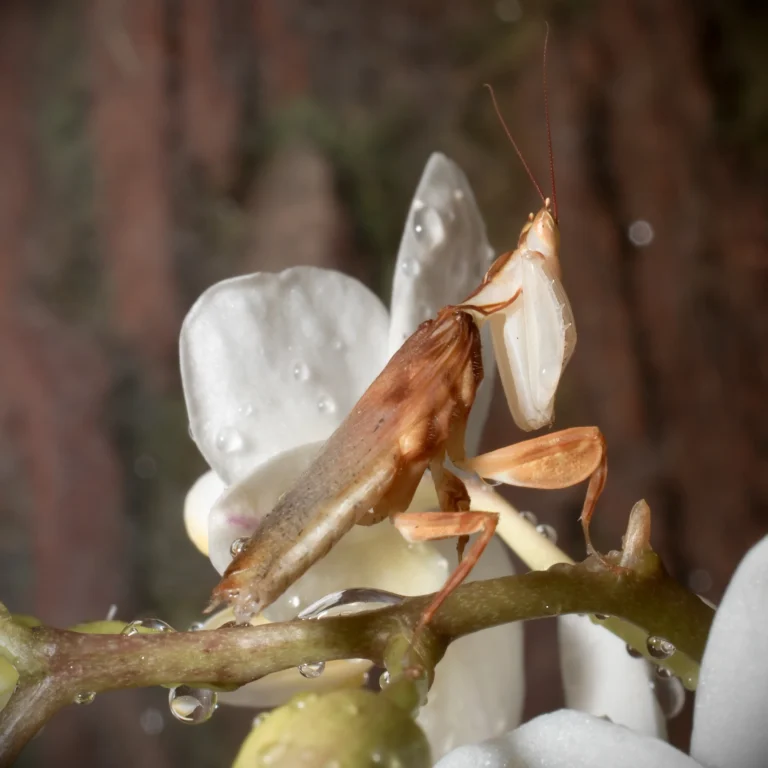
Photographer Art Wolfe’s portrait of the species was taken in the highlands of Malaysia, showing a mantis resting on pastel flower petals that match its colors.
Indonesia: where the species was first described
When the orchid mantis was first described in the 1790s, the specimen behind the description came from Ambon, in Indonesia’s Maluku Islands, according to Wikispecies. That makes Indonesia the species’ “type locality.” The original specimen is presumed lost.
Indonesia’s many islands are part of the wider range, and the species appears in the pet trade under names like Indonesian orchid mantis.
Thailand and mainland Southeast Asia
Thailand, Myanmar, Cambodia, Laos and Vietnam form the northern part of the range. The Montreal Insectarium describes the species as Asiatic in origin, with its natural habitat in Southeast Asia, Malaysia and Indonesia.
Singapore
Singapore is included in Wikipedia’s country list. As a highly urbanized island, its suitable habitat is limited to remaining forest and green areas.
The northern edge: India and Bangladesh
The northernmost historic record comes from Sivasagar in Assam, northeast India, reported by James Wood-Mason in 1878, according to Wikipedia. Recent observations on iNaturalist suggest the species may reach far eastern India and Bangladesh. These records are near the edge of the range and are less well documented than the core region.
The Philippines
Some sources list the Philippines within the range, while Wikipedia’s current list does not. We treat it as uncertain. If you are researching orchid mantises in the Philippines, look for verified observations with photos on iNaturalist or museum records.
Where Exactly Does the Orchid Mantis Live in the Forest?
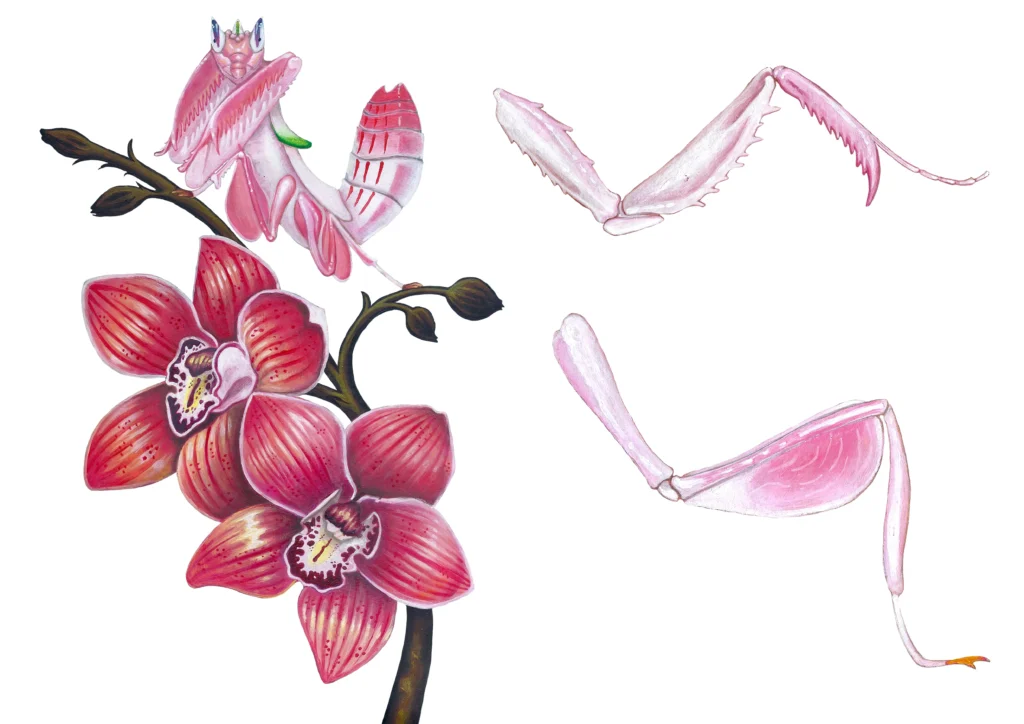
The name suggests it lives on orchids, but it does not depend on them.
On flowering shrubs and leaves
Naturalist Nelson Annandale, writing about an expedition in around 1900, described the orchid mantis hunting on the flowers of the Straits rhododendron (Melastoma polyanthum), a common flowering shrub in its range. Wikipedia describes the mantis climbing twigs until it finds a cluster of flowers, then holding on with its rear legs and swaying to mimic movement in the wind.
In plain sight
Unlike many camouflaged predators, orchid mantises often sit openly. Science Friday’s summary of the field research notes that they sit in plain view and catch more prey in flower-rich areas. They do not need to hide inside a flower; their own flower-like body is the lure.
By day
The orchid mantis is diurnal, or active during the day, according to the Oakland Zoo’s species profile. That fits its lifestyle: its prey, such as bees and butterflies, visit flowers in daylight.
Microhabitat summary
| Habitat feature | What the orchid mantis uses |
|---|---|
| Plants | Flowering shrubs and small trees, including Melastoma; leaves and stems near flowers |
| Height | Shrubs and small trees, where most records come from |
| Light | Daytime activity in sun and dappled light |
| Prey | Pollinating insects visiting flowers |
| Position | Often on open leaves or flowers rather than hidden |
How Naturalists First Found It in the Wild
The orchid mantis has fascinated travelers for more than 150 years, and early accounts tell us a lot about its habitat.
- 1870s. James Wood-Mason recorded the species in Assam, India, in 1878, and supplied a drawing to Alfred Russel Wallace, according to Wikipedia.
- 1889. Wallace described the mantis in his book Darwinism, calling it rare and noting its flower-like resemblance.
- 1890. Edward Bagnall Poulton, in The Colours of Animals, called it an “Indian Mantis” that attracts insects with its flower-like shape and pink color.
- Around 1900. Nelson Annandale, on the Skeat Expedition to the Malay Peninsula, described it hunting on the flowers of the Straits rhododendron.
- 1940. Hugh Cott discussed the nymph’s “alluring coloration” in Adaptive Coloration in Animals.
These accounts placed the mantis on flowering shrubs in the Malay region and northeast India long before field experiments were possible. It took until the 2010s for researchers to test what the naturalists had described.
Other Flower-Mimicking Mantises in Its Range
The orchid mantis is not alone in Southeast Asia’s forests. Several other flower-mimicking or camouflaged mantises live in the same region, according to Wikipedia’s flower mantis list and the Natural History Museum of Utah:
| Species | Common name | How it differs |
|---|---|---|
| Creobroter species | Jeweled flower mantises | Strong fliers with eyespots on the forewings |
| Theopropus elegans | Banded flower mantis | White band across the forewings |
| Parymenopus davisoni | Yellow flower mantis | Slender and yellow, with three dark wing spots in females |
| Deroplatys desiccata | Dead leaf mantis | Looks like a brown dead leaf; found in Malaysia, Indonesia and the Philippines |
None of these has the orchid mantis’s broad, petal-shaped leg lobes. See flower mantis for the full comparison.
The Climate Orchid Mantises Need
The orchid mantis is a tropical insect. Its forest habitat is warm year round with high humidity and regular rain. It has no ability to survive cold winters, which is why it cannot live outdoors in temperate countries.
Keepers recreate this climate in captivity. Common targets are roughly 75 to 85°F (24 to 29°C) and 60 to 80% humidity, with good ventilation. A US Mantis care sheet warns that high humidity without adequate ventilation will kill specimens, a reminder that the forest air the species evolved in is humid but moving, not stagnant. Our orchid mantis care sheet explains how to match these conditions.
Bringing the habitat home
A good enclosure borrows from the wild habitat without copying it exactly. What matters most is vertical space with thin branches to climb, a mesh ceiling to hang from, warmth, humidity with airflow, and plenty of light during the day. Live or artificial flowers are decorative, not essential, because the mantis does not need a real orchid to thrive. The orchid mantis enclosure guide gives sizes and a step-by-step setup.
How Common Is the Orchid Mantis in the Wild?
Wild orchid mantises are seldom seen. Some of that is down to camouflage: a white or pink mantis on a white or pink flower is easy to overlook. Some of it is real scarcity in places. A 2020 report from the Chinese Academy of Sciences, describing field observations of orchid mantises ambushing butterflies, listed the threatened status of the orchid mantis in its natural habitat, “because of its rarity,” as an open question for research.
We could not find a global IUCN Red List assessment for Hymenopus coronatus, so it has no official conservation category. Its forest habitat across Southeast Asia faces pressure from land clearing, and wild collection for the pet trade is a concern. Buying captive-bred animals only helps reduce that pressure. See orchid mantis facts for more on its status.
Habitat and Hunting: Why Location Matters
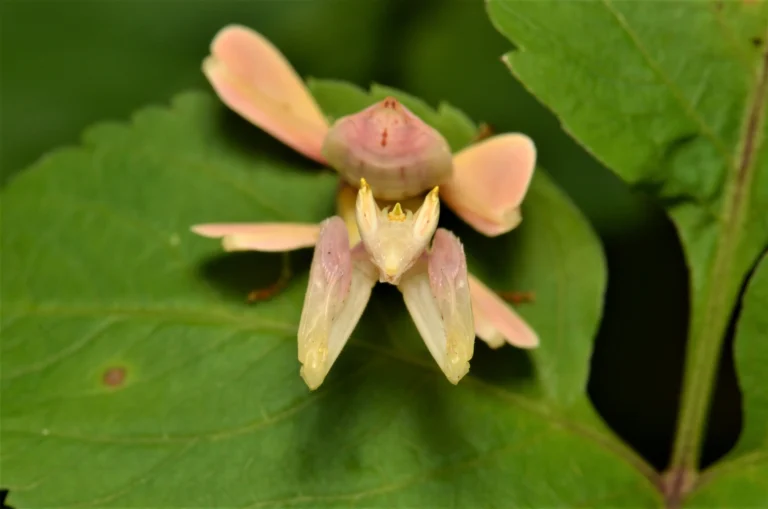
The orchid mantis’s habitat is not just where it lives; it is part of how it hunts. Research shows the species attracts pollinating insects by looking like a flower. In a 2014 study, color modeling showed that, to pollinators, orchid mantises could not be told apart from the flowers growing in the same habitat, and in field trials the mantises attracted pollinators at a higher rate than those flowers.
A separate study published in Zoological Science in 2014 found that juvenile orchid mantises also release chemical cues that attract Oriental honeybees, a pollinator common in their range.
Field observations reported by the Chinese Academy of Sciences in 2020 recorded wild orchid mantises catching butterflies, crickets, bees, flies and grasshoppers. A flower-rich patch of forest is, in effect, a hunting ground. See orchid mantis camouflage and what orchid mantises eat.
Can Orchid Mantises Live Outside Their Native Range?
Not outdoors in temperate climates. They need constant warmth and humidity, and they have no cold-tolerant life stage. That does not mean releasing one is harmless. In the United States, USDA APHIS warns that many non-native invertebrates kept as pets are restricted because they could harm agriculture or the environment if they escape. Never release a pet mantis outside. See can you own an orchid mantis?
Where to See an Orchid Mantis
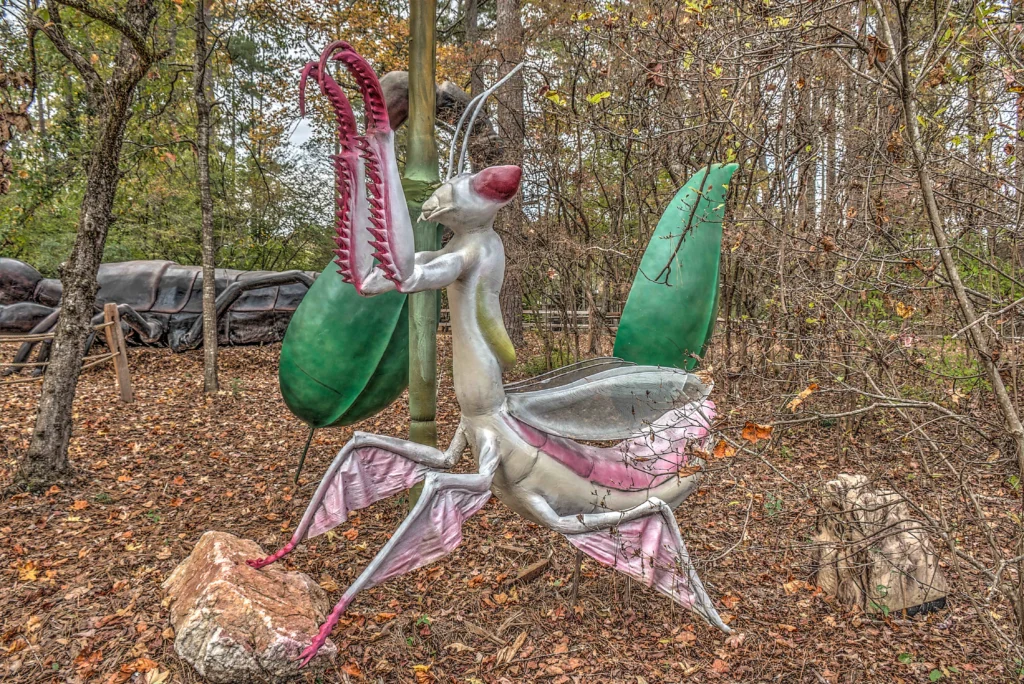
If you cannot travel to a Southeast Asian rainforest, several zoos and museums have exhibited orchid mantises:
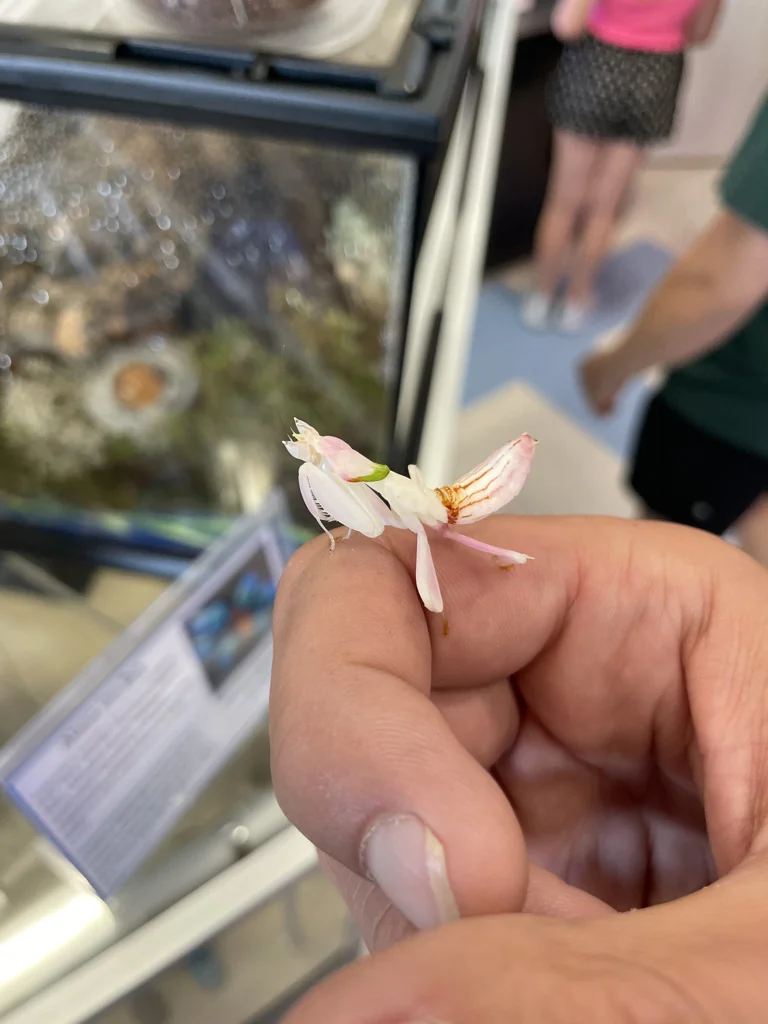
- Cincinnati Zoo and Botanical Garden. Its insect team raised orchid mantises from confiscated egg cases and shipped 110 to five other accredited zoos.
- Oakland Zoo. Its House of Bugs in the Children’s Zoo has listed the orchid mantis.
- Minnesota Zoo. It has described keeping orchid mantids alongside other mantis species.
- Natural History Museum of Utah. Its Bug World exhibit featured the orchid mantis in its first biome.
Exhibits change, so check a zoo’s website before visiting.
A Note on “Orchid Mantis Location” Searches
If you searched for an orchid mantis location in a video game, the answer depends on the game. In Grounded, it is a boss found in the orchid pot on the shed’s porch; see orchid mantis in Grounded. In Animal Crossing, it appears on white flowers; see orchid mantis in Animal Crossing.
Related Guides
If you want to go deeper, these guides pick up where this page leaves off:
- Orchid mantis: the complete guide: everything about the species in one place.
- Orchid mantis camouflage: the science of its flower disguise.
- What orchid mantises eat: wild diet and a feeding guide.
- Flower mantis species: every major flower-mimicking mantis compared.
Frequently Asked Questions
Where do orchid mantises live?
In the tropical forests of Southeast Asia, including Malaysia, Indonesia, Thailand, Vietnam, Cambodia, Laos, Myanmar and Singapore.
Where are orchid mantises native to?
They are native to Southeast Asia. The species was first described from a specimen from Ambon, Indonesia.
Do orchid mantises live on orchids?
Not specifically. They hunt on many flowering plants and leaves, and have been recorded on the flowers of the Straits rhododendron.
Are there orchid mantises in the Philippines?
Some sources list the Philippines, but Wikipedia’s current range list does not. Treat it as uncertain until you find verified records.
Why is it called the Malaysian orchid mantis?
Malaysia is the country most associated with the species, both in the pet trade and in scientific field studies.
What kind of forest does the orchid mantis live in?
Warm, humid tropical forest. Most records place it on flowering shrubs and small trees, where pollinating insects feed. Its use of the high canopy has not been well studied.
Is the orchid mantis active during the day or at night?
During the day. Zoo profiles describe it as diurnal, which matches the daytime activity of the bees and butterflies it hunts.
Can I find an orchid mantis in my garden?
Only if you live within its tropical Southeast Asian range. It cannot survive outdoors in temperate climates.
Sources
- Wikipedia, Hymenopus coronatus: https://en.wikipedia.org/wiki/Hymenopus_coronatus
- Wikiwand, Orchid mantis (range and history): https://www.wikiwand.com/en/articles/Orchid_mantis
- Wikispecies, Hymenopus coronatus: https://species.wikimedia.org/wiki/Hymenopus_coronatus
- O’Hanlon, J.C. et al. (2014). Pollinator deception in the orchid mantis. The American Naturalist. https://www.journals.uchicago.edu/doi/reader/10.1086/673858
- Science Friday, “Unraveling the Orchid Mantis Mystery”: https://www.sciencefriday.com/articles/unraveling-the-orchid-mantis-mystery/
- Mizuno, T. et al. (2014). Zoological Science 31(12): 795-801. https://bioone.org/journals/zoological-science/volume-31/issue-12/zs140126/Double-Trick-Visual-and-Chemical-Mimicry-by-the-Juvenile-Orchid/10.2108/zs140126.short
- Chinese Academy of Sciences, “Orchid Mantis Ambushes Foraging Butterflies”: https://english.cas.cn/newsroom/research_news/life/202003/t20200312_231167.shtml
- Wikipedia, Flower mantis: https://en.wikipedia-on-ipfs.org/wiki/Flower_mantis
- Natural History Museum of Utah, “Weird and Wonderful: Why Mantises Are Awesome Alien Assassins”: https://nhmu.utah.edu/articles/weird-and-wonderful-why-mantises-are-awesome-alien-assassins
- Montreal Insectarium (Espace pour la vie), Orchid praying mantis: https://espacepourlavie.ca/en/insects-arthropods/orchid-praying-mantis?mode=76
- Asian Geographic, The Pink Orchid Mantis: https://asiangeo.com/?p=40053
- Earth.com, Orchid mantis: https://earthpedia.earth.com/animal-encyclopedia/arthropoda/hymenopodidae/hymenopus-coronatus/
- Art Wolfe, orchid mantis, Sarawak, Malaysia: https://artwolfe.com/showcase/orchid-mantis-sawarak-malaysia
- Oakland Zoo, Orchid Mantis: https://www.oaklandzoo.org/animals/orchid-mantis/
- Minnesota Zoo, “What’s all in a Name?”: https://mnzoo.org/?p=20127
- Cincinnati Zoo, “Mantis Mayhem”: https://cincinnatizoo.org/mantis-mayhem/
- Natural History Museum of Utah: https://nhmu.utah.edu/articles/orchid-mantis-breathtakingly-beautiful-deceptively-deadly
- US Mantis, orchid mantis care sheet (PDF): https://cdn.shopify.com/s/files/1/1296/7335/files/Orchid_Mantis_care_sheet.pdf
- USDA APHIS, Invertebrate Pets: https://www.aphis.usda.gov/organism-soil-imports/invertebrate-pets